A Guide to Securing Outdoor Areas: Effective Tips for Maximizing Coverage
Check your yard for gaps in fences, loose latches, or low sections-small openings invite intruders. Aim lights at dark alleys and corners, not well-lit entrances, using 6–8 foot mounted LEDs with motion sensors. Install weatherproof cameras with night vision up to 100 feet, focusing on back doors and side gates. Link alarms to loud sounds and phone alerts for instant detection. Use tamper-proof locks and trim shrubs below 3 feet, keeping them 3 feet from walls. Systems cost $50–$200+, with wireless models needing monthly checks. You’ll find smarter ways to upgrade each layer.
Notable Insights
- Inspect fences quarterly for gaps, loose boards, or low sections that create security blind spots.
- Trim dense foliage and keep shrubs under 3 feet high to eliminate hiding spots and improve visibility.
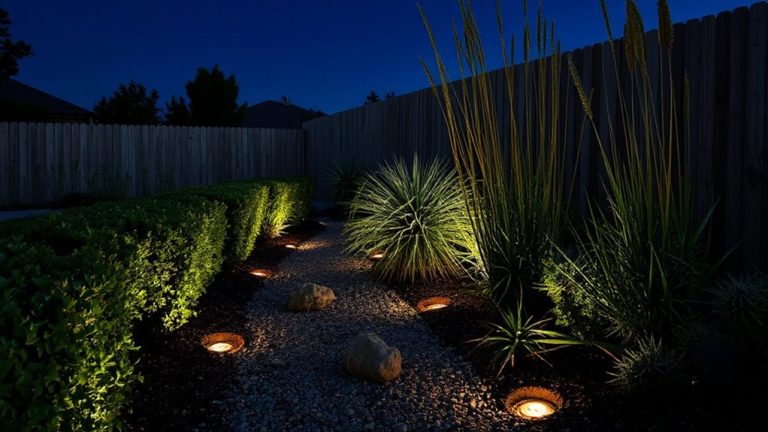
- Position outdoor lights 6–8 feet high with motion sensors to illuminate dark corners and deter intruders.
- Install weatherproof cameras with night vision and wide-angle lenses to cover high-risk zones and blind spots.
- Connect motion detectors to loud alarms and real-time phone alerts for immediate intrusion response.
Find the Blind Spots Around Your Yard
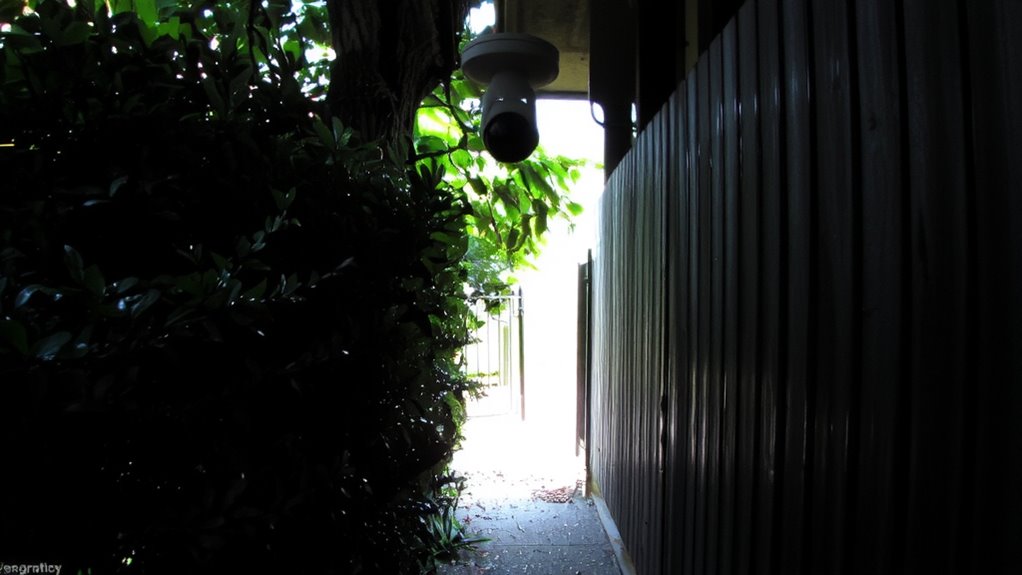
Where do intruders most often gain unnoticed access to a yard? Usually through fence gaps and areas lacking overhead coverage. These blind spots give cover from prying eyes and security cameras. You should walk your property line and look for loose boards, broken latches, or low sections where someone could slip through. Even small openings matter-animals and children aren’t the only ones who exploit them. Overhead coverage, like tree canopies or porch overhangs, can also hide movement from motion lights and surveillance. Trim back dense foliage and check if your camera angles miss shadowed zones. Consider installing taller fencing or adding pickets to close gaps. Metal or reinforced wood tends to hold up better over time. Inspecting these areas quarterly helps maintain consistent security. It’s a low-cost step with high impact, especially when paired with smart camera placement. Top outdoor models offer weather-resistant design for reliable performance in harsh conditions.
Aim Lights Where Intruders Won’t Expect Them
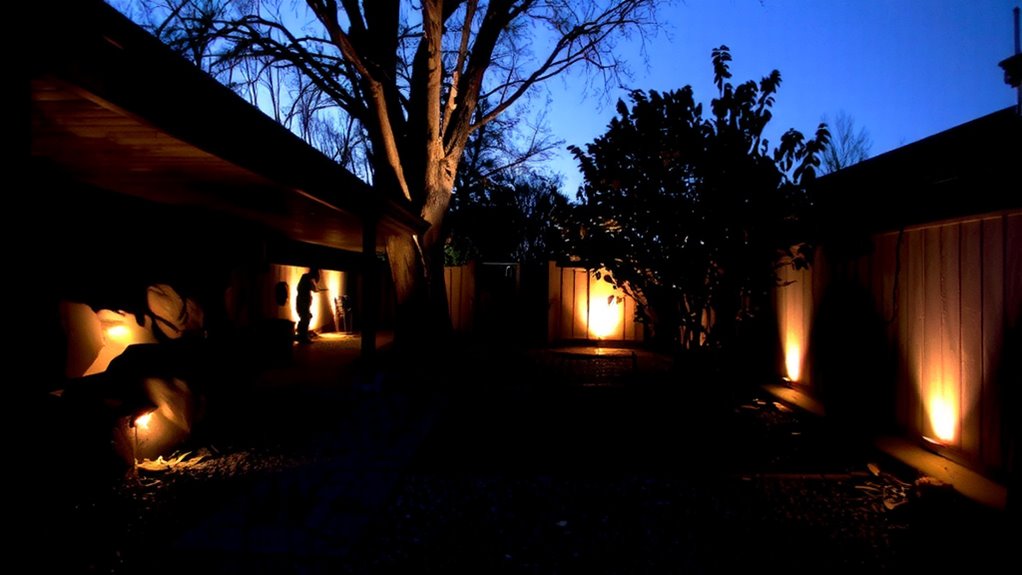
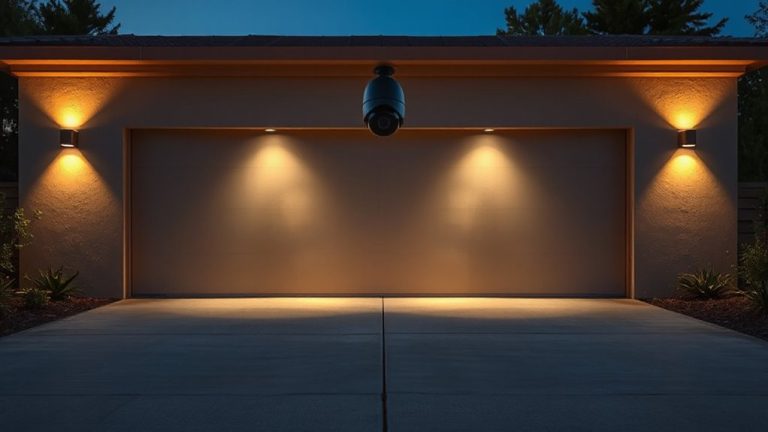
Why would an intruder linger in a well-lit doorway when they can slip through a dim alley beside the garage? You need to aim lights where they’ll be most effective-away from obvious spots and into escape routes criminals might use. Use glare control to keep lights bright but not blinding, so you preserve night vision and avoid drawing attention to the fixture itself. Position lights to cast strategic shadows in corners and along fences, making hidden movement harder. Motion sensors combined with angled fixtures increase surprise and deter loitering. Don’t flood every space-overlighting creates predictability. Instead, balance illumination and darkness deliberately. LED fixtures with adjustable brackets let you fine-tune coverage. Proper placement, around 6–8 feet high, improves effectiveness. Expect to spend $30–$60 per quality fixture, but it’s a proven way to disrupt intrusion patterns. For reliable performance, consider installing one of the best wireless motion sensor lights designed for outdoor security.
Cover Every Corner With Outdoor Security Cameras
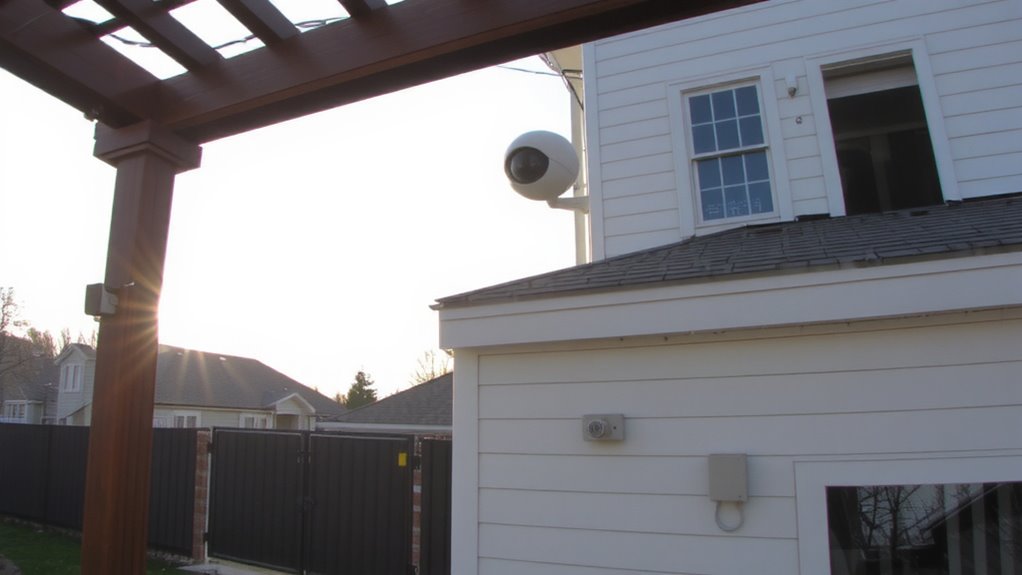
How confident are you that every angle of your property is watching back? To truly secure your outdoor areas, you need surveillance that doesn’t quit. Install cameras with weatherproof housing so they withstand rain, snow, and extreme temperatures without damage. Position them to cover blind spots like side gates, back doors, and dark corners. Choose models with night vision enhancement to capture clear footage after dark-most effective ones reach up to 100 feet. Opt for wide-angle lenses to reduce the number of cameras needed. While higher-resolution cameras cost more, they offer better identification quality. Check local crime data to prioritize high-risk zones. Avoid pointing lenses at neighbors’ windows to respect privacy. With proper placement and durable, functional hardware, your system becomes a reliable layer of prevention. For optimal performance, consider best security cameras that combine weather resistance, high resolution, and smart detection features.
Link Motion Alarms to Loud Noises and Phone Alerts
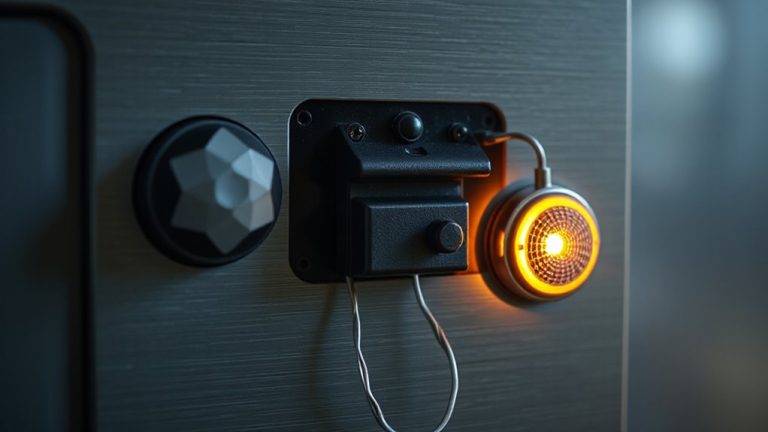
Ever wonder what happens the moment motion is detected near your shed or driveway? Linking motion alarms to loud noises and phone alerts guarantees you’re notified instantly. When motion sensors activate, built-in sound sensors can trigger ear-pitched alarms to deter intruders, while you get a real-time alert on your phone. With alert customization, you choose how and when you’re notified-whether through push notifications, texts, or emails-reducing false alarms from pets or passing cars. Systems vary in price from $50 for standalone alarms to $200+ for smart setups with app control. Most wireless models are easy to install, though battery life ranges from 6–12 months. For maximum effectiveness, place sensors at entry points and test monthly. This dual-response approach-audible deterrence and mobile alerts-adds urgency and convenience, giving you timely data to act.
Lock Gates and Doors With Tamper-Proof Hardware
You’ve already set up motion alarms to alert you the moment something moves near your property, but securing access points themselves is the next line of defense. Reinforcing gates and doors with tamper-proof hardware deters break-ins by making forced entry much harder. Gate reinforcement adds structural strength, while door sensors trigger alerts if opened unexpectedly. Choose locks with anti-drill plates and shielded strike plates to resist common bypass methods. Below are common hardware options:
| Hardware Type | Pros | Cons |
|---|---|---|
| Deadbolts with anti-drill plates | High resistance to tampering | Requires proper door frame installation |
| Electromagnetic locks | Works with access control systems | Needs continuous power |
| Reinforced strike plates | Improves door sensor effectiveness | May need longer screws for framing |
Combine gate reinforcement and door sensors with your alarm system for layered protection. Invest in quality-budget models often fail under stress.
Trim Shrubs So No One Can Hide
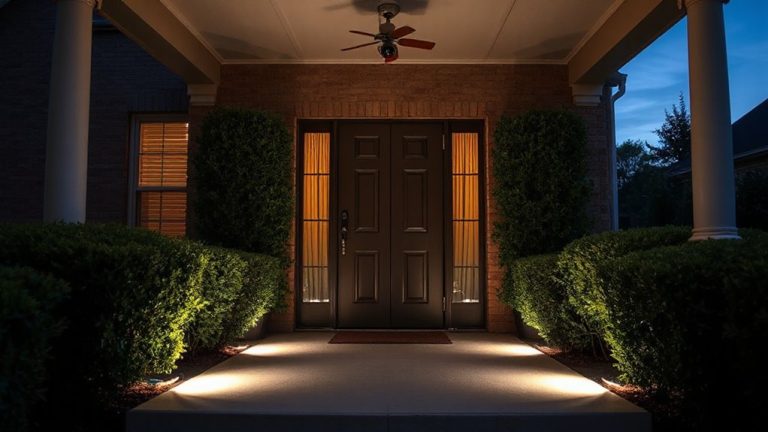
While overgrown shrubs may add curb appeal, they can also create hidden spots for intruders to approach undetected, so trimming them is a simple but effective layer of outdoor security. You should maintain regular landscape maintenance to prevent dense foliage near doors, windows, and pathways. Aim for visibility improvement by keeping shrubs trimmed to under 3 feet high and spacing them at least 3 feet from walls. This reduces cover and makes suspicious activity easier to spot. Well-trimmed plants also support the effectiveness of lighting and camera coverage. You’ll want to prune regularly-every few months, depending on growth rate. Though consistent upkeep requires effort, the payoff in security is worth it. Good landscape maintenance isn’t just about looks; it’s a practical part of protecting your home. With clearer sightlines, you minimize blind spots and make your property less inviting to intruders.
Get Instant Phone Alerts From Your Outdoor Security System
If your outdoor security system can’t notify you the moment something unusual happens, you’re relying too much on chance. Real time notifications guarantee you’re alerted instantly when motion is detected or a camera senses activity. These alerts appear directly on your phone, letting you respond quickly-whether you’re at home or away. Pairing this with remote monitoring means you can view live footage, check recordings, and even talk through built-in speakers using an app. Most modern systems offer customizable alert settings, so you’re not overwhelmed by false alarms from animals or passing cars. Look for models with encrypted data and two-factor authentication for better security. While monthly subscription plans often enable full features, some brands offer local storage and free basic alerts. Setup is usually straightforward, but consider Wi-Fi strength in your yard. With real time notifications and remote monitoring, you stay informed and in control-without needing to watch feeds constantly.
On a final note
You’ve covered the key steps to secure your outdoor space effectively. Find blind spots, position lights and cameras wisely, and use motion alarms with phone alerts. Trim shrubs, lock gates with tamper-proof hardware, and guarantee full yard visibility. These measures, backed by security studies, reduce break-in risks. Most systems offer affordable, DIY setups. Plan placement carefully, balance costs, and choose reliable, connected devices for consistent protection night and day.