Understanding Different Types of Sensors Integrated Into Modern Security Systems
You’ll find door and window sensors use magnetic circuits to detect openings, costing $15–$30 each and ideal for ground-level entry points. Motion sensors come in PIR and microwave types-PIR detects body heat with fewer false alarms, while microwave offers higher sensitivity but can interfere with nearby electronics. Glass break sensors listen for shatter sounds within 20 feet, using dual-spectrum tech to reduce mistakes. Environmental sensors alert you to smoke, water leaks, or gas, typically priced $25–$60 and best placed in basements, kitchens, or near furnaces. Home setups often mix door, motion, and smart lighting, while businesses may add access control. Wired systems are reliable; wireless ones install faster. Entry-level home kits start around $200, while commercial systems can exceed $1,000. Choosing the right mix depends on layout, budget, and risk level. Each sensor fills a specific role, so coverage matters more than quantity. A balanced system combines detection types for full protection. You’ll see how placement and sensor synergy boost effectiveness in any secure setup.
Notable Insights
- Door and window sensors use magnetic circuits to detect unauthorized openings and are ideal for perimeter security on ground-level entries.
- Motion sensors include passive infrared (PIR) and microwave types, with PIR detecting body heat and microwave using radio waves for movement detection.
- Glass break sensors identify shattering sounds and vibrations using dual-spectrum acoustic and frequency analysis to reduce false alarms.
- Environmental sensors monitor for fire, flooding, and gas leaks, providing early warnings in high-risk areas like kitchens and basements.
- Home systems focus on door/window and motion sensors, while businesses often add access control and prioritize scalable, reliable wired or wireless setups.
Door and Window Security Sensors: The First Line of Defense
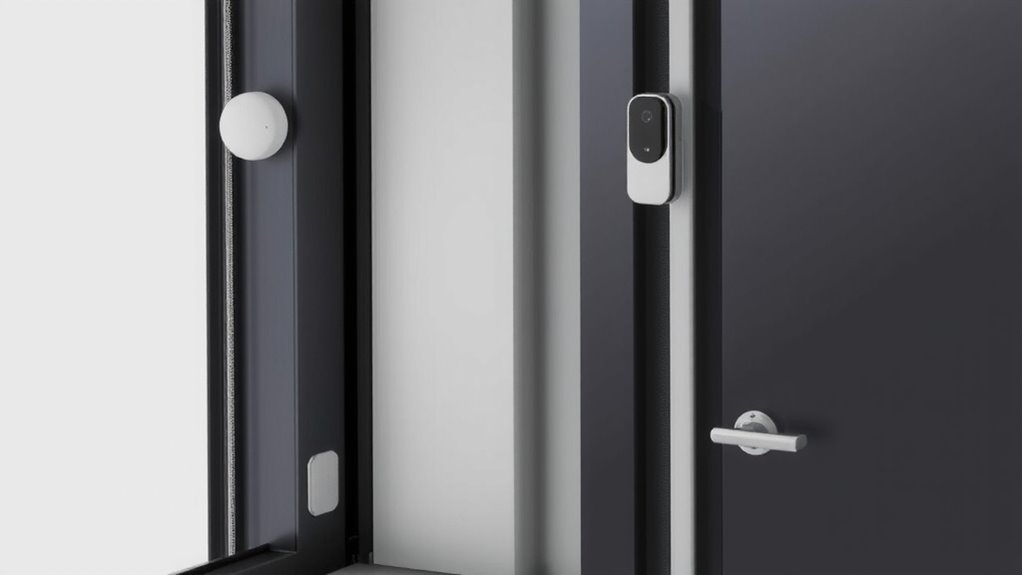
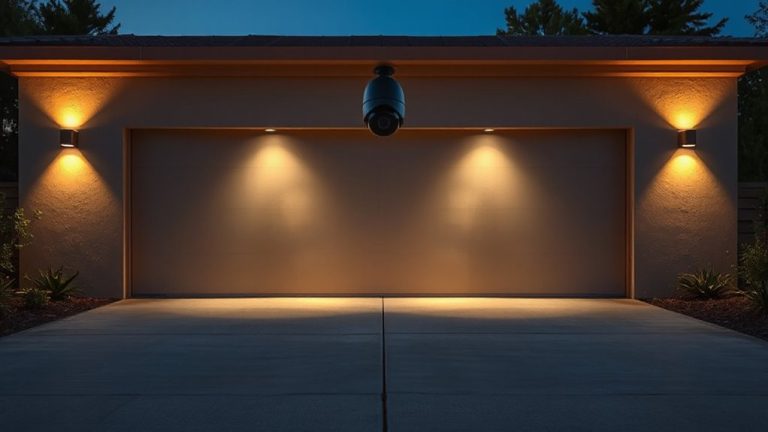
While you might overlook them at first glance, door and window sensors are a foundational part of most home security systems, serving as the first alert when an intrusion occurs. You’ll typically install one sensor on the door jamb and another on the moving part of the door or window, creating a magnetic circuit that breaks when opened. These sensors work just as well on window tracks, detecting even slight shifts. Most models are wireless, easy to install, and cost between $15 and $30 each. They’re reliable, with low false alarm rates compared to motion detectors. A key advantage is their predictability-since they only trigger when a door or window opens, you’ll know exactly where to check. For best coverage, place them on all ground-level and accessible entry points. Though they don’t monitor room activity, they’re essential for perimeter defense and work well as part of a layered system. Best garage door alarm sensors offer enhanced protection for one of the most vulnerable access points in a home.
Motion Sensors: Infrared vs. Microwave Intruder Detection
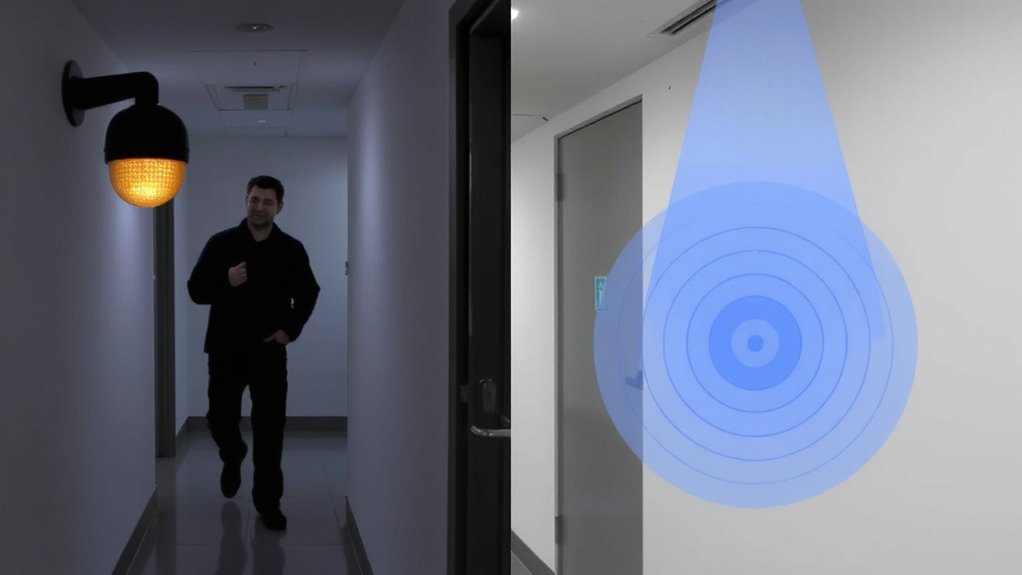
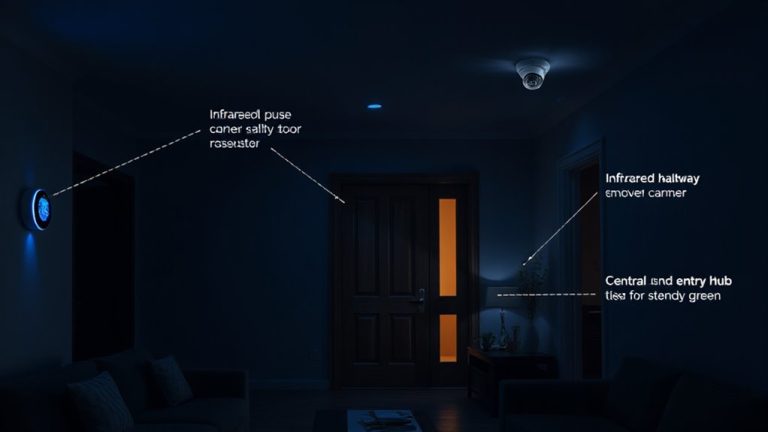
A motion sensor is a key component in modern security systems, detecting movement inside or around your home when doors and windows are breached. You have two main options: infrared and microwave sensors. Passive infrared (PIR) sensors detect heat changes from body warmth, making them energy-efficient and reliable for most homes. Microwave sensors use active detection, sending out radio waves that bounce off objects. While more sensitive, they’re prone to signal interference from metal objects or appliances. Best Motion Sensors for Home Assistant offer compatibility with smart home setups for enhanced automation and monitoring. Here’s a quick comparison:
| Feature | Infrared Sensor | Microwave Sensor |
|---|---|---|
| Detection Method | Heat-based (passive) | Radio waves (active detection) |
| Signal Interference Risk | Low | Moderate to high |
Infrared models cost less and avoid false alarms in stable environments. Microwave types cover larger areas but may require careful placement. Choose based on room layout, budget, and sensitivity needs.
Glass Break Sensors: How They Detect Window Smashes
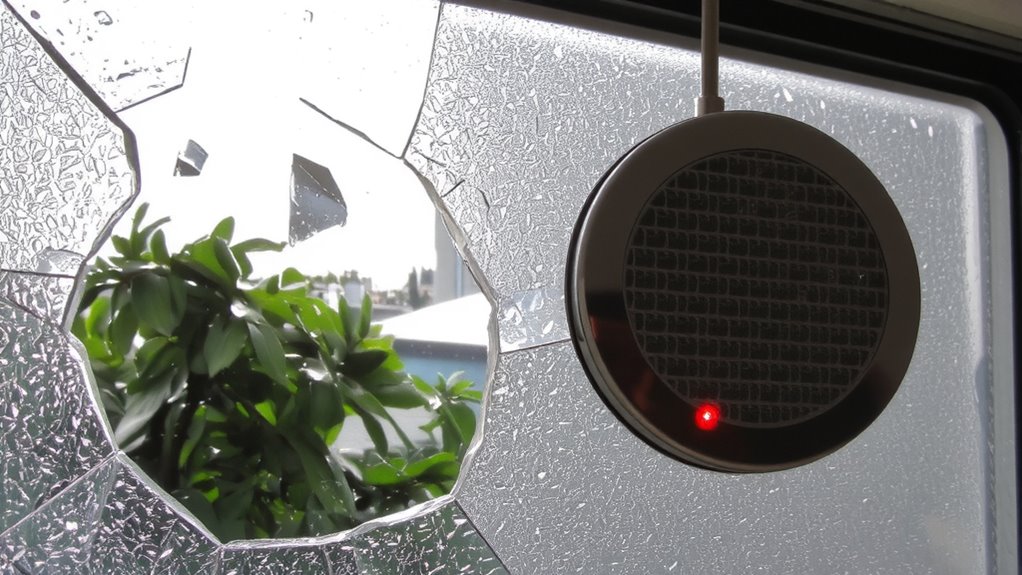
You’ve already secured motion coverage inside and around your home, but what protects you the moment a window is shattered? Glass break sensors detect that exact threat using acoustic analysis and frequency recognition. These devices listen for the unique sound patterns of breaking glass, filtering out everyday noises like clinking dishes or slamming doors. When you install a glass break sensor, it continuously monitors for high-pitched shatters and low-frequency cracks, cross-referencing both to confirm a real threat. That dual-spectrum frequency recognition reduces false alarms. Most models cover up to 20 feet and work best within line of sight of windows. They’re easy to install, often wireless, and integrate seamlessly with most security systems. While not a replacement for contact sensors, they add a vital early-warning layer. Expect to pay $25–$50 per unit. For full protection, place one near each vulnerable window.
Environmental Security Sensors: Fire, Flood, and Gas Leak Alerts
If your home is protected against intruders but not environmental threats, you’re overlooking risks that can be just as dangerous-fires, floods, and gas leaks often strike without warning and cause severe damage before they’re noticed. Environmental security sensors help detect these hazards early. Smoke detection sensors identify rising heat or particles from fires, sending instant alerts so you can act quickly. Similarly, water monitoring sensors placed near basements or appliances detect moisture before small leaks become big problems. Gas sensors sense carbon monoxide or natural gas buildup, reducing health risks. Most systems integrate with your network, allowing remote alerts via smartphone. Units typically cost $25–$60 each and are easy to install. For best protection, place sensors in high-risk areas like kitchens, bathrooms, and near furnaces. Regular testing maintains reliability. These devices aren’t foolproof, but they enhance safety markedly when used consistently.
Pick the Right Security Sensors for Home or Business
What kind of property are you securing-your home or a business-and how do your needs differ? For homes, focus on motion sensors, smart lighting, and door/window sensors to deter intruders and alert you quickly. Businesses often need more robust setups, including access control systems that restrict entry to authorized personnel and provide logs for accountability. Smart lighting works well in both settings, automatically turning on when motion is detected, making properties appear occupied. Consider how often spaces are used and who should enter. Homes benefit from simplicity and automation, while businesses need scalability and monitoring. Wired systems offer reliability; wireless provides easier installation. Budget accordingly-entry-level home kits start around $200, while business-grade access control can exceed $1,000. Plan sensor placement carefully to cover all entry points and avoid false alarms.
On a final note
You now know the key sensors in modern security systems and how they protect homes or businesses. Door and window sensors stop break-ins early, motion detectors spot movement using infrared or microwave tech, glass break sensors hear shattering glass, and environmental sensors alert you to fires, floods, or gas leaks. Each has pros, cons, and costs to take into account. Combine them wisely based on your space and needs for stronger, smarter protection.