The Role of Smart Home Devices in Enhancing Your Overall Security Ecosystem
Smart home devices boost your security by linking cameras, sensors, and alarms over your network with encryption like AES or TLS to protect data. They use motion detection, real-time alerts, and automation-like turning on lights-to deter intruders. Devices work best when compatible, using the same protocol or ecosystem. For stronger protection, enable two-factor authentication and network segmentation. Choosing certified, pet-immune sensors and cloud storage improves reliability-there’s more to optimize your setup effectively.
Notable Insights
- Interconnected smart devices use encryption and network isolation to protect data and contain potential breaches.
- Motion sensors and door cameras detect intrusions early, especially when placed at key entry points.
- Real-time alerts with audio verification enable immediate threat assessment and faster response to suspicious activity.
- Automated lighting and schedules deter break-ins by creating the appearance of occupancy in real time.
- Compatible devices using unified protocols ensure seamless integration, reducing security gaps and system failures.
How Smart Home Security Works
While smart home security systems rely on interconnected devices to monitor and protect your property, understanding how they work helps you make informed choices. These systems use your home network to communicate, so data protection is essential. Device encryption guarantees that information from cameras, sensors, and alarms stays private as it travels to your phone or the cloud. Without it, hackers could intercept footage or disable your system. Network isolation adds another layer by separating security devices from other smart gadgets, like TVs or speakers, reducing the risk of a single breach spreading. This means if a less secure device is compromised, your cameras and locks stay protected. Look for systems that support strong encryption protocols like TLS or AES. Also, confirm your router allows network segmentation. These features may cost more upfront but improve long-term safety. Proper setup and updates are key. Top-rated smart home devices often include built-in encryption and support network segmentation for enhanced security.
Key Smart Home Security Devices
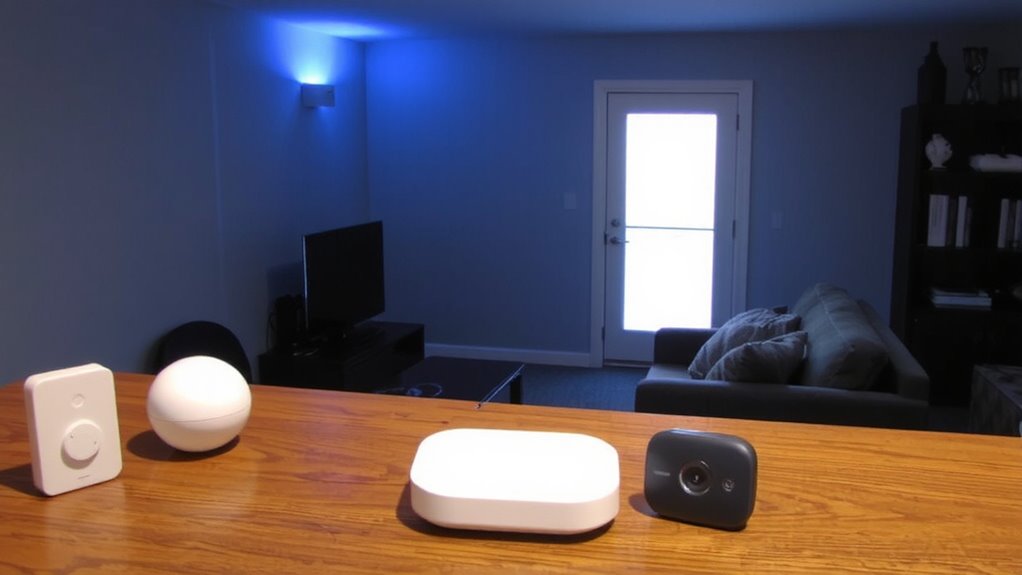
You’ve seen how smart home security systems use encryption and network design to protect your data and devices, and now it’s time to look at the tools that make it all happen. Motion sensors detect movement indoors and outdoors, triggering alerts when activity occurs, which helps identify potential intrusions early. These sensors work best when placed in hallways, near windows, and in dark corners. Door cameras, meanwhile, capture video of anyone approaching your entryway, letting you see and sometimes speak to visitors remotely. Most models include night vision and cloud storage, though subscription fees may apply. While motion sensors can occasionally trigger false alarms from pets, newer models offer pet immunity up to 40 pounds. Door cameras provide visual confirmation but require proper mounting and lighting for peak clarity. Both devices integrate with security hubs and support two-factor authentication, ensuring reliable monitoring and stronger home protection when used together. Top models like those in the best doorbell cameras guide offer advanced features such as facial recognition and extended field-of-view.
Why Real-Time Alerts Stop Threats Faster
Because every second counts during a break-in, real-time alerts deliver immediate notifications the moment a sensor detects unusual activity, giving you the chance to respond before a threat escalates. With motion detection, your system identifies movement in restricted areas, like hallways or back doors, and alerts you instantly-whether you’re downstairs or out of town. Many systems now include audio verification, so you can hear real-time sounds through connected cameras to assess if an alert is a pet, a family member, or a real threat. This reduces false alarms and speeds up accurate decisions. Paired with a monitoring service, alerts get professional eyes fast. Look for systems offering low-latency notifications and encrypted data transfer. Most cost $20–$40 monthly, plus equipment fees, but can save time, property, and stress.
How Automation Blocks Break-Ins Before They Happen
Smart home automation doesn’t just respond to threats-it helps stop them before they start. When you use motion sensors, they detect unexpected movement around your home, especially at odd hours. These sensors can trigger automated lighting instantly, making it look like someone’s awake and alert inside. Criminals are far less likely to attempt a break-in when lights turn on automatically, even if you’re not home. Automated lighting, paired with motion sensors, creates the impression of occupancy and activity, which is a strong deterrent. Studies show homes that appear occupied face fewer intrusion attempts. You don’t need expensive setups-basic systems start under $150 and integrate easily. Set schedules or randomize light patterns for realism. Just make certain sensors cover entry points like doors and driveways. This proactive layer boosts security without relying solely on alarms after a breach. For optimal protection, consider installing the best motion detectors for every home to ensure reliable and comprehensive coverage.
Choose Compatible Devices to Avoid Gaps
While setting up individual smart devices might seem convenient, choosing ones that work together seamlessly is key to preventing security gaps. You need strong device compatibility to guarantee each piece of your system communicates effectively. Without it, sensors might not trigger alarms or cameras could miss events. System integration allows controls, alerts, and data to flow smoothly across devices, whether it’s locks, lights, or motion detectors. Look for products using the same protocol, like Zigbee or Z-Wave, or within the same brand ecosystem. Check for certification labels, like Works with Alexa or Apple HomeKit, to simplify selection. Poor integration risks delays or failures when seconds count. Though some platforms cost more upfront, they reduce long-term issues. Always verify specs before buying to confirm compatibility. Planning around integration improves reliability and cuts repair or replacement costs later.
Lock Down Your Smart Security System
Even if your smart devices are compatible, failing to secure the system itself leaves your home vulnerable to breaches. You must enable device encryption so data sent between devices and apps stays protected. Without it, hackers could intercept video feeds or disarm your alarms. Always use strong user authentication, like two-factor verification, to prevent unauthorized access. It’s not enough to rely on a simple password-many breaches happen due to weak login controls. Check that your hub and cameras support end-to-end encryption and update firmware regularly. Limit user access to only those who need it, and review permissions monthly. Systems with automatic security patches reduce long-term risks. While encrypted devices may cost slightly more, the added protection is worth it. A well-secured system guarantees your smart home stays safe, private, and reliable over time.
On a final note
You strengthen your home security by integrating smart devices that work together. Real-time alerts and automation help stop threats early, while compatible systems close gaps. Lock down networks with strong passwords and updates. Choose devices with proven response times and clear privacy policies. Though initial costs range $200–$600, the investment improves safety. Plan placement and connectivity carefully for best results.