Understanding Biometric Authentication in Modern Home Security Solutions
You’re already using biometrics when your fingerprint or face opens your front door. These systems scan unique traits to verify identity, with models ranging from $100 to $400 depending on features like liveness detection or dual authentication. They cut risks of lost keys or hacked codes, work faster than traditional methods, and often integrate with smart home systems. Top-tier models encrypt data locally and meet ISO or FIDO standards to protect privacy. Cheaper units may have higher false acceptance rates, so look for adjustable sensitivity and regular firmware updates-security improves when you know what to prioritize.
Notable Insights
- Biometric home security uses unique biological traits like fingerprints or facial features to verify identity and control access.
- Facial recognition systems require liveness detection to prevent spoofing from photos or masks.
- Fingerprint and facial recognition locks offer keyless entry, with prices ranging from $150 to $400 per door.
- Local encryption of biometric data enhances privacy and reduces risks of theft during data breaches.
- Integration with smart home platforms enables remote access, automation, and real-time security alerts via app control.
What Is Biometric Home Security and How Does It Work?
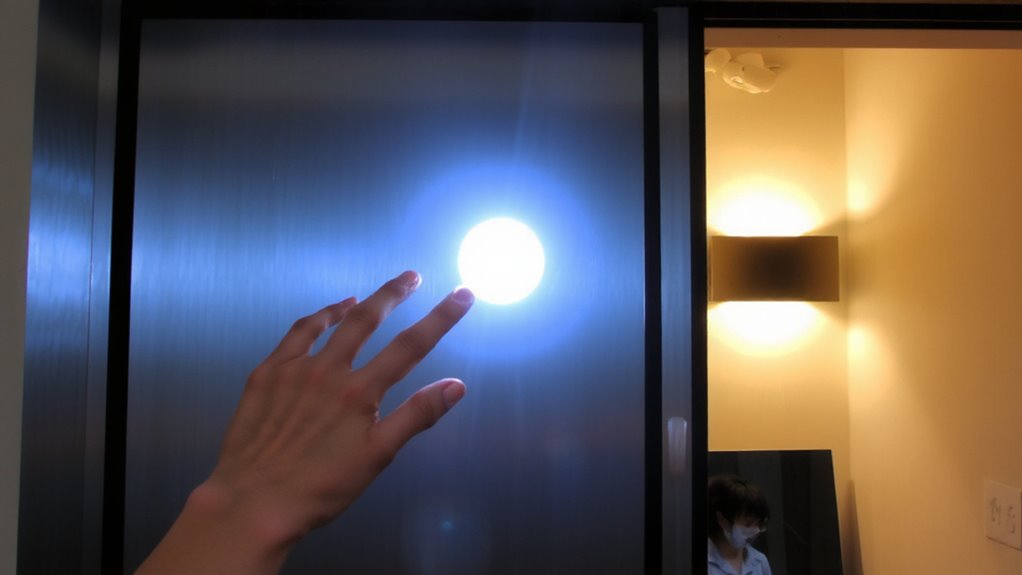
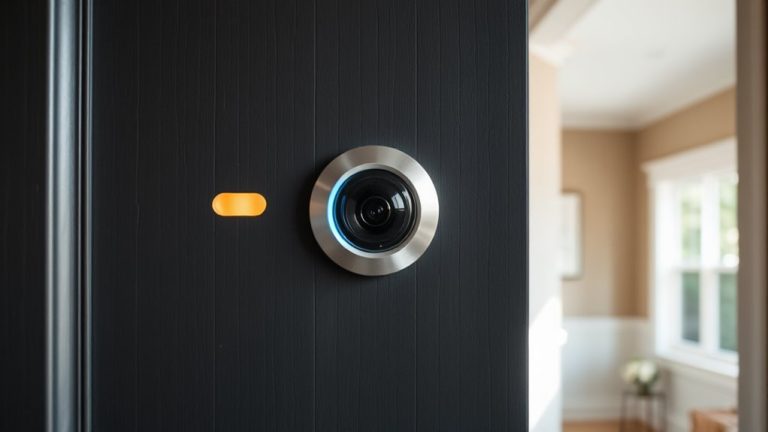
Security starts at your front door, and biometric home security offers a modern way to protect it. You use unique biological traits, like fingerprints or facial features, to verify identity quickly. Facial recognition scans your face using infrared sensors or cameras, matching it to stored data for access. While convenient, it isn’t perfect-some systems can be tricked by photos or masks, a risk known as biometric spoofing. To reduce this, look for models with liveness detection that checks for eye movement or blood flow. These systems require secure encryption to prevent data theft. Setup costs range from $100 to $300 per door, with no monthly fees. Installation is usually DIY, but professional help guarantees accuracy. Consider lighting conditions and user diversity when choosing a device, as performance varies.
Types of Biometric Locks for Residential Use
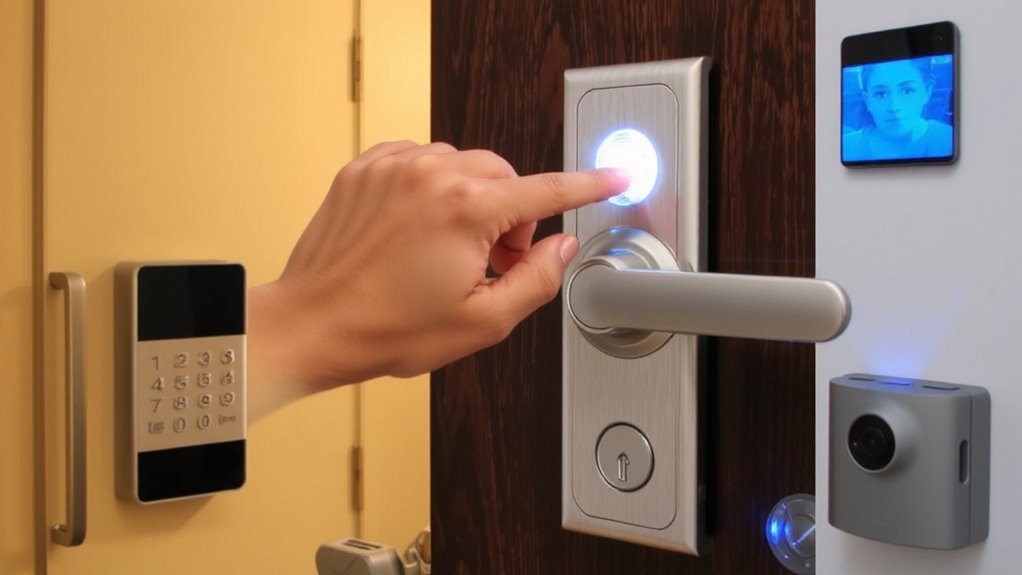
Biometric locks come in several types, each using a different part of your body to grant access. Fingerprint scanning is one of the most common and affordable options, reading the unique patterns on your fingertips. It’s reliable for most users, though it can struggle with very dry or wet fingers. Facial recognition uses cameras to map your facial features and verify identity, offering convenient hands-free access. It tends to be more expensive but performs well in good lighting. Some models now combine both fingerprint scanning and facial recognition for added security. Entry accuracy depends on sensor quality, so choose systems with low false acceptance rates. Installation is typically straightforward on standard doors. Expect to spend $150–$400 per lock, depending on features. Always check compatibility with your door type and power source before buying. For firearm storage, best biometric trigger locks offer quick access and high security using fingerprint recognition.
Why Biometric Entry Beats Keys and Keypads?
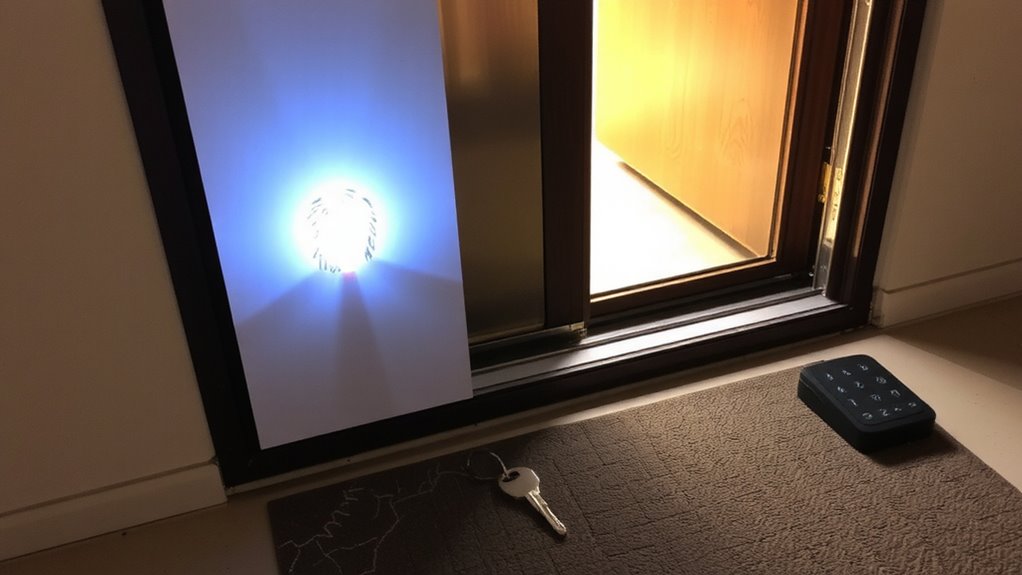
While traditional keys and keypads have long been standard for home access, they come with well-documented drawbacks that biometric systems are designed to overcome. You no longer have to worry about lost keys or forgotten codes, making biometric entry a stronger choice in the convenience vs. security balance. Keys can be copied, and keypads are vulnerable to code sharing or shoulder surfing, but your fingerprint or facial scan is unique to you. Though user adoption challenges exist-like initial setup or concerns over false rejections-modern systems have improved accuracy and ease of use. They’re especially helpful for families with kids or elderly members who might struggle with key management. Setup typically takes minutes, and most units cost between $100 and $300. With faster access and fewer vulnerabilities, biometrics offer a practical upgrade for everyday home security. Some top models even integrate seamlessly with best smart locks for Home Assistant.
Privacy and Accuracy: Biometric Lock Risks Explained
What happens if your fingerprint data gets into the wrong hands? If a biometric system stores data improperly, hackers could exploit it in data breaches, and unlike passwords, you can’t change your fingerprint. That’s why top-tier locks encrypt your biometrics locally instead of on remote servers. Still, false positives remain a concern-some systems might let an unauthorized user in because their fingerprint closely matches yours. Studies show cheaper models have higher false positive rates, sometimes as high as 1 in 100 attempts. To reduce risk, choose a lock with adjustable sensitivity settings and liveness detection, which checks for real skin. Look for models certified by standards like FIDO or ISO/IEC 19794. While biometric locks offer convenience, balancing privacy and accuracy means investing in trusted hardware and understanding its limits. Top Picks & Buying Guide can help identify models that meet these security and performance criteria.
How Biometric Door Locks Work With Smart Homes
When you integrate a biometric door lock into your smart home system, it connects via Wi-Fi, Bluetooth, or a hub-compatible protocol like Z-Wave or Zigbee, letting you manage access remotely through a smartphone app. You can receive real-time alerts, grant temporary entry, and sync the lock with other devices for automated routines. Some systems support voice recognition, allowing hands-free locking or access checks using smart speakers. However, integration challenges may arise with older hubs or mixed-brand setups, potentially limiting functionality. Verify your lock uses a reliable protocol and check compatibility before buying. While Wi-Fi enables cloud access, it can increase vulnerability if not properly secured. Bluetooth models are simpler but may have shorter range. For best results, choose a lock with strong encryption and regular firmware updates. Planning for power outages and connectivity issues is also essential.
Choosing the Right Biometric Lock for Your Door
You’ve seen how biometric door locks work with smart home systems, connecting through Wi-Fi, Bluetooth, or protocols like Z-Wave to offer remote access and automation. Now, choosing the right one depends on two key factors: installation complexity and aesthetic design. Some models fit standard door prep, making installation simple, while others require professional help due to wiring or unusual measurements-check specs before buying. Design-wise, pick a finish and shape that matches your door and home style. Sleek metallic finishes often look modern, but brushed nickel or matte black may better suit traditional homes. Also, make certain the scanner is easy to reach and won’t be blocked by door frames. Balance function and form. Locks with minimal installation complexity and strong aesthetic design improve both usability and curb appeal. Always review manufacturer guidelines and user feedback to confirm compatibility and ease of setup.
Secure Biometric Access: Avoiding Failures and Hacks
How secure is your fingerprint really? Biometric access offers convenience, but it’s not foolproof. Sensor spoofing, where fake fingerprints trick scanners, is a real risk. Always choose systems with liveness detection to reduce this threat. Your biometric data must be protected with strong data encryption-both in transit and at rest-so hackers can’t steal or misuse it. Look for devices certified by standards like FIDO or ISO 30107.
| Risk | Prevention |
|---|---|
| Sensor spoofing | Use liveness detection |
| Data theft | Enable data encryption |
| False rejects | Clean sensor regularly |
| System failure | Backup access method |
| Outdated firmware | Regular updates |
Opt for models with local storage instead of cloud-based data. Check warranty and update support before buying. These steps keep your home secure and your access reliable.
On a final note
You can trust biometric locks to secure your home, but choose wisely. They offer fast, keyless access using fingerprints or facial scans, often working well in smart home systems. Still, dirty sensors or false rejections may happen. Look for models with encryption, backup entry, and at least a 95% accuracy rate. Expect to pay $200–$400. Pair them with strong doors and updated software for best results.