Choosing Between Floodlights and Pathway Lighting for Optimal Home Perimeter Defense
You should use both floodlights and pathway lights for best home perimeter defense. Floodlights (700–1300 lumens, 4000–5000K) deter intruders with bright, wide coverage, especially when mounted high with motion sensors. Pathway lights (100–300 lumens, 2700–3000K) guide safe movement with low, glare-free illumination. Combine shielded fixtures, strategic placement near entry points, and smart controls to boost security and efficiency. A layered approach maximizes visibility while minimizing risks. More details on enhancing each element follow.
Notable Insights
- Use floodlights with 700–1300 lumens and 4000–5000K color temperature for high-visibility security in dark zones.
- Install pathway lights at 100–300 lumens and 2700K–3000K for safe, glare-free guidance along walkways and driveways.
- Place motion-sensor floodlights high on corners and entry points to deter intruders and reduce false triggers.
- Space pathway lights every 8–10 feet with directional shielding to eliminate dark spots without light pollution.
- Integrate smart controls to automate lighting schedules and link floodlights with security systems for real-time alerts.
Compare Floodlights and Pathway Lights
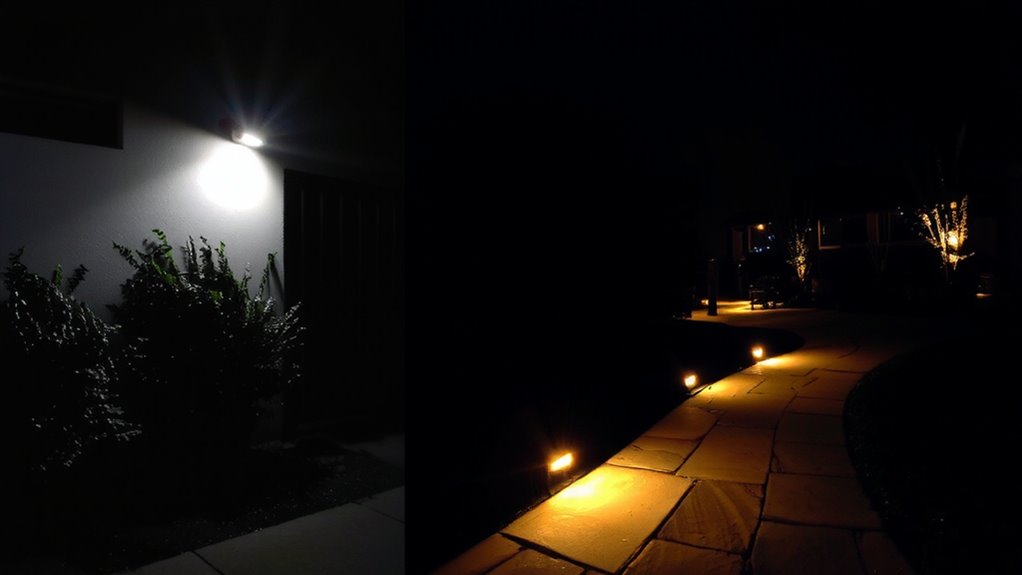
While both floodlights and pathway lights serve important roles in outdoor lighting, they differ markedly in purpose and performance. Floodlights deliver high light intensity, typically ranging from 700 to 1300 lumens, making them ideal for illuminating large areas. They often use a cooler color temperature around 5000K, which enhances visibility and alertness. In contrast, pathway lights offer lower light intensity, usually between 100 and 300 lumens, with warmer color temperatures near 3000K for a subtle, inviting glow. Floodlights use motion sensors and wide beam angles, while pathway lights focus on consistent, low-level illumination along walkways. Installation costs for floodlights are generally higher due to power and placement needs. Pathway lights require more units per foot, increasing overall pricing. Choose based on function-brightness and coverage versus guidance and aesthetics.
Choose the Right Outdoor Light for Your Security Needs
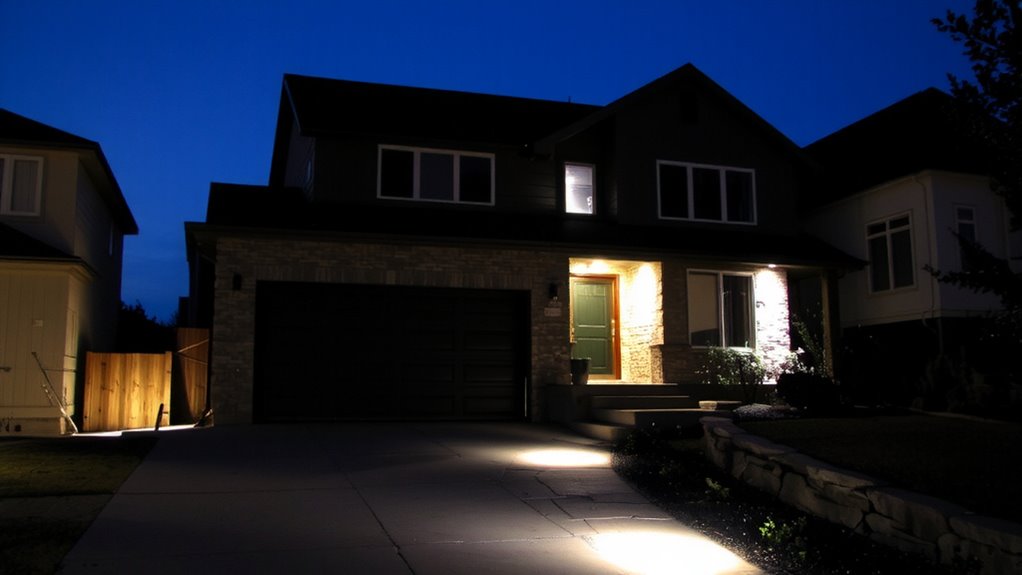
If you’re focused on protecting your property, floodlights are likely your best bet because they deliver bright, wide-reaching illumination that deters intruders. Their high-intensity beams cover large areas, making it harder for criminals to hide. For best security, choose a light color around 4000–5000K-this cool white hue enhances visibility and mimics daylight. Motion-sensor floodlights further boost effectiveness by activating only when needed, which improves energy efficiency. LEDs are ideal here; they use up to 75% less energy than incandescent bulbs and last years longer, reducing long-term costs. While pathway lights add ambiance and guide foot traffic, they don’t provide the same deterrent. Prioritize floodlights for vulnerable zones like entrances and dark corners, and make certain they’re positioned high to avoid tampering. Smart models with scheduling or app control add convenience, but even basic setups greatly strengthen security. For reliable options, consider some of the top-rated best outdoor motion sensor lights that combine durability, brightness, and advanced sensing technology.
Design Lighting Around Your Property Layout
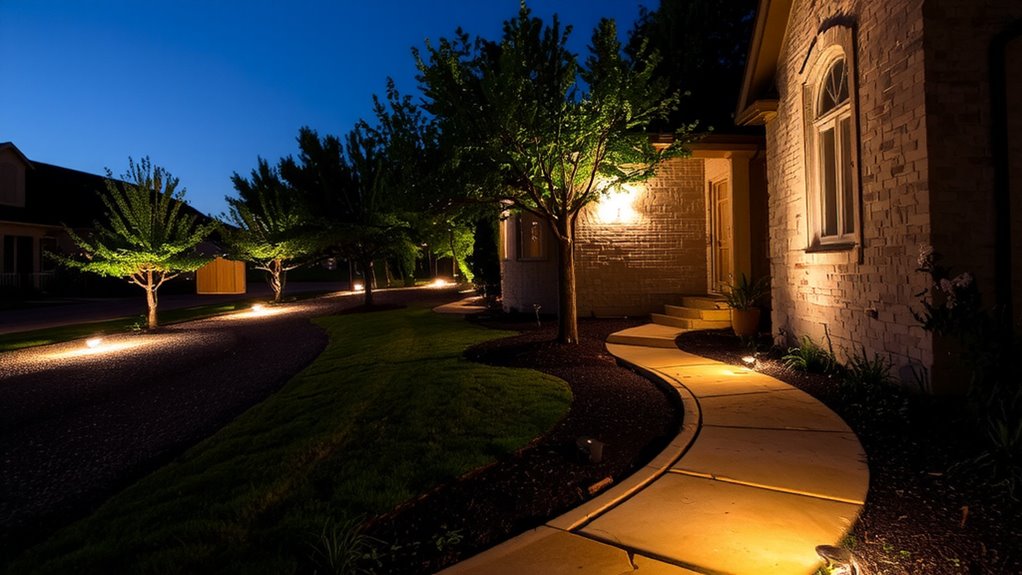
When planning your outdoor lighting, start by mapping out your property’s layout to identify key zones that need illumination, such as entry points, walkways, and dark corners. Proper light placement deters intruders and improves nighttime visibility. Match fixture style to both function and architecture-path lights for walkways, floods for broad coverage. Balance aesthetics and security by selecting coordinated designs.
| Zone | Fixture Style | Light Placement Tip |
|---|---|---|
| Front entrance | Wall sconce | Mount at eye level, facing outward |
| Side yard | Motion floodlight | Place high, angled downward |
| Driveway | Bollard or post light | Space every 8–10 feet |
| Back patio | Deck or recessed | Install near stairs and edges |
Strategic planning guarantees consistent coverage without dark spots. For areas requiring active threat detection, consider installing motion sensor flood lights to enhance responsiveness and coverage.
Avoid Glare With Smart Light Levels
Since excessive brightness can reduce visibility and create safety hazards, choosing the right light level matters just as much as fixture placement. You don’t need blinding light intensity-moderate, well-directed lighting works better for security. High-intensity lights often cause glare, which impairs night vision and creates dark shadows where intruders can hide. Instead, select fixtures with adjustable beam focus to direct light where it’s needed, like entry points and walkways. Shielded or cobra-headed fixtures help contain light downward, reducing spill and improving clarity. For pathway lighting, lower light intensity with tight beam focus guarantees safe footing without blinding visitors. Floodlights should use mid-range intensity with precise focus to illuminate zones without washing out surroundings. Opt for bulbs with 2700K to 3000K color temperature and proper lumens-typically 700–1300 for pathways, 1600–4000 for broader areas. Smart design beats brute brightness.
Add Motion and Smart Controls to Outdoor Lights
You’ve already chosen the right light levels and fixtures to minimize glare and improve visibility, but adding motion and smart controls takes your outdoor lighting further by making it responsive and efficient. Motion sensors turn lights on only when someone approaches, cutting energy waste and reducing light pollution. Look for models with adjustable sensitivity to avoid false triggers from pets or passing cars. Smart controls offer smart scheduling, so lights turn on or off at set times based on your routine. With remote monitoring, you can check or adjust lights from your phone, even when you’re away. Many systems integrate with home security apps and work with voice assistants. While setup costs range from $50–$150 per fixture, long-term savings on energy and enhanced security make it worthwhile. Choose reputable brands with strong warranties.
Place Outdoor Lights Where Intruders Hide
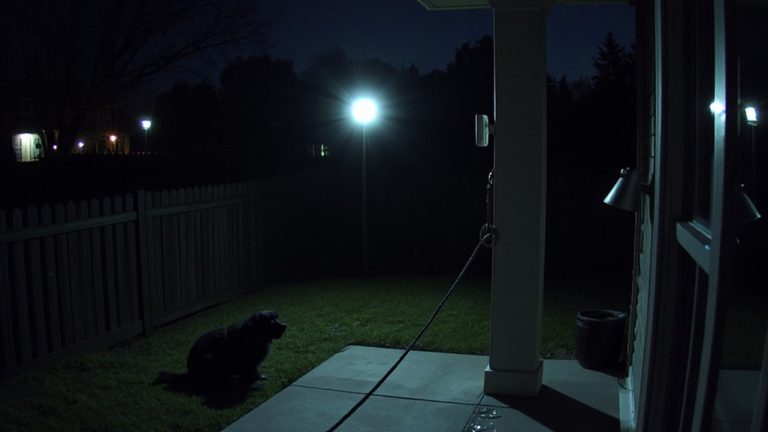
Where do burglars look first when scouting a property? They seek shadow zones and blind spots-areas obscured from street view or neighbors’ sightlines. These spots, like rear corners, side gates, or dense shrubbery, give intruders cover. You should place lights exactly there, not just along the front walk. Target entry points: basement windows, back doors, and garage sides. Illuminating shadow zones reduces concealment, while lighting blind spots increases detection chances. Use floodlights for wide, intense coverage in dark corners, and keep fixtures mounted at least eight feet high to prevent tampering. Avoid over-lighting, which can create glare and new shadows. Instead, aim for even, consistent brightness. Security isn’t about flooding every inch-it’s about strategic placement. Fix lights to eliminate hiding spots, making your home less inviting. This simple, data-backed move increases deterrence more than adding extra fixtures. A best outdoor security light provides both illumination and motion-sensing features to enhance perimeter defense.
Combine Flood and Pathway Lights for Full Coverage
While floodlights excel at deterring intruders with intense beams, and pathway lights guide movement safely across your yard, using both together creates a layered defense. You gain layered illumination that covers blind spots and improves visibility from multiple angles. Place floodlights at strategic zones like corners, entryways, and garage sides to activate when motion is detected. Install pathway lights along walkways, driveways, and garden edges to eliminate dark patches and assist safe nighttime navigation. Combining both types guarantees intruders have fewer places to hide while you maintain clear access. LED models save energy and last longer, though initial setup may cost $200–$500 depending on size and features. Use timers or smart controls to automate lighting. This approach balances security and functionality, offering reliable perimeter coverage without over-lighting.
On a final note
You should choose floodlights for deterring intruders with bright, wide coverage, especially near entry points. Pathway lights offer consistent guidance and subtle security along walkways. Use both for full perimeter defense. Motion sensors and smart controls cut energy use and increase responsiveness. Avoid glare by angling lights downward and selecting appropriate lumens. Plan placement around hiding spots and property layout. Proper lighting lowers risks without overspending.