Safety Briefing Checklist for New Tenants in Multifamily Buildings
You should create a customized safety briefing tailored to your building’s layout, occupancy, and hazards-generic briefings overlook critical risks. Highlight two emergency exits, unobstructed fire doors, and working smoke detectors. Map evacuation routes, utility shut-offs, and high-risk areas like laundry rooms. Use floor plans, videos, and QR codes to boost understanding. Train staff consistently and update the plan every six months-there’s more to get right than most realize.
Notable Insights
- Tailor safety briefings to reflect the building’s unique layout, occupancy type, and specific hazards.
- Clearly mark primary and secondary evacuation routes using floor plans and on-site signage.
- Require participation in fire drills and conduct them quarterly to improve emergency response times.
- Train staff to deliver consistent, engaging orientations using visuals, videos, and interactive methods.
- Provide multiple briefing formats-digital, print, and multimedia-to ensure accessibility and retention.
Stop Using Generic Safety Briefings

While one-size-fits-all safety briefings may seem efficient, they often fail to address the specific risks tenants actually face in your building. You need a plan tailored to your layout, occupancy, and hazards. Generic scripts might mention fire drills and emergency exits, but they don’t reflect your actual evacuation routes or assembly points. Custom briefings guarantee residents know exactly where to go and what to do. For example, high-rises require stairwell protocols, while garden apartments may have obscured exits. Fire drills conducted quarterly increase response speed by up to 40%, according to fire safety data. Clearly mark all emergency exits and update signage when layouts change. Avoid oversimplifying-include floor-specific instructions. Though customization takes more initial effort, it reduces confusion during real emergencies. You’ll also meet insurance and code requirements more effectively, lowering liability risks over time.
Start With These 5 Critical Safety Messages

Safety starts with clear, actionable information-especially in the first hours after move-in. You need to know where your emergency exits are-always locate the nearest two, in case one is blocked. Never prop open fire doors or block exit paths. You’re expected to participate in scheduled fire drills, so pay attention to alarm signals and evacuation procedures. These drills save lives by ensuring everyone knows how to respond quickly and calmly. Smoke detectors must stay unobstructed, and you should test yours monthly. Know your building’s policy on cooking safety, smoking, and space heaters-common causes of residential fires. In conclusion, keep your contact information updated with management so alerts reach you. These five messages-emergency exits, fire drills, detector maintenance, hazard rules, and communication-form the core of your safety routine. Follow them to stay protected.
Pinpoint Your Building’s Key Hazards and Layout
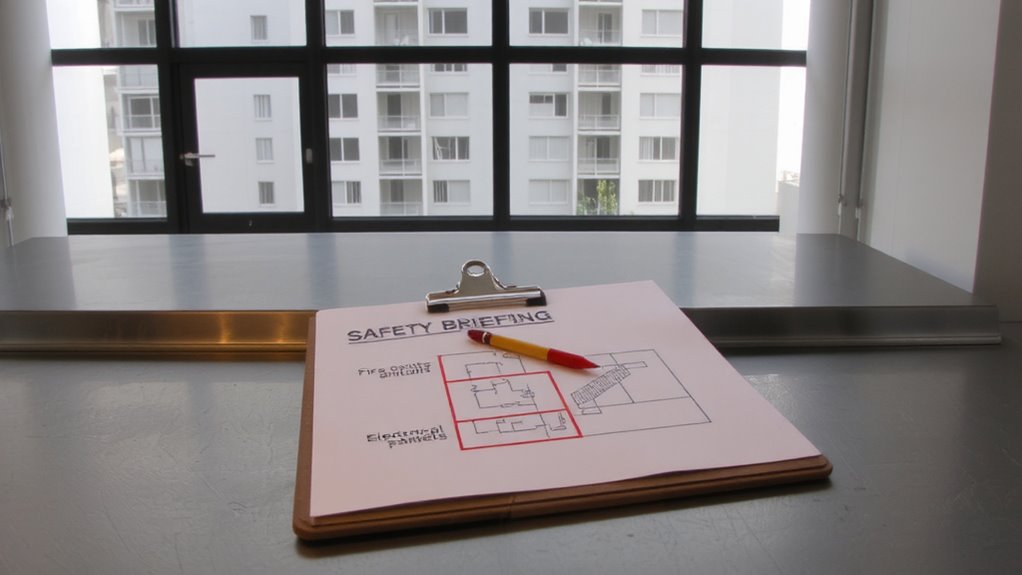
What do you need to know about your building’s layout to stay safe during an emergency? You should identify all fire exits and confirm they’re unobstructed and well-marked. Know the primary and secondary routes from your unit to the outside, and check that stairwells are secure and lighting works. Locate utility shut offs for gas, water, and electricity-they’re often in basements, utility rooms, or near meters. Knowing how to turn these off can prevent fires, flooding, or electrocution. Walk through the building to map hazards like shared laundry areas, hallways with poor lighting, or zones prone to slips and falls. Take note of where fire extinguishers and alarms are placed. Understanding your building’s layout helps you react quickly and safely. Make a mental plan now-don’t wait for an emergency to figure it out.
Create a Resident-Friendly Safety Briefing (With Visuals and Tech)
How do you turn a routine safety briefing into something tenants will actually read and use? Make it visual, mobile-friendly, and simple. Use floor plans with color-coded exits and photos of fire extinguishers or smoke alarms to boost emergency preparedness. People remember images better than text, so include diagrams showing evacuation routes and utility shut-offs. Offer a digital version via email or app-many prefer reading on phones, and it reduces printing costs. Pair this with short videos on fire prevention basics, like not overloading outlets or maintaining stoves. QR codes in common areas can link directly to your briefing. Test readability with a sample audience and revise for clarity. While print copies guarantee access for all, digital tools improve engagement. This mix supports different learning styles, increases retention, and strengthens overall safety compliance with minimal effort.
Train Staff to Deliver Consistent Safety Orientations
While it’s easy to assume tenants will stay safe just because information is provided, consistent staff training guarantees everyone receives the same clear, accurate safety guidance from day one. You must train your team to deliver key details like emergency procedures uniformly, so no resident misses critical steps during a crisis. Staff accountability secures each orientation covers the same verified content, reducing confusion and liability. Use scripted outlines and role-playing to maintain consistency, and assess understanding with brief quizzes. Assign a lead trainer to oversee delivery and correct deviations quickly. When every team member explains fire exits, alarm systems, and utility shut-offs the same way, residents gain confidence and preparedness. Regular training sessions reinforce protocols and keep staff focused. This structured approach strengthens compliance, improves response readiness, and supports a professional standard across all interactions-making safety communication reliable, repeatable, and effective for everyone involved.
Review and Update Your Safety Briefing Every 6 Months
You should review and update your safety briefing every six months to guarantee it stays aligned with current regulations, building changes, and emergency response standards. This routine secures your emergency preparedness protocols remain effective and your fire prevention measures reflect the latest codes. Regular updates help identify new hazards and improve response efficiency.
| Focus Area | Action Item |
|---|---|
| Emergency exits | Confirm all paths are unobstructed |
| Smoke detectors | Test and schedule replacements if needed |
| Fire extinguishers | Inspect pressure and accessibility |
| Contact info | Update management and emergency numbers |
| Evacuation drills | Plan biannual practice sessions |
Neglecting updates may compromise safety and compliance. Make revisions based on resident feedback, incident reports, or infrastructure upgrades. A current briefing boosts tenant confidence and secures clear, actionable guidance during crises. Consistent review strengthens overall protection.
On a final note
You should stop using generic safety briefings because they don’t address your building’s real risks. Instead, focus on five key messages: fire safety, emergency exits, electrical hazards, elevator rules, and reporting procedures. Customize the briefing with clear visuals, simple language, and mobile access. Train staff to deliver it consistently. Review and update the briefing every six months to reflect changes and resident feedback. This approach improves understanding, guarantees compliance, and strengthens overall safety.