Utilizing Metadata From Video Footage for Enhanced Crime Prevention Strategies
Your security camera’s metadata-like timestamps, location, and device ID-helps police detect crime patterns and track suspects across cameras using AI and synchronized data. It powers hotspot predictions and cross-camera tracking without viewing private footage. While older systems may lack compatibility, modern setups under $200/year offer solid analysis. With proper encryption and warrant-controlled access, it’s a privacy-compliant tool that strengthens community safety when used responsibly-and there’s more to how it works in real time.
Notable Insights
- Video metadata provides critical details like timestamps and camera locations to verify authenticity and support criminal investigations.
- AI analyzes metadata to detect anomalies and link related incidents, improving identification of suspicious behaviors and repeat offenders.
- Synchronized timestamps and location data enable cross-camera tracking of suspects across multiple surveillance systems.
- Historical metadata fuels crime hotspot prediction through spatial analysis, guiding proactive patrol and resource allocation.
- Privacy-compliant use of metadata allows law enforcement to investigate efficiently while protecting public trust through encryption and warrant-based access.
What Is Video Metadata: and Why It’s Changing Policing

Think of video metadata as the digital fingerprint of every security camera recording-silent, detailed, and packed with information you don’t see on screen. It includes timestamps, camera location, file format, and device ID, all essential for video authentication. You rely on this data when reviewing footage after a break-in, ensuring the recording hasn’t been altered. Metadata standardization is now improving how police use video evidence across cities, allowing faster, accurate comparisons. Without standard formats, agencies struggle to share or verify data. With it, investigations become more efficient and legally sound. The pros? Reliable timestamps and source verification help secure convictions. The con? Older systems may lack compatible metadata features. For best results, choose cameras supporting standardized metadata and enable automatic syncing. Investing in such systems strengthens home security and supports broader crime prevention.
How AI Detects Crime Patterns in Video Metadata Instantly
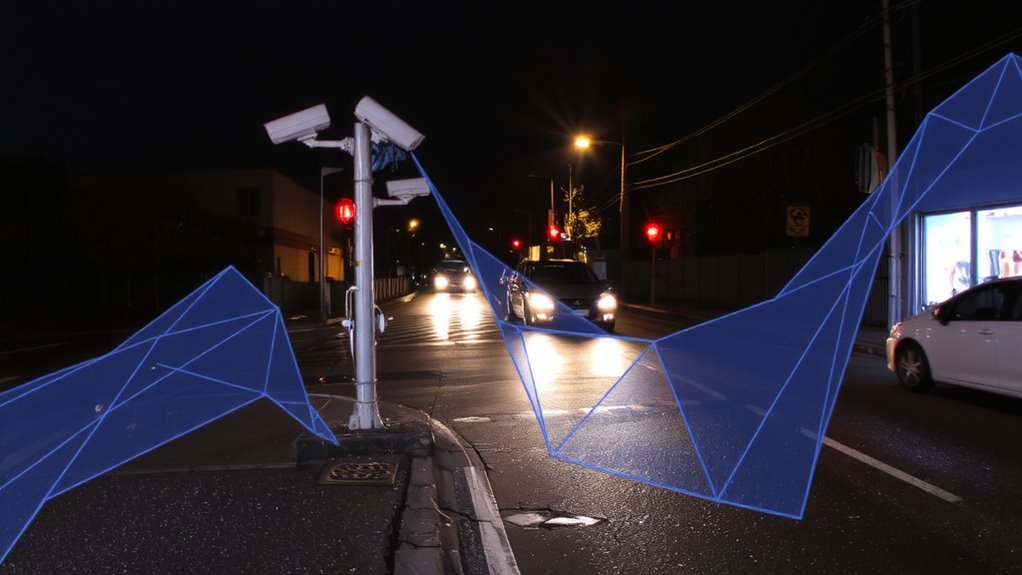
While you might not notice it at first, AI systems are already analyzing the hidden details in video metadata to spot crime patterns faster than ever. These systems use anomaly detection to flag unusual activity, like someone lingering near a door at odd hours. You get alerts only when something stands out, reducing false alarms. Behavior clustering groups similar actions over time, helping identify repeat offenders or high-risk zones. For example, if multiple break-ins show similar timing or movement, the AI links them without you lifting a finger. This works best with high-quality cameras that log accurate timestamps and locations. While the tech has limits-like needing consistent footage and strong internet-it’s a powerful tool when paired with human review. Setup costs vary, but many home systems now include basic AI features for under $200 a year. You gain real-time insights without complexity.
Tracking Criminal Movement Across Cameras With Metadata

Coordinating surveillance across locations relies on metadata to track criminal movement with precision. You can use cross camera tracking to follow suspects as they move between different video feeds, linking timestamps, locations, and appearance data seamlessly. This system analyzes metadata like motion direction, clothing color, and speed, allowing you to reconstruct paths efficiently. Behavior correlation strengthens investigations by comparing actions across cameras, identifying patterns that suggest intent or coordination. For example, two individuals moving in sync across multiple feeds might indicate teamwork in a theft. While effective, cross camera tracking requires synchronized time sources and overlapping coverage to avoid gaps. It also demands secure data storage and privacy compliance. The initial setup may be costly, especially for large properties, but the long-term payoff in deterrence and evidence collection is significant. You’ll need consistent camera placement and metadata accuracy to maximize reliability. A reliable wireless surveillance camera system ensures seamless integration and metadata continuity across multiple devices.
Predicting Crime Hotspots With Past Video Data
You can use past video data to predict crime hotspots by analyzing patterns in recorded activity over time. When you examine metadata from surveillance footage, you’ll notice crime clustering-certain areas see repeated incidents under similar conditions. Spatial analysis helps map these events, revealing high-risk zones based on location, time, and environmental factors. By combining timestamps, camera locations, and incident tags, you create heatmaps that highlight where crimes are most likely to occur. This data-driven approach allows law enforcement and neighborhoods to allocate patrols or lighting more effectively. The pros include better resource use and faster response planning; the downside is the need for consistent, high-quality footage. You’ll need reliable storage and analysis software, which can be costly. Still, the long-term benefits of preventing crime through evidence-based planning make it a practical strategy for safer communities.
How Cops Can Use Metadata Without Violating Privacy
How can law enforcement use metadata without crossing privacy lines? You can analyze timestamps, locations, and device IDs while avoiding personal content. Data encryption guarantees sensitive info stays protected during storage and transfer. Access should only happen under strict warrant protocols, meaning officers need judicial approval before diving into footage. This balances public safety and civil rights. Use metadata to spot crime patterns, not to monitor individuals. Limit searches to specific times and places tied to investigations. Avoid mass surveillance-it’s inefficient and erodes trust. Agencies must log all access for accountability. Pair these practices with transparency to build community confidence. When encryption and warrant protocols are non-negotiable, you uphold privacy while using video data effectively. Smart policies today prevent legal issues tomorrow. You’re not sacrificing security for privacy-you’re strengthening both.
On a final note
You can use video metadata to strengthen home security by spotting patterns and tracking movement across cameras. It helps predict risks using real data, improving prevention. When paired with AI, it quickly analyzes footage without invading privacy. Make sure systems follow local laws, encrypt data, and limit access to trusted users. Choose tools with clear privacy controls, good storage options, and fair pricing.