How to Conceal and Protect Outdoor Security Camera Wiring From Tampering
Plan your camera wire routes carefully, using rooflines or downspouts to hide them. Run wires through UV-resistant conduit-costing $1–$3 per foot-for outdoor durability. Use paintable raceways along trim for a clean look, or bury cables 6–12 inches deep with direct-burial conduit where possible. Seal all connections in IP65-rated enclosures with dielectric grease. Each method balances protection, cost, and ease-knowing the options helps you choose wisely.
Notable Insights
- Route wires along rooflines, downspouts, and trim to keep them hidden and off the ground.
- Use UV-resistant conduit or paintable raceways to protect wiring and blend with exterior surfaces.
- Bury cables in direct burial-rated conduit at 6–12 inches deep to prevent tampering and weather damage.
- Seal all connections in IP65-rated weatherproof enclosures with dielectric grease on contacts.
- Camouflage wires using landscaping, siding, or split-raceway designs for discreet, secure installation.
Map Wire Paths to Avoid Tampering Early
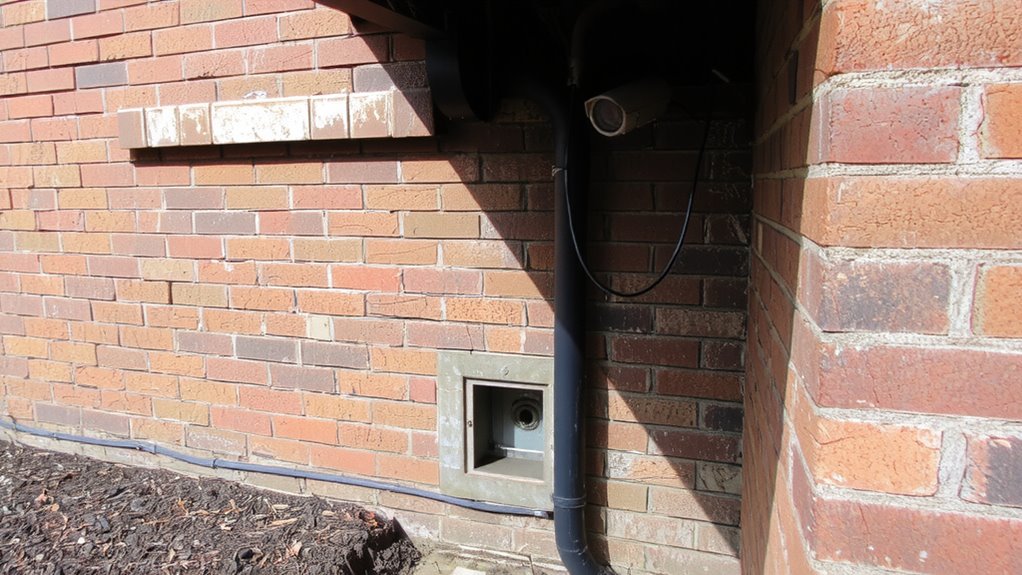
Before you install your outdoor security cameras, taking time to map out wire paths can save you trouble down the road. Good path planning helps you avoid obstacles, reduce visible wiring, and minimize tampering risks. You’ll want to trace the shortest, most discreet route from each camera to your power source or recorder. Think about wire camouflage early-routes along rooflines, behind downspouts, or near existing structures make cables harder to spot. Use trees, siding, or trim to naturally conceal wires, but avoid loose runs that vandals could grab. Poor planning leads to exposed wires, costly rework, and weak security. Take photos of your property and sketch your plan before cutting or drilling. A well-planned path improves both aesthetics and protection, giving you a reliable system that’s tough to disrupt.
Protect Wires With Conduit (Even Outdoors)
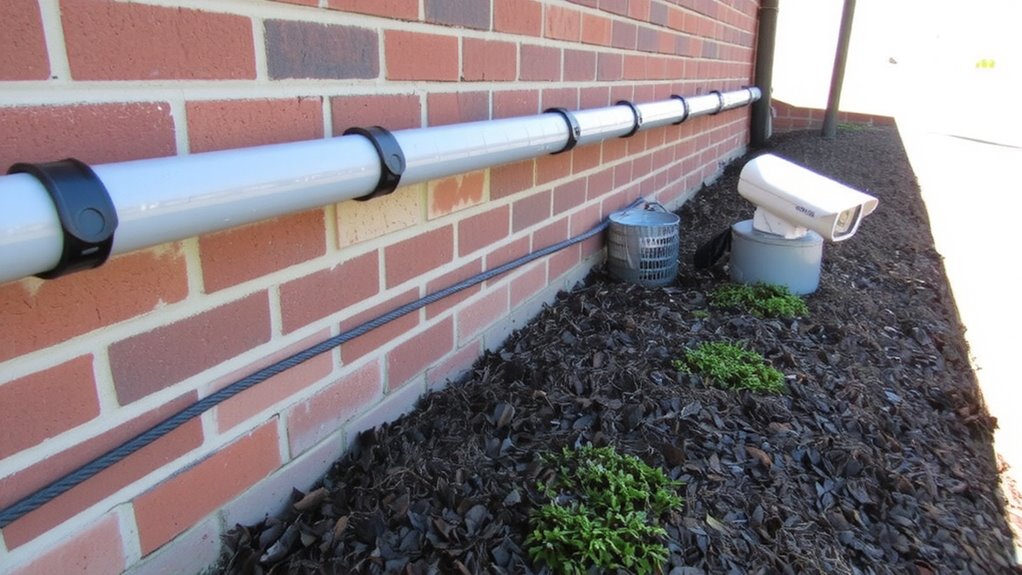
Your outdoor camera’s wiring needs real protection, and rigid or flexible conduit delivers just that-even in harsh weather. Conduit materials like PVC, metal, and UV-resistant plastic shield cables from damage, moisture, and tampering. UV resistance is essential outdoors to prevent cracking and degradation over time. Use a conduit rated for direct sun exposure to guarantee long-term performance. A well-protected wiring system contributes to the reliability of the best wired security camera systems when installed correctly.
Plan routes where conduit stays secure and visible only where necessary. Conduit adds minimal cost-usually $1–$3 per foot-but enhances durability markedly. Choose based on your climate and installation style.
Disguise Cables Along Trim Using Raceways
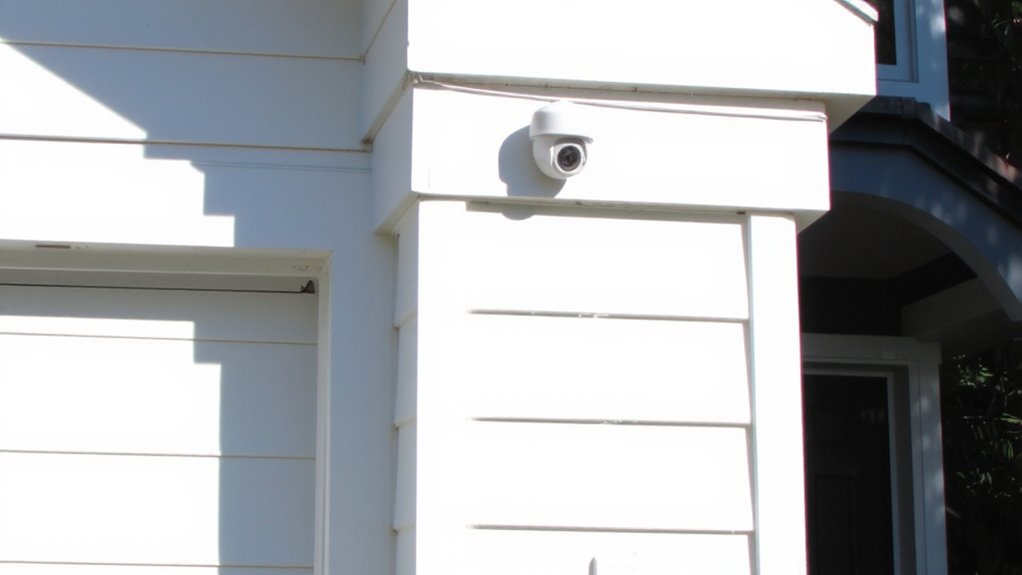
Raceways offer a practical solution for hiding security camera cables along baseboards, soffits, or exterior trim without the bulk of conduit. You can achieve effective cable camouflage by choosing paintable raceways that match your home’s exterior. Trim integration is seamless when you mount them flush against surfaces with UV-resistant adhesive or screws. These channels protect wires from weather and minor tampering while staying low-profile. For best results, measure your route first and choose split-raceway designs that allow easy cable access during installation. Plastic raceways cost $1 to $3 per foot and take under an hour to install with basic tools. Though not as durable as metal conduit, they’re ideal for straight runs and corners. While visible up close, their blend with trim reduces attention. Raceways work well when burying wires isn’t feasible, giving structured, affordable protection with minimal impact on curb appeal.
Bury Wires When Possible for Full Protection
When your outdoor layout allows, burying camera wiring is the most secure way to protect cables from weather and tampering. Use depth measurement to guarantee wires are buried at least 6–12 inches deep, depending on local codes and cable type-this prevents damage from mowing or gardening. Direct burial-rated cables or conduit add durability and longevity. Burying wires also opens up landscaping camouflage options, letting grass, mulch, or plants naturally hide entry and exit points. This method beats surface runs or raceways when concealment and protection are priorities. While installation takes more effort upfront, the long-term payoff is cleaner aesthetics and reduced risk of cuts or interference. Plan the route carefully to avoid utilities, and mark paths before digging. Though costs rise slightly with trenching tools or materials, the investment boosts system reliability. Burying wires isn’t always feasible, but when possible, it’s the most effective defense against tampering and environmental wear.
Seal All Wire Connections in Weatherproof Enclosures
A weatherproof enclosure is essential for protecting wire connections from moisture, dust, and temperature fluctuations that can degrade performance over time. You need secure connections to maintain signal integrity and system reliability, especially in outdoor environments. These enclosures help prevent moisture from reaching exposed wires, which can cause short circuits or corrosion. Look for enclosures with an IP65 rating or higher-they’re tested to block water and dust. Use dielectric grease on metal contacts to further prevent moisture buildup. Make sure the enclosure is UV-resistant if it’ll be in direct sunlight. Mount it close to the camera or power source to minimize exposed wire length. Check seals annually for wear, and replace them as needed. Proper maintenance guarantees long-term function and avoids costly repairs. This small step markedly improves your system’s durability and performance. For RV owners, integrating these practices with a reliable Top RV Security Systems ensures comprehensive protection against environmental and security threats.
On a final note
You reduce tampering risks by planning hidden wire paths and using durable outdoor conduit, which protects against weather and sabotage. Disguising wires along trim with raceways blends them into your home’s exterior. Burying cables offers the best security but costs more and requires planning around utilities. Always seal connections in weatherproof enclosures to guarantee reliability. These steps improve camera function and extend system life.