Securing Your Home After a Break-In: Recovery and Reinforcement Steps
Call the police right away, even if the suspect is gone, and avoid touching anything to preserve evidence. Document damage with photos and notes, then change all locks-especially after forced entry-and reinforce doors with $20–$50 kits. Install security cameras with motion detection and cloud storage, and consider professional alarm monitoring. Notify your insurer promptly with the police report and itemized list. You’ll want to know how to help your family feel safe again.
Notable Insights
- Report the break-in to police immediately to preserve evidence and obtain a required report for insurance claims.
- Document all damage and missing items by taking photos, videos, and maintaining a detailed, organized log by room.
- Replace locks and reinforce doors, windows, and entry points to prevent future unauthorized access.
- Install security cameras and alarms with motion detection and professional monitoring for enhanced home protection.
- Notify your insurance company promptly and submit the police report, photos, and itemized loss list to file a claim.
Report the Break-In Immediately
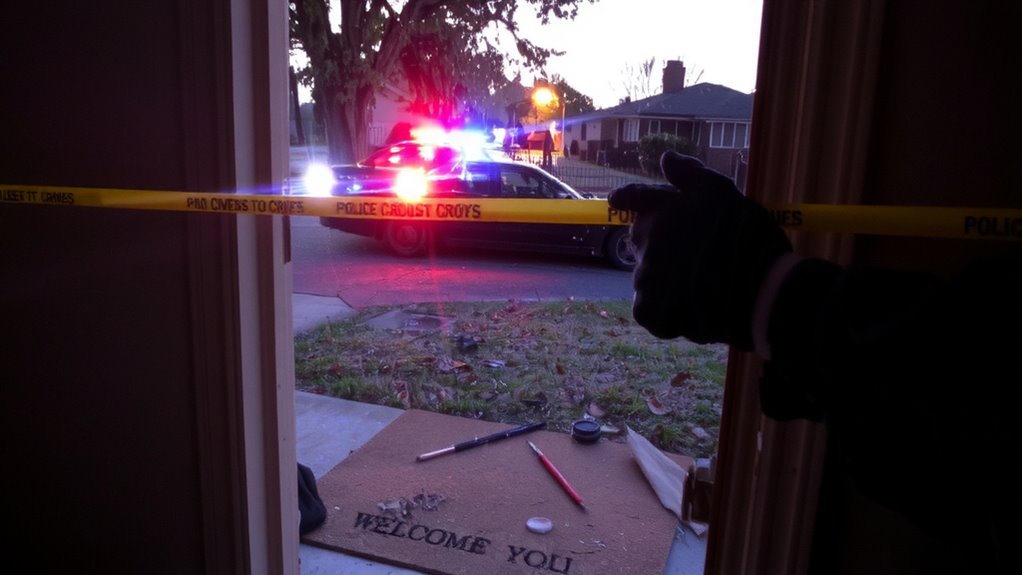
While it might feel overwhelming right after discovering a break-in, reporting the incident to law enforcement as soon as possible improves your chances of recovering stolen items and helps authorities identify potential crime patterns in your area. You should call the police immediately, even if the suspect is gone, because timely action supports evidence preservation. Avoid touching anything disturbed during the break-in, since fingerprints, footprints, or tool marks might still be present. Officers will guide you through securing the scene and creating an official police report, which is essential for insurance claims. A detailed police report also increases the likelihood of tracking repeat offenders. Cooperation with law enforcement strengthens community safety, and preserving evidence properly guarantees investigative accuracy. Don’t delay-reporting fast increases resolution rates and supports effective follow-up.
Assess and Document the Damage
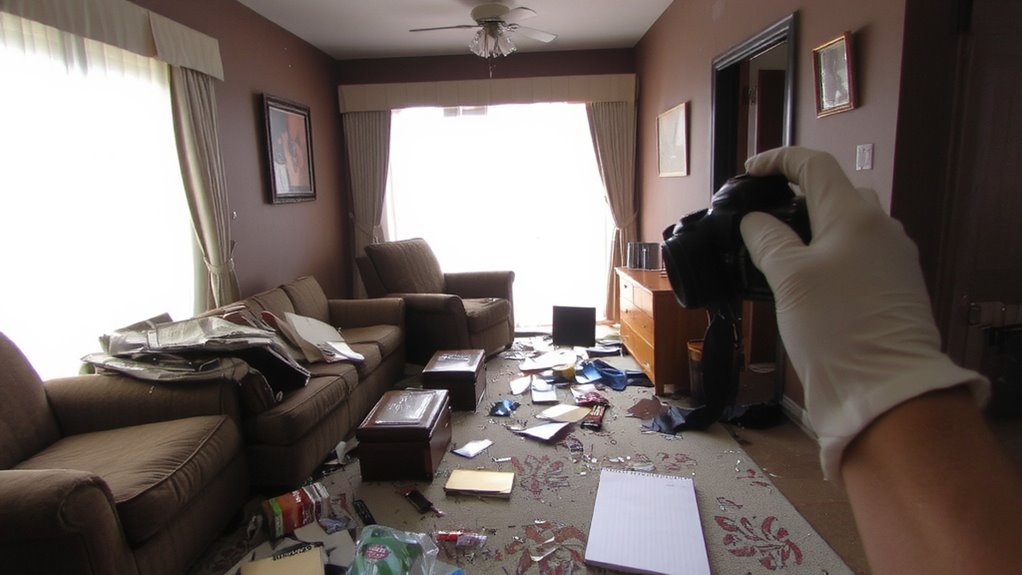
What’s the first step once the police have left and you’re left facing the aftermath? You need to assess and document the damage thoroughly. Start by walking through each room, noting forced entry points and missing or damaged items. This isn’t just about property valuation-your insurance relies on accurate records. Take photos or videos of everything, including subtle signs of tampering. Also, consider the emotional trauma; it’s normal to feel overwhelmed, so ask for support if needed. Keep a written log of your observations to share with insurers. Use the table below to organize your findings:
| Room | Damage Type | Estimated Value ($) |
|---|---|---|
| Living Room | Broken window | 300 |
| Bedroom | Ransacked drawers | 0 (labor) |
| Garage | Stolen tools | 450 |
This structured approach aids claims and recovery.
Change Locks and Secure All Entry Points
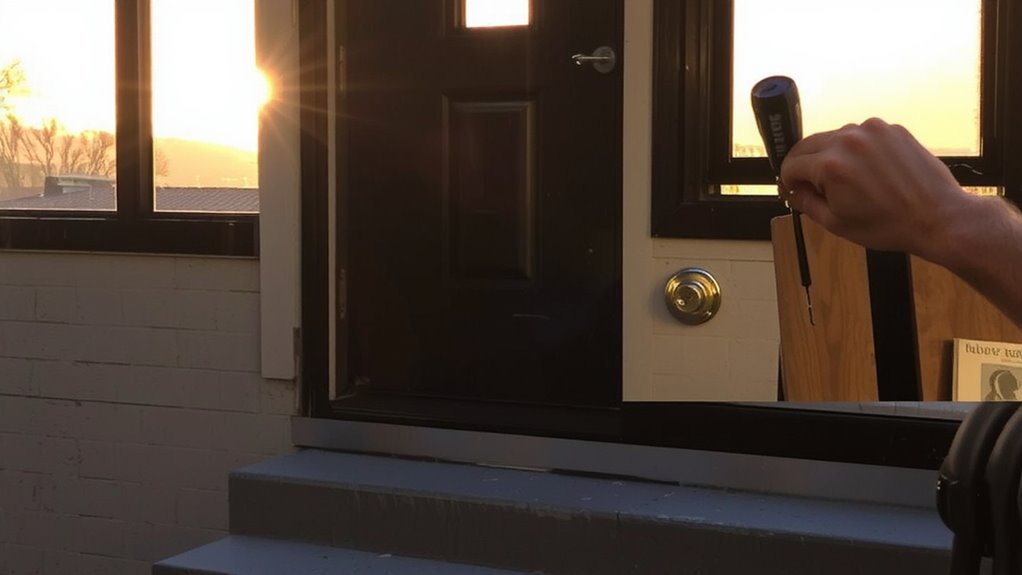
Start by replacing locks on all exterior doors, especially if the intruder gained access through a key or forced entry. Even if nothing appears damaged, it’s safer to assume keys could be duplicated. Use high-security deadbolts with reinforced strike plates, which greatly improve resistance to forced entry. Consider door reinforcement kits, which strengthen the frame and hinge side-common failure points. These kits cost $20–$50 and are easy to install. For sliding or basement windows, add window anchoring systems to prevent easy lifting or prying open. These simple devices cost under $15 per window and deter casual intruders. Check all entry points, including garage doors and pet doors, for weak locks or gaps. Upgrade to solid-core doors where possible, as they resist breaking better than hollow ones. A complete lock replacement for a standard home averages $120–$300, depending on quality and number of doors. Top-rated best front door locks offer advanced pick resistance and ANSI Grade 1 certification for maximum security.
Install Security Cameras and Alarms
If you want to deter future break-ins and gain peace of mind, installing a security camera system and alarm is one of the most effective steps you can take. Good camera placement increases coverage of entry points and blind spots, making it harder for intruders to approach unseen. Look for systems with motion detection, night vision, and cloud storage for reliable monitoring. Alarm integration lets cameras and alarms work together-triggering recordings when the alarm sounds. Wired systems offer reliability, while wireless ones provide easier installation. Consider professional monitoring for faster emergency response, though it adds to monthly costs. DIY kits save money but require self-management. Most experts recommend placing cameras at front and back doors, garages, and near windows. Test your system monthly to verify proper function. With smart planning, you’ll boost security efficiently and effectively. For reliable options, check out the best security cameras based on expert testing and real-world performance.
Notify Your Insurance Company and File a Claim
How quickly should you act after a break-in to protect both your safety and your finances? Right away-contact your insurance company as soon as possible. Most insurers require prompt reporting to start the claim process and avoid delays. Review your policy coverage to understand what losses are included, such as stolen items, damaged property, or temporary housing. Document everything: take photos, keep police reports, and list damaged or missing items with estimates. This evidence supports your claim and speeds up approval. Be honest and thorough when describing the incident. While the claim process can take days or weeks, staying organized helps. Note that filing a claim may affect future premiums, so weigh costs versus benefits. Your insurer will assign a claims adjuster to assess the damage and determine payout. Keep records of all communication.
Help Your Family Feel Safe at Home Again
While restoring physical security is essential, helping your family regain a sense of safety after a break-in requires both emotional support and practical steps. Open conversations help everyone process the event without pressure. Reestablish routines to restore normalcy, and consider speaking with a counselor if anxiety persists. You can also strengthen community ties by joining a neighborhood watch-studies show these programs reduce burglary rates by up to 16%. Reinforce safety with visible security measures, like motion lights or cameras. Upgrading to reliable wireless motion sensor lights can enhance exterior visibility and deter potential intruders.
| Action | Benefit |
|---|---|
| Offer emotional support | Reduces fear and builds trust |
| Talk openly about the event | Helps process emotions |
| Join a neighborhood watch | Increases community vigilance |
| Install visible security tools | Deters future break-ins |
On a final note
You’ve taken the right steps to recover and secure your home. Report the crime, document damage, and change locks immediately. Install alarms and cameras to deter future break-ins-systems range from $100 to $500, with monitoring adding monthly costs. Notify your insurer promptly to file a claim. Finally, talk openly with your family, reinforcing routines and safety plans to restore confidence and peace.