Security Cameras With Advanced Object Classification for Enhanced Monitoring
You can cut false alarms by up to 80% with security cameras that use advanced object classification to tell people, vehicles, animals, and packages apart. These systems analyze shape, size, and motion using AI, often processing data on-device for faster, more private alerts. Look for 1080p resolution, night vision, and adjustable sensitivity to boost accuracy. They’re ideal for homes, retail, or construction sites where precise detection matters. Custom alert rules help you stay focused on real threats-knowing more improves your choices.
Notable Insights
- Advanced object classification identifies people, vehicles, animals, and packages using AI-driven shape, size, and motion analysis.
- Security cameras with object filtering reduce false alerts by up to 80% by ignoring irrelevant motion like foliage or weather effects.
- High-resolution 1080p+ video and night vision ensure accurate detection in various lighting and environmental conditions.
- Customizable alert rules allow notifications only for specific objects, such as people or vehicles, enhancing monitoring precision.
- On-device AI processing enables real-time classification, faster response, and improved privacy through local data handling.
What Is Advanced Object Classification in Security Cameras?
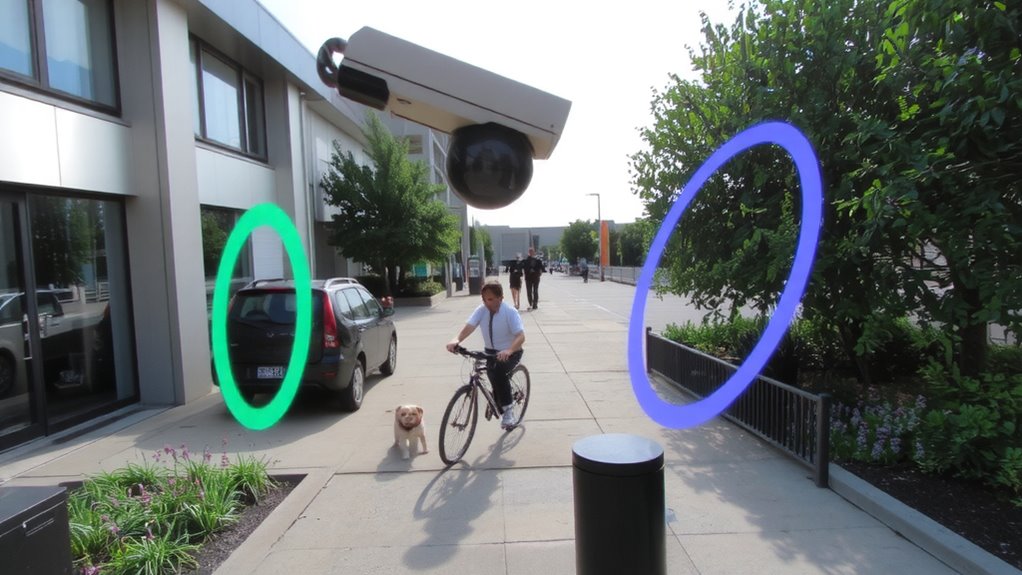
Advanced object classification in security cameras helps you distinguish between different types of motion, like people, vehicles, animals, and packages, so you get fewer false alerts. This technology uses image recognition to identify shapes, sizes, and colors in the video feed. It pairs that with pattern analysis to study movement over time, helping the system learn what normal activity looks like. You benefit from more accurate alerts because the camera doesn’t just detect motion-it understands what’s moving. Most modern systems classify objects using on-device or cloud-based AI. On-device processing is faster and more private, while cloud-based options offer better accuracy but may require a subscription. Look for cameras supporting at least person, vehicle, and animal classification. Higher-end models include package and license plate detection. Make sure the camera logs classification data for review.
How Object Classification Reduces False Alarms
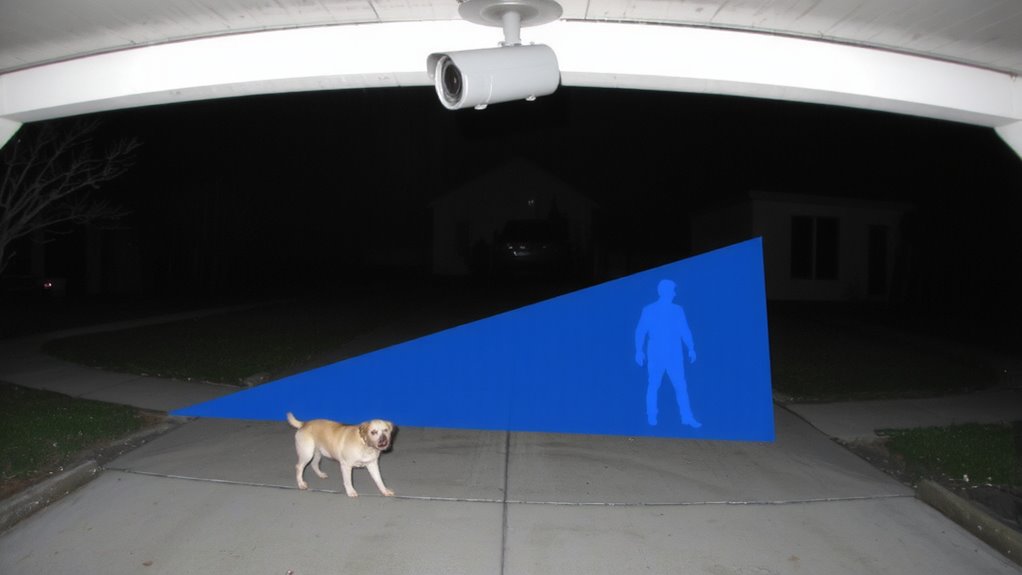
Since not every movement around your property signals a threat, object classification helps you filter out irrelevant alerts by identifying what’s actually triggering the motion. With object filtering, your camera distinguishes between people, vehicles, and other moving objects, so you’re not notified every time a tree branch sways or a cat walks by. This smart recognition greatly improves alarm precision, meaning you get alerts only for events that matter. Systems using this technology reduce false alarms by up to 80%, according to recent studies. That means fewer disruptions and more reliable monitoring. While cameras with advanced object filtering may cost more upfront, the long-term value is clear: less time managing false alerts and stronger confidence in real threats. Always check if your system allows customizable alert rules based on object type. It enhances control and guarantees efficient security. Some of the top-performing models offer wireless security cameras with built-in AI processing for real-time object classification.
Can Cameras Tell If It’s a Person, Car, or Dog?
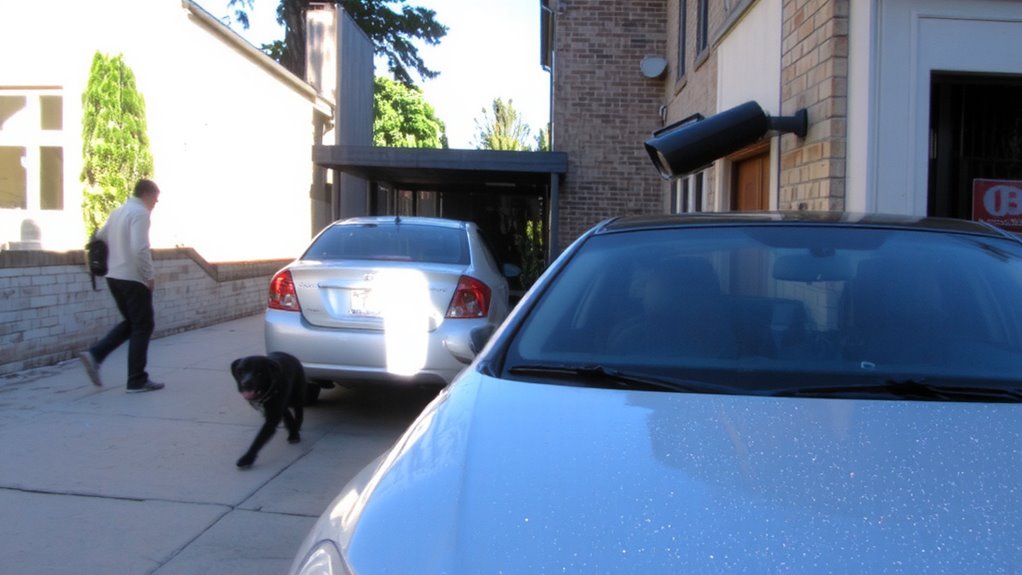
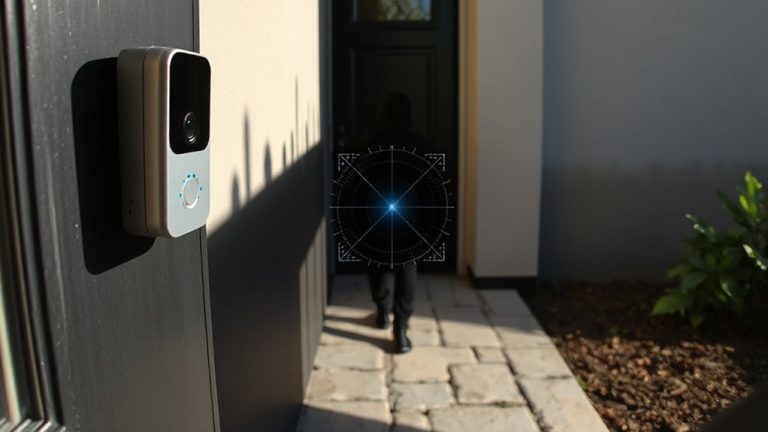
Smart detection starts with accurate identification, and yes-modern security cameras can tell the difference between a person, a car, and a dog. Using built-in AI, these systems analyze shape, size, and movement to classify objects correctly. You benefit when motion patterns help distinguish a walking human from a roaming pet or passing vehicle. Cameras learn typical animal behavior, so a jumping dog or prowling cat doesn’t trigger false alerts. Instead of general motion, they focus on specific actions-like a person approaching your door or a car pulling into the driveway. This precision reduces unnecessary notifications and increases reliability. You’ll find consistent performance across lighting and weather conditions. High-end models deliver better results, but even mid-tier cameras offer useful classification. Choose based on your environment-if you have pets or live near a street, accurate object separation is key. Some top-tier models also support audio recording to provide additional context during security events.
Must-Have Features for Accurate Object Detection
You’ve seen how modern cameras can tell a person from a pet or vehicle using AI, but not all systems deliver the same level of accuracy. For reliable detection, look for sharp image resolution-ideally 1080p or higher-so the AI has clear visual data to analyze. Night vision is essential, allowing the camera to capture usable footage in low light, which helps maintain detection accuracy after dark. Effective motion tracking guarantees the camera follows moving objects smoothly, reducing missed events. Pair this with adjustable sensitivity settings to avoid false alerts from trees or shadows. AI-powered models that distinguish between object types perform better when combined with local processing, minimizing delays. Choose systems with regular firmware updates to improve detection over time. While higher-end models cost more, their precision often justifies the price. Don’t skip checking field of view and weather resistance, especially for outdoor use. Top models in the best wireless home security cameras category combine these features for optimal performance.
Top Use Cases for Object-Classifying Security Cameras
When securing your property, knowing exactly what’s triggering your camera alerts can save time and reduce false alarms. With object-classifying cameras, you’ll get real time analytics that distinguish between people, vehicles, animals, and packages. This means fewer nuisance alerts from swaying trees or passing cars. In homes, object tracking helps monitor kids or pets safely while ignoring non-threats. Retail stores use these cameras to watch for loitering or after-hours intrusions, focusing only on human activity. Warehouses benefit from detecting unauthorized vehicle access or identifying specific assets via real time analytics. Construction sites prevent theft by getting alerts only when people or tools are moved, not when wind or debris triggers motion. These cameras integrate into systems where precision matters, reducing workload for security staff. You’ll pay more upfront, but the accuracy cuts long-term monitoring costs.
Add Object Detection to Your Existing Security System
It’s possible to upgrade your current security setup without replacing every camera. With smart integration, you can add object detection to existing devices using compatible add-on modules or AI-powered network video recorders. This legacy upgrade lets older cameras gain advanced features like person, vehicle, or animal classification. You’ll reduce false alarms from shadows or weather, improving alert accuracy. Most systems support standard protocols like ONVIF, making compatibility likely. Costs range from $100–$300 per channel, depending on processing power. While performance may not match purpose-built AI cameras, it’s a cost-effective step. Setup requires basic networking skills and firmware checks. Pros: saves money, reduces waste. Cons: limited by original camera resolution and frame rate. Plan for adequate storage and bandwidth. Smart integration extends value, making your current system smarter without full replacement.
What’s Next for AI in Smart Camera Surveillance?
What comes after object detection in smart camera surveillance? You’re moving into smarter, faster systems powered by AI. Edge computing integration lets cameras process data on-site, reducing lag and boosting privacy since footage isn’t constantly sent to the cloud. That means quicker alerts and lower bandwidth use-perfect for home setups. Beyond spotting people or pets, you’ll get predictive threat analytics, where AI learns patterns and flags unusual behavior before trouble starts. For example, if someone lingers too long at your gate, the system might alert you before a break-in occurs. Pros: earlier warnings, less false alarms. Cons: higher upfront cost, needs reliable hardware. Look for models with regular firmware updates and scalable cloud plans. Plan for $150–$300 per camera. This isn’t sci-fi-it’s the next step in practical, data-driven home security.
On a final note
You can rely on security cameras with advanced object classification to detect people, vehicles, or animals accurately, reducing false alerts by up to 70%. Look for models with AI processing, high-resolution video, and motion zone customization. These features boost reliability and help you respond faster to real threats. While higher upfront costs exist, long-term benefits include smarter alerts and better surveillance. Choose systems compatible with your current setup to save money and improve protection efficiently.