A Comprehensive Guide to Securing Your Property Against Burglary and Theft Incidents
Upgrade your entry doors with solid cores and ANSI Grade 1 locks, reinforced by heavy-duty strike plates and long screws to resist forcing. Install motion-sensor lighting at entry points-solar or wired-to deter intruders, cutting break-in risks substantially. Use security cameras with night vision and alarms, as unmonitored homes face triple the burglary risk. Add smart locks for remote control and alerts, and reinforce sliding doors, basement windows, and garages with films, pins, and sensors. Costs vary, but layered defenses work best-there’s more to contemplate for full protection.
Notable Insights
- Upgrade entry doors with solid cores, reinforced frames, and ANSI Grade 1 locks to resist forced entry.
- Install motion-sensor lighting at entry points to deter intruders and improve nighttime visibility.
- Deploy surveillance cameras with night vision and motion detection for continuous property monitoring.
- Use smart locks with remote access and real-time alerts to monitor and control entry points from anywhere.
- Secure vulnerable areas like windows, sliding doors, and garages with locks, sensors, and shatter-resistant film.
Upgrade Doors and Locks to Deter Break-Ins
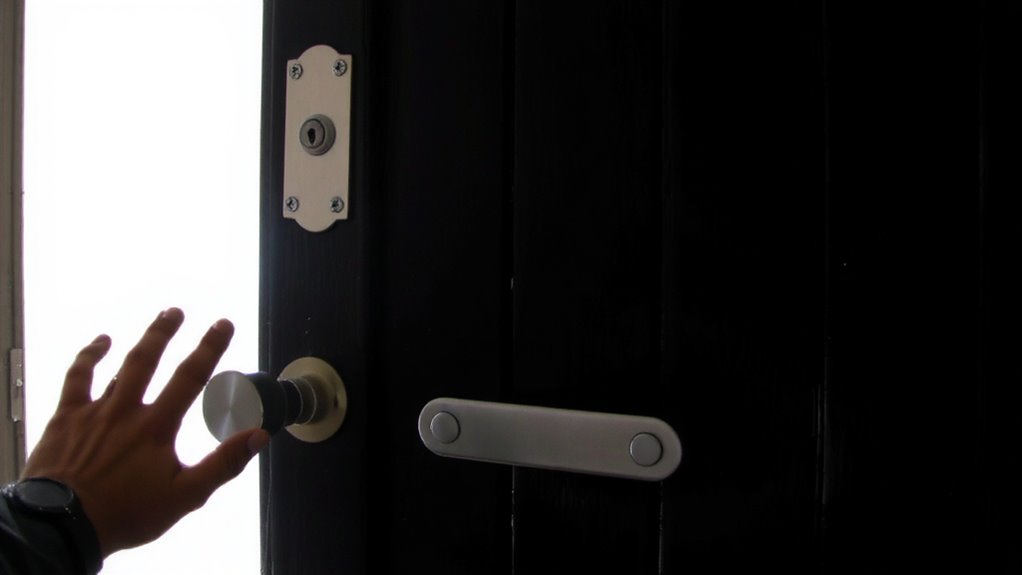
While upgrading your home’s entry points won’t guarantee absolute protection, it considerably reduces the risk of break-ins by making forced entry more difficult and time-consuming for intruders. You should reinforce door frames with heavy-duty strike plates and longer screws to prevent them from splitting under pressure. This simple step increases resistance against kicking or shoulder blows. You’ll also want to upgrade lock cylinders to high-security models that resist picking, bumping, and drilling. Look for locks rated ANSI Grade 1 for maximum durability. Solid-core doors paired with reinforced frames and upgraded cylinders create layered protection. Installation is straightforward but best done by a professional to guarantee alignment and function. Costs range from $100–$300 per door, depending on materials. These upgrades offer proven, measurable improvements in home security and are a smart investment. For comprehensive surveillance, consider integrating Best Lorex Cameras to monitor entry points effectively.
Light Up Dark Corners to Scare Off Intruders
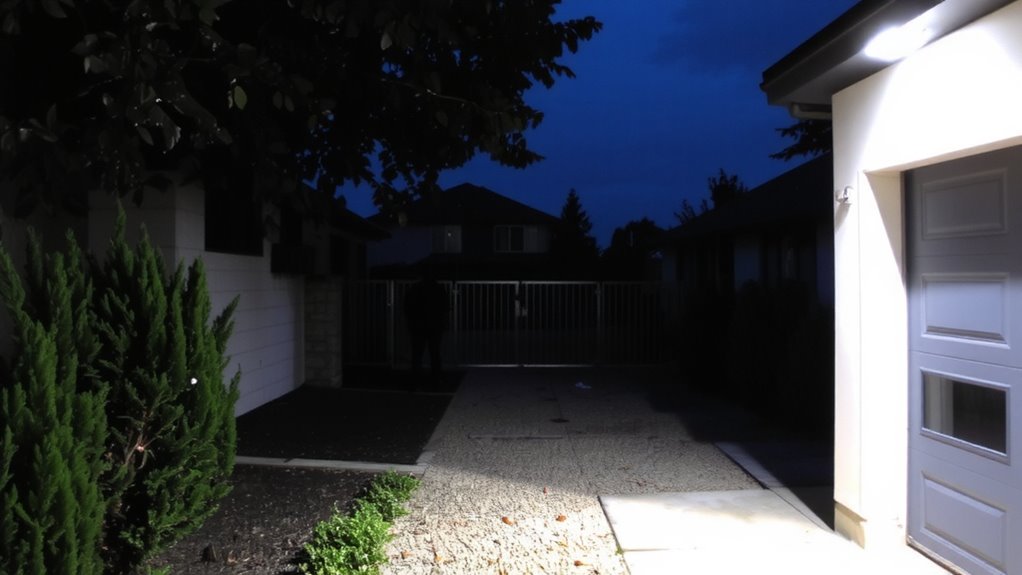
You’ve strengthened your doors and locks, making forced entry harder, but intruders still look for easy targets elsewhere-like dark, hidden spots around your property. Lighting eliminates these hiding places. Install outdoor sconces near entry points to maintain consistent illumination. They’re reliable and improve visibility, helping you and neighbors notice suspicious activity. Pair them with motion sensors, which trigger bright lights when movement is detected, startling intruders and drawing attention. Studies show homes with motion-activated lighting face 3 fewer break-in attempts. Motion sensors vary in range and sensitivity, so aim for 30-foot coverage and adjustable settings to reduce false alerts. Solar-powered options cost $25–$50 per unit and install easily, while wired sconces may require an electrician, costing $100–$250 each. Use a mix of both for layered defense. Guarantee lights cover pathways, corners, and backyard access points. For optimal performance and ease of installation, consider the best wireless motion sensor lights that combine advanced detection with durable outdoor design.
Install Proven Security Cameras and Alarms
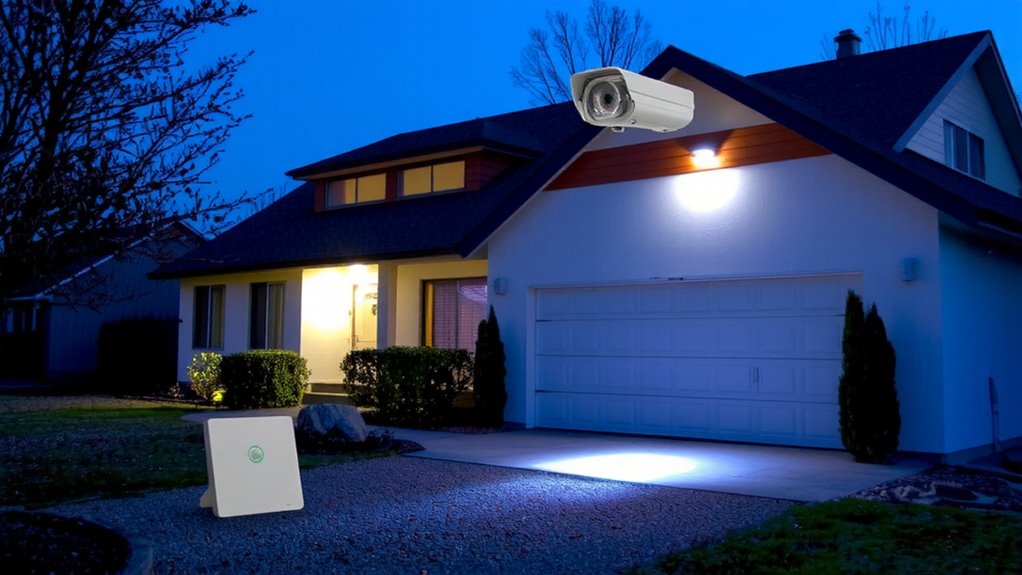
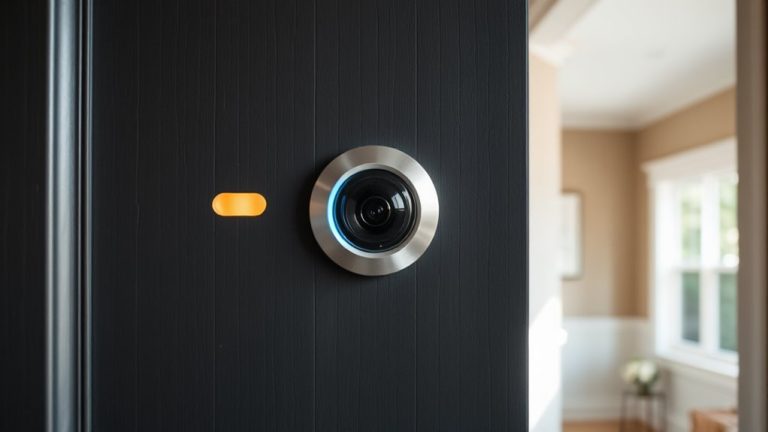
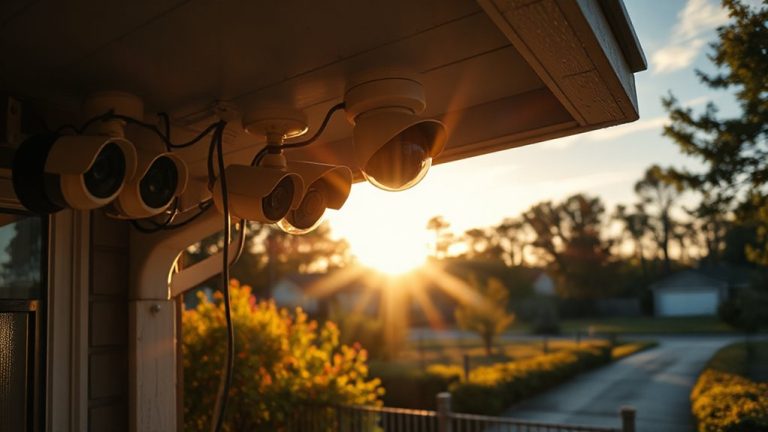
If you’re serious about deterring criminals and catching them when they strike, installing security cameras and alarms is a proven strategy backed by data. Studies show homes without alarms are 300% more likely to be burglarized. Opt for cameras with motion detection and night vision to capture clear footage 24/7, even in total darkness. Motion detection reduces false alerts by focusing only on activity, while night vision guarantees uninterrupted monitoring. Place cameras at entry points and blind spots for full coverage. Wired systems offer reliability, but wireless models provide easier installation and remote access. Alarm systems with professional monitoring notify authorities automatically. Expect to spend $200–$600 for decent equipment, with optional monthly plans for cloud storage and monitoring. Look for weather-resistant builds and high resolution. Combining visible cameras and audible alarms markedly increases effectiveness, as most intruders avoid properties with active security setups. For optimal performance, choose models listed among the best home security cameras.
Monitor and Lock Doors Remotely With Smart Devices
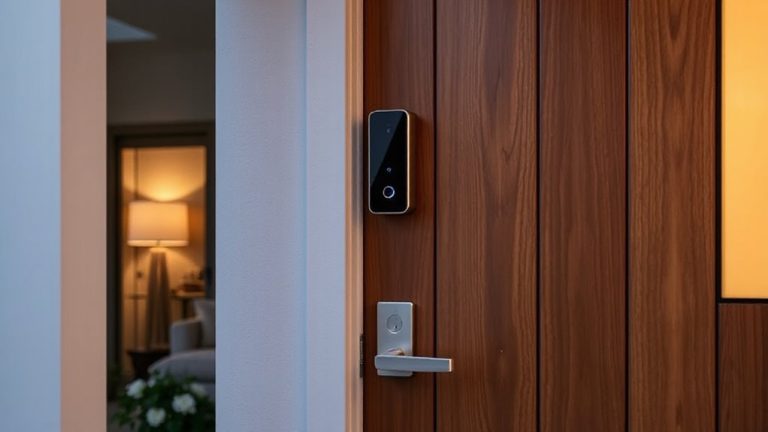
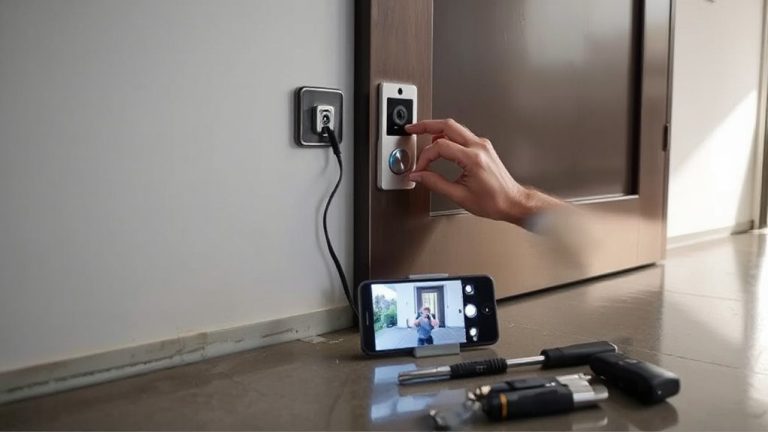
How do you make certain your doors are secure when you’re miles from home? Remote monitoring and smart locking systems let you check and control access in real time using a smartphone. With remote monitoring, you’ll get alerts when doors open or if someone attempts entry, so you can respond quickly. Smart locking allows you to lock or open doors from anywhere, which is useful if you forget to secure a door or need to grant temporary access. Most systems work with Wi-Fi and require a mobile app, offering features like activity logs and user codes. Installation is usually DIY, taking under an hour. Costs range from $100 to $300 per lock, with some requiring monthly subscriptions for cloud storage. Choose models with strong encryption and two-factor authentication for better protection. These tools improve convenience and security when used correctly.
Secure Basement Windows, Sliding Doors, and Garages
Smart locks give you control over entry points from afar, but other vulnerable areas like basement windows, sliding doors, and garages need just as much attention. Reinforce sliding doors with vertical security pins and sturdy locks. Apply shatter-resistant window film to basement windows-it holds glass together if struck, delaying break-ins. For garages, install garage sensors that alert you if the door opens unexpectedly, and keep the internal door to your house locked. Use motion-sensing lights and clear vegetation around access points.
| Feature | Pros | Cons |
|---|---|---|
| Window film | Low-cost, discreet, UV protection | Won’t stop forced entry |
| Garage sensors | Real-time alerts, easy install | Requires Wi-Fi/power |
| Sliding door locks | Affordable, effective | Needs proper alignment |
These steps reduce risk and boost detection.
Team Up With Neighbors to Prevent Home Break-Ins
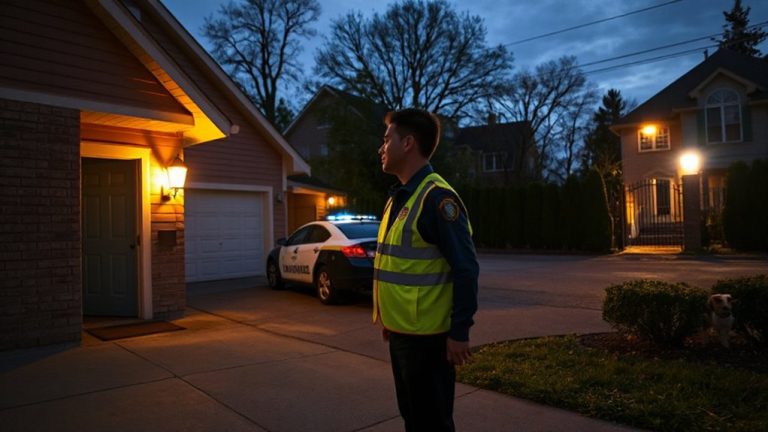
What makes a neighborhood truly secure? It’s not just strong locks or alarms-it’s neighbors working together. When you join a neighborhood watch, you help create a proactive defense against break-ins. These groups share information, report suspicious activity, and often coordinate with local law enforcement. Studies show homes in areas with active neighborhood watch programs face up to 16% fewer burglaries. Add community patrols, and you increase visibility, making your block less appealing to criminals. Volunteers walk or drive designated routes, checking for open gates, unfamiliar vehicles, or broken lights. While patrols take time and organization, the payoff is stronger connections and safer streets. Start by attending a meeting or launching one through your homeowners’ association. Many programs offer free training and signage. Participation is usually low cost, if any. You don’t need a big team-just committed neighbors who look out for one another.
On a final note
You’ve taken smart steps to protect your home by reinforcing doors, adding lights, and using alarms and cameras. These proven upgrades reduce burglary risks substantially. Smart locks and neighbor cooperation add extra layers of safety. While no system is perfect, combining physical and tech-based defenses offers strong protection. Plan investments based on your home’s weak spots, and budget for both equipment and installation. Security works best when layered and consistent.