Balancing Fire Safety and Security: Emergency Exits That Remain Secure
You can keep emergency exits secure without sacrificing fire safety. Delayed egress locks offer 15–30 second delays with alarms, ideal for retail or healthcare, while electrified locks release instantly during fires. Both meet fire codes when UL-listed and battery-backed. Use security film ($20–$100) and alarms to reduce break-in risks. Proper installation and compliance guarantee safety and security work together-knowing the right system for your building makes all the difference.
Notable Insights
- Emergency exits can be secure yet compliant by using approved security film and door alarms to deter unauthorized access.
- Fire-rated doors with panic hardware allow quick escape while containing flames during a fire event.
- Delayed egress locks provide security by delaying exit 15–30 seconds but must release automatically during fire alarms.
- Electrified locks offer instant egress when fire alarms activate, balancing access control with life safety requirements.
- Compliance with fire codes requires UL-listed systems, battery backups, and professional installation to ensure safe and secure operation.
Why Emergency Exit Systems Seem Unsafe?
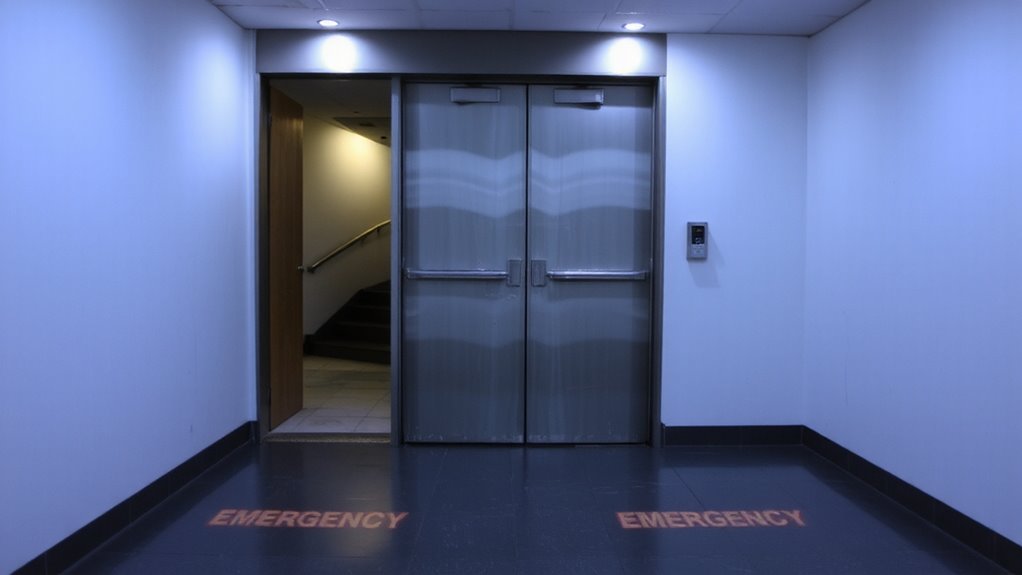
Why do emergency exits sometimes feel more like security risks than lifesaving features? Because of perceived vulnerability and access concerns. You install them for safety, yet worry they might invite break-ins. That’s understandable-any door or window designed to open quickly from the inside can seem like a weak spot to intruders. Studies show homes with multiple ground-level exits face slightly higher break-in risks if not properly secured. But that doesn’t mean you should block them. Instead, balance is key. Use approved security film on exit windows, install door alarms, or choose exit doors with built-in locking mechanisms that still allow instant release from the inside. These solutions cost $20–$100 per unit and are easy to install. The pros? You maintain fire safety compliance while reducing access concerns. The con? Some upgrades need professional installation. Plan carefully-safety and security don’t have to conflict.
How Emergency Exit Systems Work During Fires
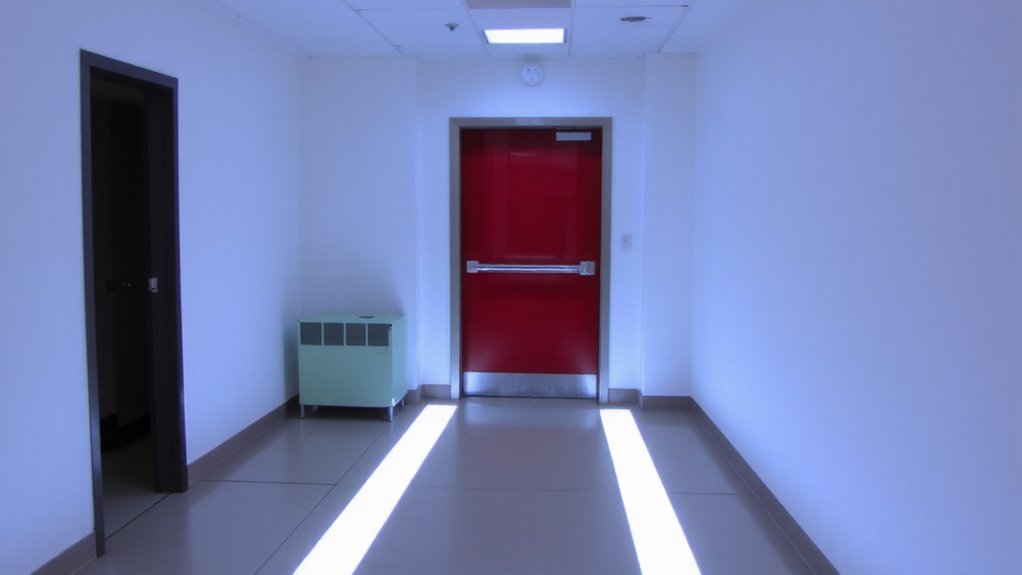
How do emergency exits actually perform when every second counts during a fire? In a fire response, your building’s emergency exits are designed to release automatically, letting people exit quickly. Most systems sync with smoke detectors or fire alarms so doors release the moment danger is detected. These features support evacuation protocols by guiding occupants to safe routes without delays. You’ll notice exit signs stay lit, often on backup power, so paths remain visible. Emergency exit hardware, like push bars, requires no twisting-just pressure to open. This guarantees even panicked or injured individuals can get out. Fire-rated doors still contain flames, but won’t trap people. These systems are tested regularly to meet safety codes. You should check your building’s evacuation plan and make sure everyone knows it. Proper maintenance and compliance keep lives protected during emergencies.
Delayed Egress vs. Electrified Locks: Which Is Right for You?
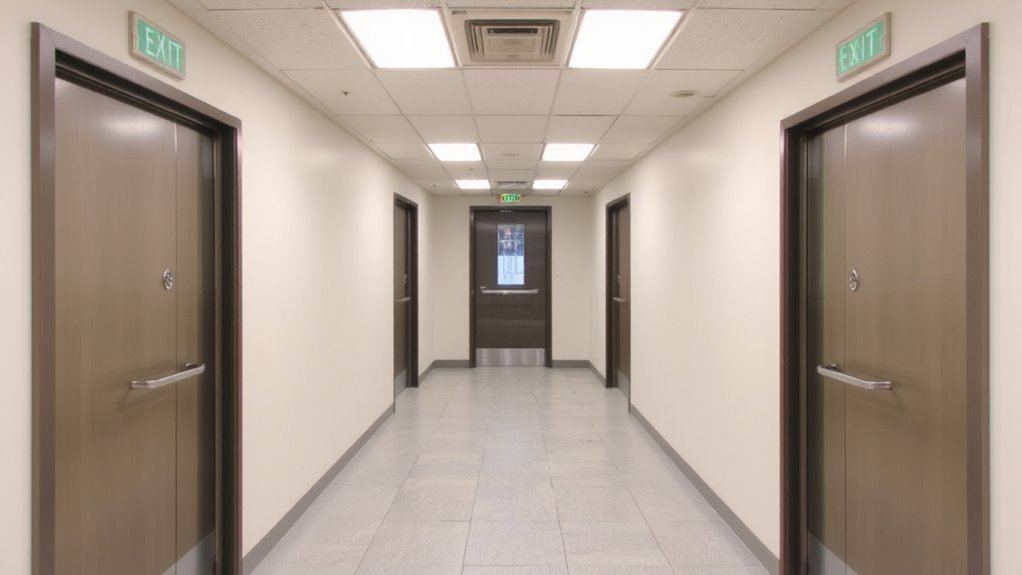
When weighing security against safety in your building, have you considered how delayed egress systems and electrified locks handle emergency situations differently? Both support access control, but differ in timing and system reliability. Delayed egress locks delay exit for 15–30 seconds, allowing alarm alerts while still permitting escape. Electrified locks release instantly upon fire alarm, prioritizing fast evacuation.
| Feature | Delayed Egress | Electrified Locks |
|---|---|---|
| Exit Delay | 15–30 seconds | Instant release |
| Alarm Trigger | Yes | Optional |
| Access Control | High | Moderate to high |
| System Reliability | Requires battery backup | Depends on integration |
| Best For | Retail, healthcare | Offices, schools |
Choose delayed egress for tighter access control with safety in mind, or electrified locks for proven system reliability and immediate egress.
Do Emergency Exit Systems Pass Fire Codes?
Your choice between delayed egress systems and electrified locks doesn’t just affect daily security-it directly impacts whether your emergency exits meet fire code requirements. Most modern systems are designed to comply with fire codes, but only if installed and maintained correctly. Delayed egress locks typically allow a 15-second delay before releasing, which fire codes permit in certain facilities, such as healthcare or educational buildings, as long as alarms sound and doors open during power failures. Electrified locks must also release automatically when fire alarms activate. Authorities conduct routine compliance checks to verify systems operate within code standards. Failure to pass these checks can result in fines or forced modifications. Always verify that your system is UL-listed and installed by a professional. Regular testing and documentation support ongoing compliance and safety.
How to Choose an Exit System by Building Type
While every building has unique safety needs, selecting the right exit system starts with understanding how occupancy type influences code requirements and security demands. For offices, schools, and retail spaces, exit design must accommodate high traffic while ensuring quick egress during emergencies. Your building layout plays a key role-long hallways or multiple floors may require additional exits or panic hardware. In residential buildings, especially multi-family units, balance security with fire code compliance by using approved release mechanisms. Industrial sites often need durable, tamper-resistant systems due to harsh environments. Always consult local fire codes, as they dictate specifics like door swing direction and exit signage. Consider delayed egress systems where theft is a concern, but verify they meet code. Proper exit design isn’t one-size-fits-all-assess usage patterns, occupant load, and emergency routes to make informed choices that keep people safe and spaces secure.
On a final note
You can keep emergency exits both secure and code-compliant with the right system. Delayed egress locks add a 15-second delay before opening during emergencies, letting you balance security and safety. Electrified locks release instantly when fire systems activate. Most meet fire codes if installed correctly. Choose based on your building’s needs: delayed egress suits retail or offices, while electrified locks fit high-occupancy spaces. Always consult local codes and a professional for proper setup.