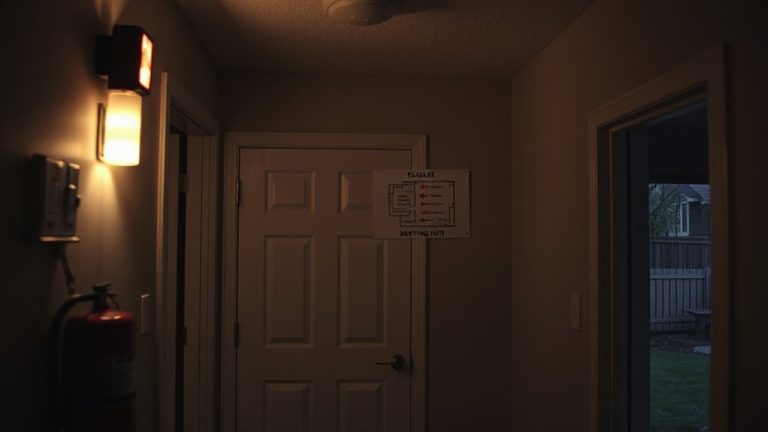
Conducting Silent Drills to Prepare for Active Intruder Situations at Home
You can prepare your home for an intruder by conducting silent drills using emergency lighting as a signal. Move quietly to secure spots like interior bathrooms or closets within 30 seconds, reinforcing doors with silent locks or wedges. Use hand signals-like a finger to the lips for silence-and code words to communicate. Practice monthly, keep drills calm, and include everyone, including pets, to build muscle memory and reduce panic. More strategies can improve your plan’s effectiveness.
Notable Insights
- Use emergency lighting as a silent signal to initiate home drills without speaking.
- Practice moving to secure, concealed areas within 30 seconds during silent simulations.
- Mask movement sounds with fans or TVs to maintain stealth during drills.
- Reinforce doors with silent, easy-to-deploy tools like wedges or sliding bolts.
- Train all family members in hand signals and code words for nonverbal communication.
How to Run a Silent Drill at Home
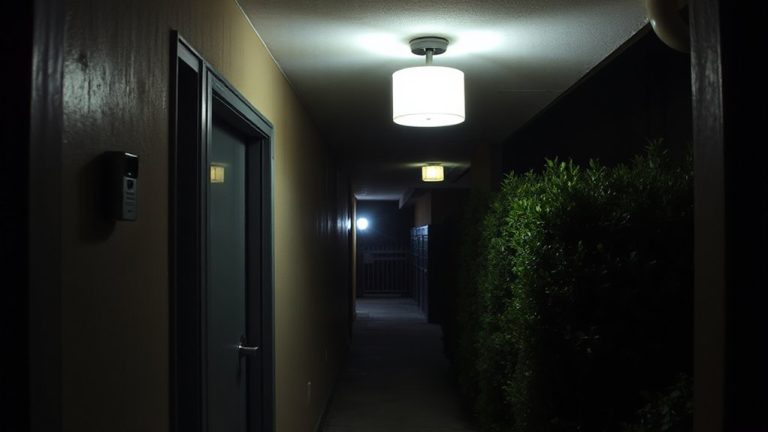
How prepared are you if an intruder enters your home while you’re inside? Running a silent drill helps you respond without alerting a threat. Start by choosing a signal-like a flick of emergency lighting-to indicate the drill has begun. This simulates real conditions when shouting or alarms could escalate danger. Use noise masking, such as turning on fans or TVs, to block subtle sounds of movement. Practice moving quietly to predetermined areas without speaking. Guarantee all family members understand the need for silence and speed. Test different times, including at night, to evaluate effectiveness under stress. Include children and adjust for mobility needs. Emergency lighting should be easy to activate and visible, but not blinding. Noise masking devices should be accessible and familiar. Review each drill’s success-timing, noise levels, coordination. These drills build muscle memory without panic.
Pick Safe Hiding Spots and Secure the Room
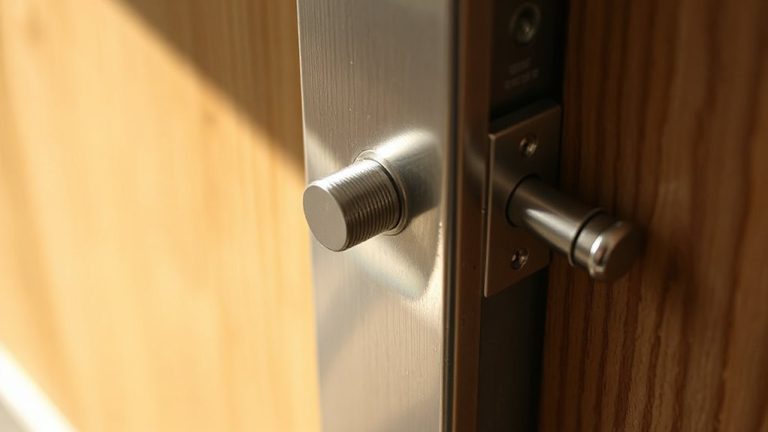
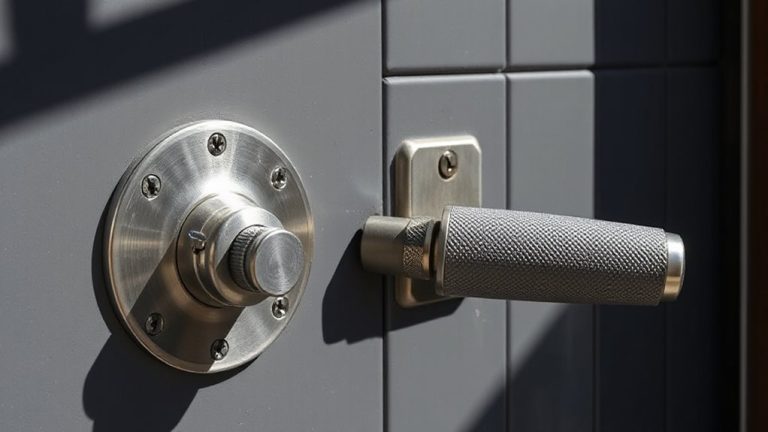
Where could you go if seconds matter most? Identify safe zones in your home-places like interior bathrooms, closets, or windowless rooms on the ground floor. These spots offer concealment and limited entry points. Once inside, secure the room quickly. Use hidden locks if possible, such as sliding bolts or portable door wedges that aren’t visible from the outside. Avoid areas near exits or large windows. Reinforce doors with additional hardware if needed, but keep moves quiet during drills. Safe zones should allow you to stay out of sight and buy time until help arrives. Practice reaching these spots in under 30 seconds. Make sure everyone knows which rooms are designated. Include pets if applicable. Test door closures regularly. Hidden locks add security, but only if you can engage them fast. Plan for accessibility and silence. A reliable top security door stopper can significantly enhance door resistance during a breach attempt.
Use Silent Signals to Communicate
What if shouting or whispering puts you at risk-how do you share critical information without making a sound? You’ll need silent signals to communicate safely and clearly. Use simple hand signals for common messages: one finger to your lips means “stay quiet,” two fingers pointed together signals “follow me,” and a flat hand down means “stay low.” Agree on basic code words, too-like “clear” to indicate safety or “move” to suggest relocation. Practice these regularly so everyone responds instantly. Hand signals work well in low light or across distances but require line of sight. Code words can be discreet but only if kept private. Combine both for better reliability. Make sure all household members, including kids, understand the system. Review and update signals every few months to avoid confusion. This system costs nothing but saves lives when silence is vital.
Run Drills Without Scaring Kids
While keeping your family safe is essential, you’ll want to run drills that prepare kids for an active intruder without overwhelming them emotionally. Start by integrating drills into regular family routines, like bedtime or weekend check-ins, so they feel familiar and calm. Use simple language and avoid graphic details-focus on actions like hiding quietly or following hand signals. This supports emotional safety and reduces fear. Practice during daylight hours first, keeping sessions brief and positive. Praise cooperation to reinforce confidence. Treat each drill as a learning moment, not a test. Repeating them monthly helps children internalize responses without stress. Avoid sudden surprises or loud cues. When drills feel like predictable, structured activities, kids stay engaged and less anxious. Consistency, clear roles, and age-appropriate explanations make all the difference. Over time, these calm, repeated efforts build both readiness and trust within your household’s safety plan.
Fix Weak Spots in Your Silent Drill
How well is your silent drill really working when seconds count? You might think you’re prepared, but weak spots slow your response. Start with regular equipment checks-test communication devices, flashlights, and alert systems monthly to guarantee they function. A flashlight that fails in darkness compromises safety. Conduct a threat assessment to identify likely entry points and update escape routes accordingly. Is a back window overlooked? Does a family member always forget the signal? These gaps matter. Rotate roles during drills to uncover hidden issues. Document problems each time and adjust your plan. Weak spots aren’t failures-they’re opportunities to improve. Stay consistent with updates and verify everyone remembers their tasks under low-light, no-sound conditions. Refining your approach through observation and data strengthens reliability. Small fixes today could make all the difference when silence is essential.
Why Quiet Drills Save Lives at Home
When danger enters your home, could you respond without making a sound? Quiet drills build muscle memory for emergency preparedness and effective intruder response. Practicing in silence removes reliance on speech, letting you act fast when every second counts.
| Benefit | How It Helps | Real-World Impact |
|---|---|---|
| Faster reaction time | Reduces hesitation during crises | Increases chances of safe escape |
| Lower noise profile | Prevents giving away your location | Enhances situational awareness |
| Family coordination | Uses signals instead of words | Keeps everyone aligned and safe |
| Calmer decision-making | Builds confidence through repetition | Reduces panic during actual events |
Silent drills are a practical part of home safety planning. You don’t need expensive gear-just consistent practice. This kind of emergency preparedness guarantees your intruder response is swift, silent, and smart.
On a final note
You now know how to run silent drills safely and effectively. Picking hiding spots, using hand signals, and practicing quietly helps everyone respond fast when it matters. Drills work best when they’re calm, regular, and age-appropriate. Review each session to fix weak spots. Evidence shows prepared families react faster and with less panic. Start small, build confidence, and update plans as needed. Quiet drills save lives.