How Glass Break Detectors Recognize Breaking Windows in Real Time
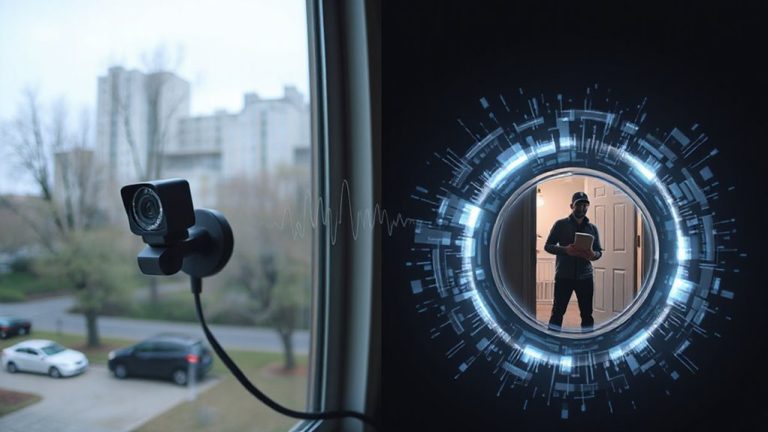
You get instant detection because glass break sensors use real-time acoustic analysis to catch the high-frequency sounds of shattering glass the moment it happens. They listen for the unique spike in pitch and rapid intensity shifts typical of breaking windows, filtering out noises like thunder or clattering dishes. Dual sensors also detect frame vibrations, boosting accuracy. Most work within 20 feet and connect to smart systems for alerts and camera activation. Proper placement and a compatible hub-costing $100 to $250-optimize performance. You’ll see how integration enhances response when you explore the full system options.
Notable Insights
- Glass break detectors use real-time acoustic analysis to instantly identify high-frequency sounds of shattering glass.
- They detect rapid frequency shifts and resonance patterns unique to glass breaking, sampled thousands of times per second.
- Dual sensors combine sound detection with shock sensing to confirm break events and reduce false alarms.
- Digital templates based on real glass break data help distinguish actual breaks from similar noises like thunder or dishes.
- Integrated smart home systems trigger immediate alerts, cameras, and notifications upon confirmed glass break detection.
How Glass Break Detectors Work in Real Time
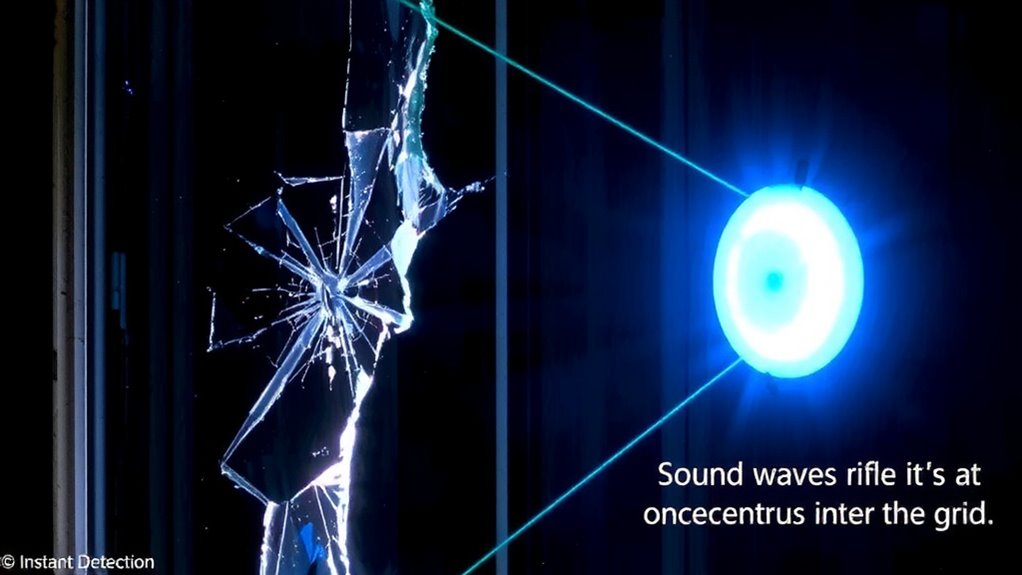
While most alarm systems rely on motion or door sensors, glass break detectors add a specialized layer of protection by identifying the unique sound and vibration patterns of shattering glass. You rely on real-time signal processing to capture and assess incoming audio data the moment a window breaks. The detector uses acoustic analysis to distinguish between everyday noises and the specific frequencies linked to breaking glass. Once the system confirms the threat, it sends an immediate alert to your security panel. These detectors work within milliseconds, minimizing response time. Most models cover up to 20 feet and work best when mounted centrally. They’re easy to install but require proper placement to avoid false alarms. While more accurate than motion sensors in certain cases, they can be affected by loud environments. Expect to pay $30–$60 per unit, with professional monitoring adding extra value.
How They Recognize Breaking Glass Frequencies
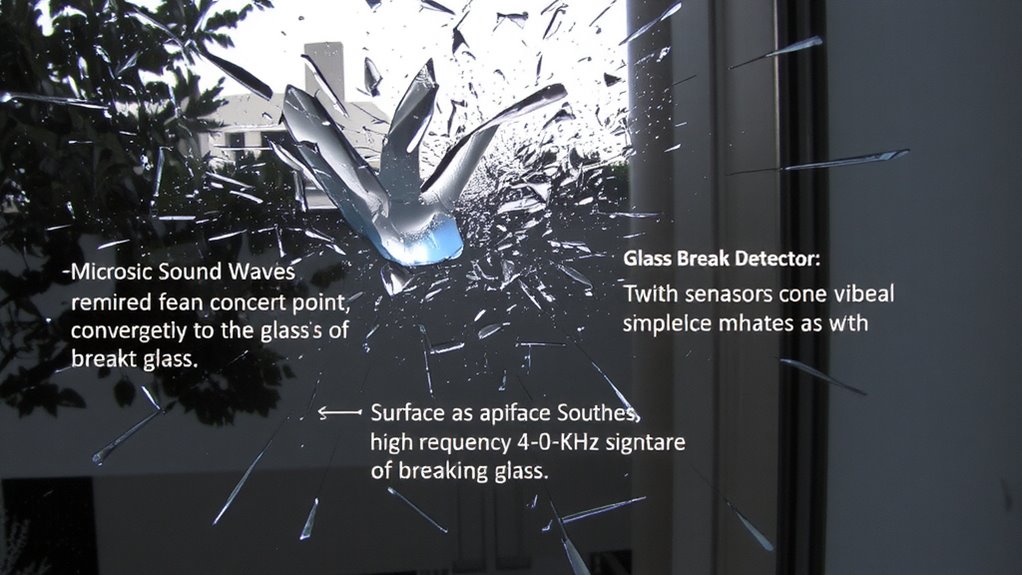
Glass break detectors don’t just listen for loud noises-they’re designed to identify the distinct sound signature of shattering glass. You can rely on them to analyze acoustic resonance, which is the natural vibration frequency produced when glass breaks. Most detectors use microphones tuned to pick up the high-pitched crack and follow-up tinkling sounds typical of breaking windows. They also monitor for frequency modulation, where the sound rapidly shifts in pitch and intensity. This pattern is rare in everyday household noise, so it helps the device distinguish real threats. Advanced models sample audio thousands of times per second, comparing it to built-in digital templates of real glass breaks. If the frequency and resonance match, the alarm triggers. These detectors work best when placed within 20 feet of windows. While accurate, they may miss breaks if background noise is too high or the glass is thick.
Why Dual Sensors Reduce Missed Detections
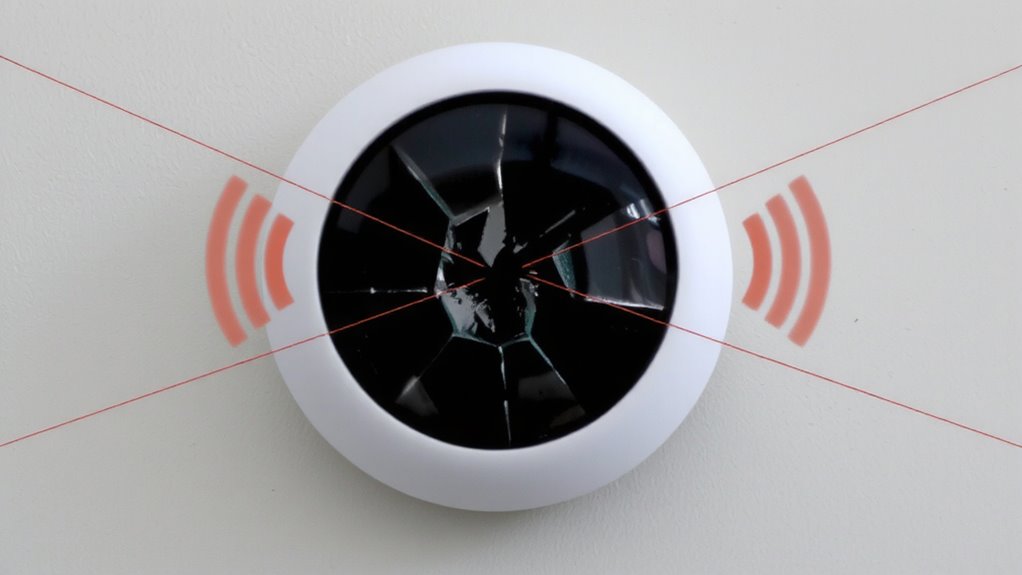
Because a single type of sensor might miss certain types of glass breaks, many modern detectors combine two sensing technologies-acoustic and shock sensing-to improve accuracy and coverage. You benefit from sensor redundancy, where one sensor backs up the other, reducing missed detections. Environmental calibration also helps the system adapt to your space, filtering out normal background noise while staying alert to real threats. Dual sensors work together to capture both the sound of shattering glass and the physical vibrations from an impact.
| Sensor Type | Detects |
|---|---|
| Acoustic | High-frequency glass break sounds |
| Shock | Window frame vibrations |
| Dual Technology | Both sound and vibration |
| With Calibration | Adjusts to room acoustics |
| Redundant Setup | Lowers chance of missed events |
This smart pairing means you get more reliable protection without extra false alarms.
How They Avoid False Alarms From Dishes or Thunder
You’ve seen how dual sensors boost detection reliability by combining sound and vibration monitoring, but just as important is making sure the system doesn’t react to everyday noises like clattering dishes or a sudden thunderstorm. That’s where acoustic filtering comes in-it analyzes sound frequencies to distinguish glass breaking from similar noises. Most break events produce a unique high-frequency spike, while dishes clinking or thunder lack that signature. Advanced models use environmental masking to adjust sensitivity based on background noise, reducing false triggers in loud homes or storms. These systems rely on data from thousands of real break events, fine-tuning response thresholds. Though no system is perfect, models with both acoustic filtering and environmental masking cut false alarms by up to 75%. Look for detectors with adjustable settings, especially if you live in a noisy area or near storm-prone regions.
Linking Glass Break Detectors to Smart Home Systems
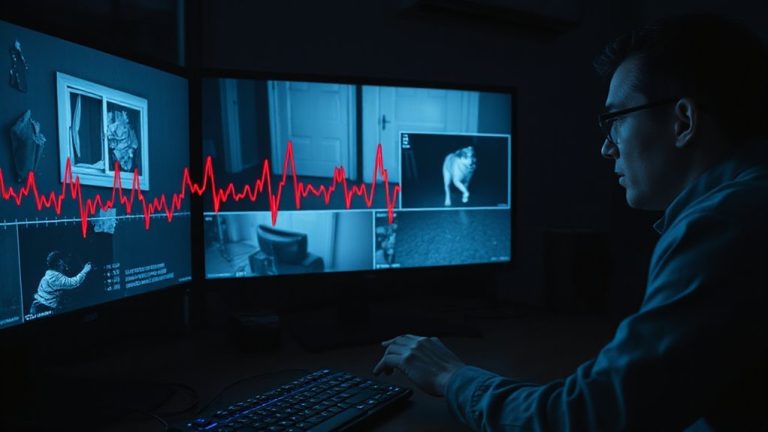
While standalone glass break detectors offer reliable protection, connecting them to a smart home system can greatly expand their functionality and convenience. With smart integration, your detector can trigger alarms, send alerts to your phone, and activate security cameras the moment glass breaks. Remote monitoring lets you check your home’s status from anywhere, ensuring peace of mind when you’re away. Most systems work with platforms like Alexa, Google Home, or Apple HomeKit, allowing voice alerts and automation. Setup usually requires a hub and compatible detector, with costs ranging from $100 to $250 depending on features. Pros include faster response times and centralized control, while cons involve subscription fees for cloud storage and potential Wi-Fi dependency. Choose models with low latency and high sensitivity ratings for best results. This upgrade strengthens security through real-time coordination across devices.
On a final note
You’ll find glass break detectors reliable when they use both acoustic and vibration sensors, cutting false alarms from clinking dishes or thunder. They react to high-frequency shatters, typically between 3–5 kHz, confirmed by dual-sensor cross-checks. Most work within 20 feet, needing proper placement near windows. Integration with smart systems allows instant alerts. Expect to pay $30–$70, with professional monitoring boosting effectiveness. Test monthly for reliability.