Understanding the Role of Drones in Enhancing Home Security Surveillance Systems: Advantages, Limitations, and Legal Considerations
You can use drones to enhance home security with aerial patrols that reduce blind spots by 63% compared to fixed cameras. They offer real-time alerts, live streaming, and autonomous routes, but face limits like 20–30 minute battery life and reduced performance in rain or strong winds. Be sure your drone has strong encryption, resists hacking, and complies with federal rules-register if it weighs over 0.55 pounds and avoid no-fly zones. Respect neighbors by adjusting flight paths and limiting nighttime use. More insights on model selection and safe operation follow.
Notable Insights
- Drones enhance home security with aerial surveillance, reducing blind spots and enabling real-time monitoring of large outdoor areas.
- Real-time motion alerts and live video streaming allow remote access to property surveillance from anywhere via smartphones or tablets.
- Limited battery life of 20–30 minutes requires strategic recharging or docking stations to maintain continuous security coverage.
- Cybersecurity risks include potential video feed hacking, necessitating strong encryption, passwords, and two-factor authentication for protection.
- Legal compliance involves registering drones over 0.55 lbs, avoiding no-fly zones, and respecting neighbor privacy to prevent legal conflicts.
Why Drones Are Changing Home Surveillance
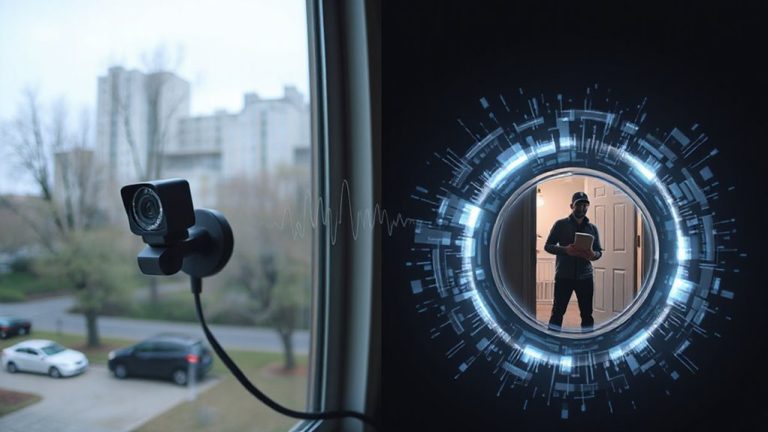
While traditional security cameras stay fixed in one spot, drone-based systems are transforming home surveillance by offering mobile, wide-area monitoring that adapts to changing threats. You can deploy drones for aerial patrols around your property, covering driveways, backyards, and perimeter fences more thoroughly than stationary units. With real time monitoring, you receive live video feeds directly to your smartphone or tablet, letting you respond quickly to suspicious activity. These systems detect motion and follow predefined routes autonomously, reducing blind spots markedly. Most models work with existing home security setups and use encrypted signals to protect your privacy. However, battery life averages 20–30 minutes, requiring frequent recharging. Initial costs range from $500 to $1,500, including docking stations and software. For consistent coverage, plan for multiple units or scheduled patrol times.
Top Benefits of Using Drones for Home Security
You get more than just a wider view when you add drones to your home security setup. Aerial monitoring lets you check hard-to-see areas like backyards, rooftops, or fences without blind spots. Combined with smart sensors, drones deliver real time alerts when motion is detected, so you’re notified instantly of potential intruders. Many models integrate with home security apps, allowing you to view footage remotely and take quick action.
| Benefit | Feature | Impact |
|---|---|---|
| Aerial monitoring | Overhead coverage | Reduces blind zones |
| Real time alerts | Instant notifications | Faster response times |
| Remote access | Live streaming | 24/7 surveillance from anywhere |
Drones strengthen prevention through consistent patrols and visible deterrence. Choose models with strong encryption and reliable connections to maintain system integrity. Setup costs vary, but long-term value comes from active monitoring that static cameras can’t match.
Battery Life, Weather Limits, and Hacking Risks
Most drones offer 20 to 30 minutes of flight time per charge, so you’ll need to plan patrols carefully to maintain consistent coverage. Limited flight duration means frequent recharging, which can create security gaps if not managed with backup batteries or automated docking stations. You should also consider weather limits-strong winds, rain, or extreme cold can reduce performance and risk damage. Many models aren’t built for harsh conditions, so check your drone’s operating specs. Hacking risks are another concern; weak encryption or unsecured Wi-Fi can expose your feed. Always use strong passwords and enable two-factor authentication. Signal interference from walls, power lines, or other devices may disrupt control and video transmission, affecting reliability. Choose drones with frequency-hopping technology to minimize signal interference. Look for models with at least 25 minutes of flight duration and weather resistance up to 15 mph winds and light precipitation for dependable home use.
Legal Rules for Flying Drones at Home
Where can you legally fly your drone around your home without running into trouble? You must follow federal and local rules to stay compliant. First, register your drone if it weighs over 0.55 pounds-this is called drone registration. Without it, you risk fines. Avoid no fly zones like airports, military bases, and emergency response areas. The FAA’s B4UFLY app helps identify these zones in real time.
| Area Around Home | Can You Fly? |
|---|---|
| Backyard (under 400 ft) | Yes |
| Near airport (5 miles) | No – no fly zone |
| Over neighbor’s pool | Risky – avoid |
| Front yard at noon | Yes |
| During wildfire nearby | No – temporary restriction |
Always check airspace updates before flying.
Respecting Privacy and Avoiding Neighbor Conflicts
Flying a drone responsibly doesn’t stop at knowing where you can operate-it extends to how your actions affect those around you, especially neighbors. You need strong boundary awareness to avoid crossing into private spaces, even accidentally. Pointing your drone’s camera at nearby homes or yards can spark tension, no matter your intent. Keep flights over your own property and set geofencing limits if your model allows. Noise management matters too-frequent buzzing overhead can annoy even the most understanding neighbors. Fly during daytime hours and limit hovering near shared walls or fences. Open communication helps; letting neighbors know your drone’s purpose and schedule reduces misunderstandings. Simple steps like adjusting flight paths and volume levels show respect. These practices don’t just prevent conflict-they build trust and make your security efforts more effective over time.
How to Choose the Right Home Security Drone
What should you look for when picking a home security drone that actually works for your needs? Start by evaluating flight time, camera quality, and ease of control-most effective models offer at least 20 minutes of flight and 1080p video. Drone customization lets you adjust settings like sensitivity, recording modes, and lighting, improving response to real threats. Flight planning tools are essential; they allow you to pre-set routes for routine property checks, increasing consistency and coverage. Look for drones with GPS tracking and return-to-home features for reliability. Consider weather resistance if you live in harsh climates. Entry-level drones start around $300 but may lack advanced features. Mid-range options, around $500–$700, typically balance performance and functionality. Always check local regulations before purchase, as some areas restrict drone use. Choose a model that aligns with your property size and monitoring goals.
Safe Drone Use: Best Practices
A well-maintained home security drone can substantially enhance your property’s protection, but only if used responsibly and with clear guidelines. Always perform pre-flight checks and follow local regulations to guarantee safe, legal operation. Thoughtful flight planning helps avoid accidents and improves surveillance efficiency. Use drone lighting to increase visibility during low-light patrols, guaranteeing you capture clear footage without startling neighbors. Respect privacy by limiting flights over private areas and avoiding neighboring properties.
| Practice | Benefit | Tip |
|---|---|---|
| Flight planning | Prevents collisions | Map routes before launch |
| Drone lighting | Improves night footage | Use adjustable brightness |
| Regular checks | Extends drone life | Inspect propellers monthly |
On a final note
You now know drones can boost home security with real-time monitoring and wide coverage, but they have limits like short battery life and weather sensitivity. Laws vary by location, so check local rules before flying. Respect neighbors’ privacy to avoid conflicts. Choose a drone with good camera quality, flight time, and encryption. Use it wisely, recharge regularly, and combine it with other security measures for best results.