Maximizing Natural Surveillance Opportunities Around Your Home
You can boost home security by using natural surveillance to deter intruders. Trim shrubs under three feet near windows and doors, so there are no hiding spots. Install motion-sensor lights ($30–$80 each) at entry points and dark corners-LEDs last longer but cost more upfront. Position windows to see driveways and sidewalks, and use open fencing to maintain clear sightlines. Combine porches, lighting, and low plants to encourage neighborhood watch. Coordinating with neighbors improves safety for everyone, and smart layout choices pay off in long-term protection.
Notable Insights
- Install motion-sensor lights at entry points to deter intruders and eliminate dark hiding spots.
- Position windows to overlook driveways, sidewalks, and entrances for improved outward visibility.
- Trim shrubs below three feet near windows and doors to prevent concealment and maintain clear sightlines.
- Use low, open fencing combined with pathside lighting to guide traffic and enhance visibility.
- Coordinate with neighbors to align lighting, landscaping, and visibility efforts for stronger community surveillance.
Understand Natural Surveillance and How It Prevents Crime
Safety starts with sightlines. You can markedly enhance crime deterrence by ensuring clear visual access around your property. Natural surveillance works because people are less likely to commit crimes when they feel they’re being seen. Position outdoor lighting near entry points and pathways-it’s proven to reduce nighttime offenses. Studies show well-lit homes experience up to 39% fewer break-ins. Use open fencing instead of solid walls to maintain visibility from sidewalks and neighboring homes. Neighborhoods with interconnected sightlines report higher perception of safety and lower burglary rates. While increased visibility offers strong passive protection, it requires ongoing maintenance like keeping walkways clear. It’s cost-effective-most lighting and design modifications range from $50 to $200. No special permits are usually needed, making it an accessible first step. You don’t need high-tech gear; simple changes boost your security by increasing observation opportunities.
Trim Shrubs Near Doors and Windows for Clear Visibility
While overgrown shrubs may add curb appeal, keeping them trimmed near doors and windows is a key step in strengthening your home’s natural surveillance. You want clear sightlines so neighbors and passersby can easily see entry points, deterring potential intruders. Overgrown front landscaping can hide criminal activity, but well-maintained plants improve visibility and safety. Trim shrubs to under three feet high near windows and doors so indoor views remain unobstructed. This simple step increases passive monitoring and supports community watchfulness. Research shows homes with clear sightlines experience fewer break-ins. Annual pruning costs $50–$150, depending on yard size, but the security benefit outweighs the expense. Avoid planting dense bushes near entries-opt for low-growing or thorny varieties that discourage hiding. Maintaining your front landscaping isn’t just about appearance; it’s a practical security strategy that keeps your home visible, predictable, and less appealing to criminals.
Install Motion-Sensor Lights at Entry Points and Dark Zones
If you’re serious about boosting your home’s security, installing motion-sensor lights at entry points and dark zones is one of the most effective steps you can take. Proper light placement deters intruders by eliminating hiding spots near doors, garages, and pathways. These lights activate only when movement is detected, offering energy efficiency by reducing unnecessary usage. Consider positioning them at entry points like front and back doors, side gates, and near dark corners where shadows gather. For optimal performance and reliability, choose from the best motion sensor flood lights based on detection range, brightness, and durability.
| Feature | Advantage | Consideration |
|---|---|---|
| Motion Detection | Alerts you to activity | May trigger falsely with pets |
| LED Bulbs | Long life, energy efficiency | Higher upfront cost |
| Adjustable Sensors | Custom light placement | Requires precise aiming |
Choose models with wide detection ranges and dusk-to-dawn settings. Good coverage enhances visibility for you and neighbors while cutting long-term costs.
Place Windows to Maximize Natural Surveillance
You’ve already made progress by lighting up dark areas with motion-sensor lights, which helps you and your neighbors notice suspicious activity. Now, focus on window placement to improve natural surveillance. Properly positioned windows extend clear sight lines from inside to key exterior areas like driveways, sidewalks, and entryways. This allows you to see approaching people or unusual behavior without stepping outside. Avoid blocking lower windows with landscaping or furniture. When planning or remodeling, place windows at standing eye level and align them with high-traffic zones. Double-pane glass and secure locks maintain safety without compromising visibility. Studies show homes with strong sight lines experience fewer break-in attempts because intruders avoid visibility. While larger windows can increase costs and heat loss, energy-efficient options balance security and comfort. Thoughtful window placement is a low-cost, effective layer of protection that complements lighting and neighborhood awareness.
Use Patios and Porches to Boost Neighborhood Watch
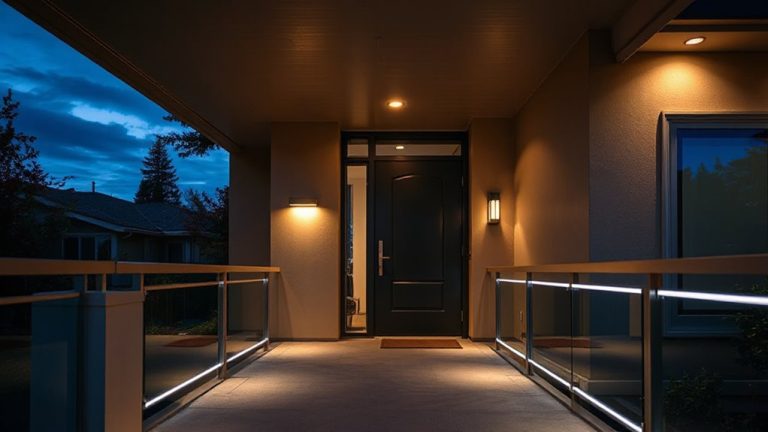
Since porches and patios often serve as natural gathering spots, positioning them to face shared spaces like sidewalks, streets, or common driveways can substantially enhance neighborhood watch efforts. Your porch positioning plays a key role-when you’re visible, so are potential intruders. Sitting outside makes you more likely to notice suspicious activity, and your presence alone deters crime. Add patio lighting to extend visibility into evening hours; motion-sensor or dusk-to-dawn lights are cost-effective and proven to reduce break-ins. Studies show homes with active outdoor spaces experience fewer property crimes. For best results, combine natural sightlines with consistent lighting. You don’t need expensive upgrades-strategic design does most of the work. Proper porch positioning and dependable patio lighting create passive surveillance, making your home and block safer without extra effort. These small changes improve awareness and community connection over time.
Keep Driveways and Side Paths Secure and Visible
While often overlooked, driveways and side paths can become security vulnerabilities if they’re poorly lit or blocked from sight, giving intruders places to hide. You need secure access and visible pathways to deter crime. Trim shrubs along walkways and install motion-sensor lighting to improve visibility. Consider low fencing to guide foot traffic and maintain clear sight lines. These steps increase natural surveillance and make your property less appealing to criminals.
The right lighting solution, such as wireless motion sensor lights, can enhance security without complex installations.
| Feature | Pros | Cost Estimate |
|---|---|---|
| Motion lights | Energy-efficient, automatic | $30–$80 each |
| Low fencing | Defines space, not obstructive | $15–$30 per linear foot |
| Pathside plants (low) | Attractive, clear view | $10–$25 per plant |
Secure access doesn’t mean isolation-it means smart, visible pathways that help you and neighbors notice suspicious activity.
Build a Safer Block Through Shared Visibility
Even when your own home is secure, the safety of your neighborhood depends on how well you and your neighbors can see and respond to unusual activity. You can build stronger community trust by sharing observations and keeping an eye out for each other’s properties. When people work together, it creates a shared responsibility that deters crime more effectively than isolated efforts. Simple actions-like leaving porches lights on, trimming shared hedges, and opening blinds during evening hours-boost visibility. Studies show neighborhoods with active watch programs and clear sightlines experience fewer break-ins. Coordinate with neighbors to identify blind spots and agree on lighting and landscaping standards. While it takes effort to organize, the payoff in safety and connection is worth it. Shared visibility isn’t just about watching; it’s about caring enough to act.
On a final note
You can reduce crime risks by using natural surveillance effectively. Trim shrubs near windows and doors so intruders can’t hide. Motion-sensor lights deter nighttime activity. Position windows and porches to overlook walkways, boosting neighborhood watch. Keep driveways and paths well-lit and visible. Shared visibility with neighbors increases safety. These low-cost, proven strategies work best when planned together, offering practical protection without extreme measures.