Using Landscaping Techniques to Improve Security by Determing Potential Intruders
You can deter intruders by keeping shrubs trimmed below windows and away from doors, ensuring clear sightlines for neighbors and passersby. Use thorny plants like barberry or holly under windows or along fences to block access. Install motion-sensor lights at entry points-solar models cost $20–$100 and reduce nighttime risk. Gravel paths crunch underfoot, adding an audible warning. Layering these elements strengthens security, and there’s more to contemplate for a fully protected exterior.
Notable Insights
- Keep shrubs low near windows and entry points to eliminate hiding spots and improve visibility.
- Use thorny plants like barberry or holly under windows to deter intruders physically.
- Install motion-sensor lighting at doors, windows, and pathways to detect and discourage nighttime intrusions.
- Lay gravel paths along access points to create audible noise when stepped on.
- Maintain clear sightlines by trimming trees and spacing plants to enhance natural surveillance.
Keep Sightlines Clear Around Your Home
While you might not think of shrubs and trees as security risks, overgrown landscaping can actually create blind spots that make your home more vulnerable. You can improve front yard visibility by keeping plantings low near windows and pathways, ensuring clear sightlines from inside your home to the street. A natural surveillance design means arranging landscaping so that neighbors and passersby can easily see your property, deterring potential intruders. Studies show homes with good visibility experience fewer break-ins. Avoid tall shrubs near entry points, and space trees so branches don’t hang low. Installing shorter plants or ground covers maintains aesthetic appeal while enhancing security. Planning costs are modest, often under $200 for redesign. The main trade-off is balancing privacy with openness, but the security benefit outweighs minor privacy loss.
Trim Shrubs to Eliminate Hiding Spots
Trimming shrubs is one of the simplest yet most effective ways to reduce hiding spots around your home. You want to maintain clear sightlines, especially near entry points, windows, and walkways. Overgrown foundation planting can provide cover for intruders, so keep shrubs below windowsills and away from doorways. For privacy screening, consider strategic placement and regular pruning instead of dense, tall growth. This balances visibility with your need for seclusion.
| Feature | Pro | Con |
|---|---|---|
| Low shrub height | Improves visibility | Less visual barrier |
| Frequent trimming | Deters hiding | Requires maintenance |
| Strategic foundation planting | Enhances curb appeal & safety | Needs planning |
Regular upkeep guarantees your landscaping supports security while maintaining aesthetic value. You’ll gain peace of mind knowing your yard doesn’t invite unwanted attention.
Use Thorny Plants as Natural Barriers
Thorny plants like barberry, holly, and pyracantha can serve as effective natural barriers that deter intruders while enhancing your landscape. You’ll find thorny hedges work well under windows or along property lines, making unauthorized access uncomfortable and slow. These plants create dense, prickly fences that are hard to cross quietly, giving you added security without harsh materials. Most species are low-maintenance and drought-tolerant once established, reducing long-term costs. Barberry costs about $15–$25 per plant and grows quickly, while holly can live decades with minimal care. Thorny hedges aren’t ideal near walkways, though-you’ll want to avoid accidental injuries. Place them strategically where intruders might enter, not where family or pets pass often. With proper spacing and care, prickly fences combine beauty and function, offering a discreet yet effective layer of protection around your home.
Install Lights to Deter Nighttime Intruders
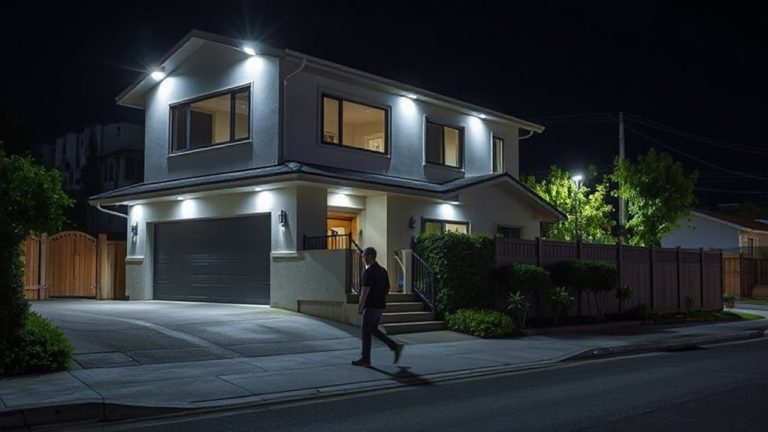
Light can be one of your most effective tools for preventing break-ins, especially when installed with strategy and purpose. You should place lights along entry points like doors, windows, and garages, where intruders are most likely to approach. Motion sensors make lighting even more effective, turning on only when movement is detected, which startles intruders and alerts you to activity. They reduce energy use and minimize light pollution. Solar powered options are easy to install since they don’t require wiring and work well in sunny areas, though their brightness may vary on cloudy days. While initial costs range from $20–$100 per fixture, they often pay for themselves through lower electricity bills and increased security. For best results, combine different light types and avoid dark corners. A well-lit property signals that you’re watchful and makes your home a less appealing target. For reliable performance, consider installing one of the best wireless motion sensor lights designed specifically for outdoor use.
Add Gravel Paths That Make Noise
You can turn your yard into a natural alarm system by adding gravel paths near entry points like side doors, back patios, or basement windows. The crunch of gravel underfoot is hard to miss, especially at night, and acts as an audible warning of movement. Gravel texture matters-choose angular, coarse stones over smooth pebbles, as they lock together and create more noise when stepped on. Proper path placement is key; install paths within 3 to 5 feet of vulnerable access points so intruders must cross them. Crushed granite or #57 stone are cost-effective options, typically running $40–$60 per ton. Install a 2- to 3-inch layer over landscape fabric to prevent weeds and settling. While gravel paths may require occasional raking or refilling, their low cost and high effectiveness make them a smart, data-backed addition to your home’s layered security strategy.
Protect Windows With Smart Landscaping
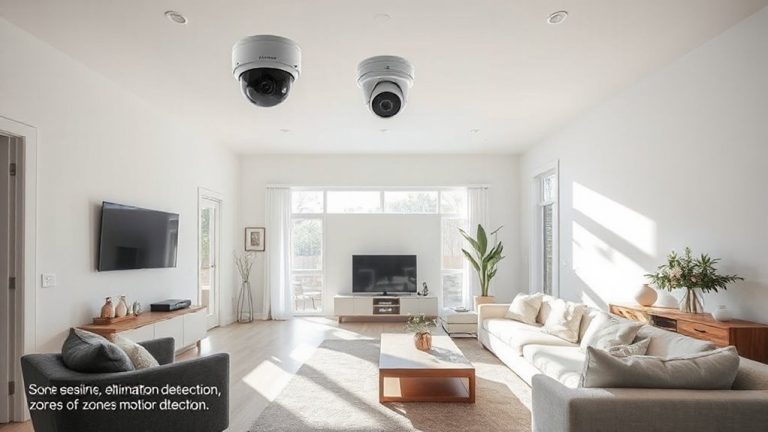
While keeping your windows visible and unobstructed might seem like the best way to monitor them, strategically using landscaping can actually enhance their security without sacrificing safety. Thorns and dense shrubs under windows deter intruders, while still allowing window sensors and surveillance cameras to function. You’ll maintain visibility for monitoring and guarantee plants don’t block essential security devices.
| Feature | Benefit |
|---|---|
| Thorny shrubs | Discourage climbing |
| Low-growing plants | Won’t block window sensors |
| Open spacing | Maintains camera sightlines |
| Evergreen varieties | Year-round coverage |
| Strategic placement | Avoids hiding spots near windows |
Position plants so they don’t interfere with surveillance cameras or window sensors. Choose species that stay compact and avoid heavy foliage near access points. Proper planning prevents false alarms and maintains clear camera views, improving detection. Smart landscaping supports tech-based tools instead of replacing them. You get layered protection that’s both natural and effective, without added cost or maintenance.
Layer Plants, Light, and Sound for Maximum Deterrence
Beyond just blocking access, your yard can actively discourage intruders by combining plants, lighting, and sound in a coordinated layout. You can use thorny shrubs near entry points, motion-activated lights along pathways, and water features that create consistent background noise to mask suspicious sounds. Aromatic gardens with lavender or rosemary not only add pleasant scents but also deter trespassers who prefer quiet, hidden spaces. Layering these elements increases surveillance effectiveness-bright areas reduce hiding spots, while sound from water features makes stealth harder. Studies show properties with varied sensory cues experience fewer intrusion attempts. Install solar-powered lights for cost efficiency, and position water features near patios or fences where sound carries well. Though initial setup may cost $200–$600, the long-term security benefits are proven. Plan placements to avoid overgrowth that could block light or sound over time.
On a final note
You can strengthen your home’s security by using smart landscaping. Trim shrubs, keep sightlines clear, and use thorny plants to block access. Install motion-sensor lights and gravel paths that make noise. Layer these features-plants, light, and sound-for best results. These low-cost, evidence-based steps deter intruders effectively, require little maintenance, and boost curb appeal while keeping your property safer night and day.