How to Align and Test Magnetic Sensors on Sliding Glass Doors
Mount the sensor on the fixed frame and the magnet on the sliding door, making certain both are aligned on the same plane. Keep the gap under 1/4 inch when closed to maintain a stable magnetic field. Check alignment regularly, as warping or shifting can cause false alarms. Test the sensor by opening the door-alarm should trigger within one second. Use the system’s test mode and verify with an indicator light or app. Proper alignment ensures reliable operation, and ongoing checks help maintain accuracy over time.
Notable Insights
- Mount the sensor on the fixed frame and the magnet on the moving door, ensuring they align when closed.
- Keep the gap between sensor and magnet under 1/4 inch for reliable magnetic field contact.
- Ensure both units are on the same plane and parallel to maintain proper alignment.
- Test the sensor by opening the door while in system test mode; alarm should trigger within one second.
- Recheck alignment and clean components if false alarms occur or sensor fails to trigger.
Know How Magnetic Sensors Work
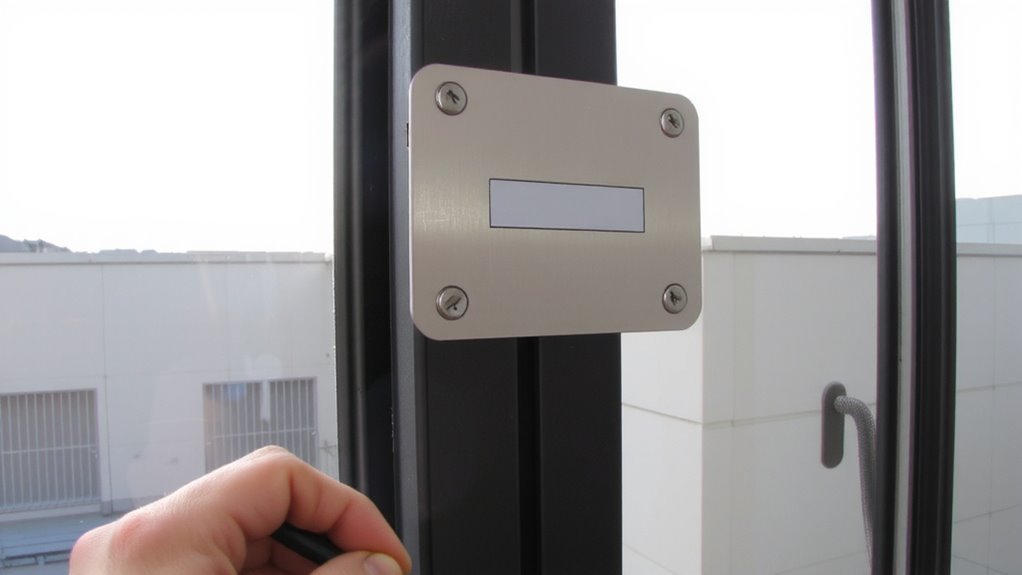
You’ve probably seen those small devices mounted on sliding glass doors-they’re magnetic sensors, and they’re a critical part of most home security systems. These sensors work in pairs: one contains a magnet, the other a switch. When the door opens, the magnetic field breaks, triggering the alarm. The correct magnetic polarity matters-reverse it, and the sensor won’t activate properly. Sensor sensitivity varies by model; some detect even slight shifts, while others need a wider gap. High sensitivity can reduce false negatives but may increase false alarms if set too aggressively. You’ll want to check the manufacturer’s specs for operating distance, usually between 1/2 to 1 inch. Battery-powered models offer easy installation but require periodic replacement. Hardwired versions provide consistent power but need professional setup. Knowing how these components interact helps you choose and maintain an effective system.
Check for Misalignment
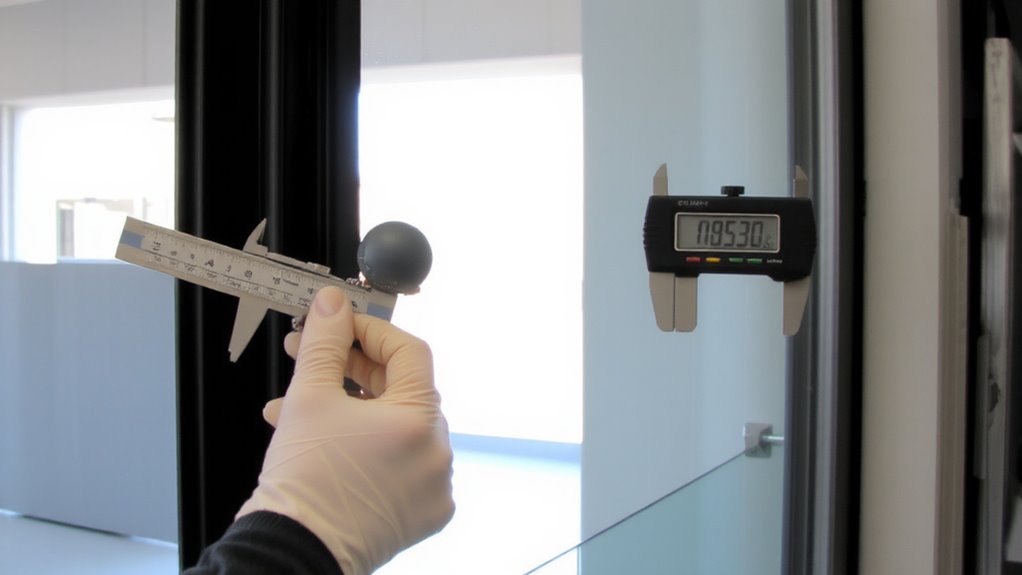
Why do some magnetic sensors fail even when properly installed? Misalignment often causes false alarms or missed triggers. Over time, door frame warping from humidity or structural shifts can push the sensor and magnet out of sync. Even a small gap reduces reliability. You should inspect both components monthly, checking that they’re still parallel and within the recommended 1/4-inch gap. Poor sensor calibration leads to inconsistent readings, so guarantee the sensor’s indicator light responds when the door opens and closes. Don’t rely solely on initial setup-environmental changes matter. Test alignment with a voltmeter if available, or use the manufacturer’s app for diagnostics. Catching misalignment early prevents security gaps. Simple visual checks and periodic testing maintain performance. Ignoring subtle shifts risks system failure when you need it most. A secure setup also depends on choosing the right hardware, such as a smart lock compatible with sliding mechanisms like those found in the best smart locks for sliding glass doors.
Align the Sensor and Magnet
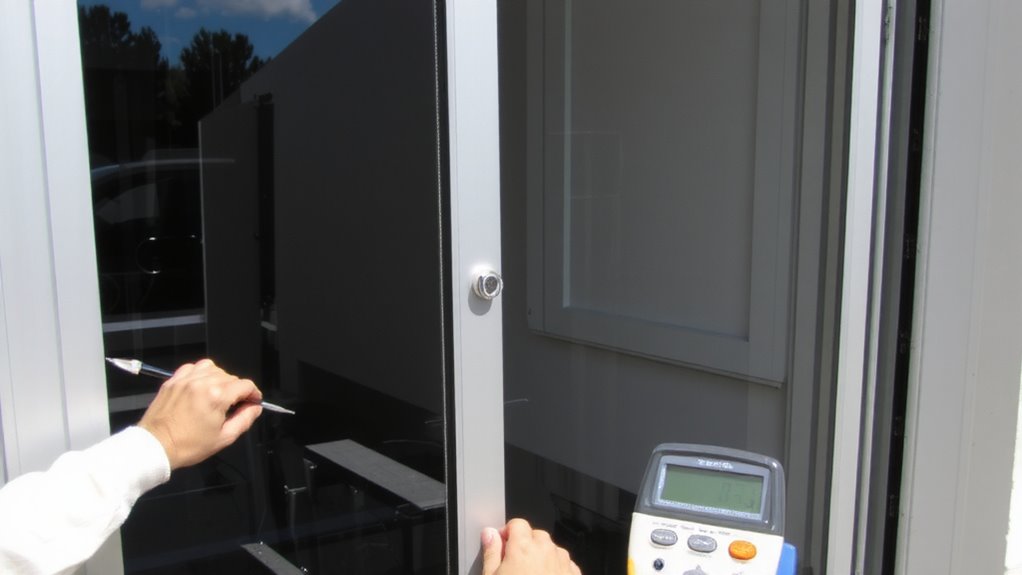
A properly aligned sensor and magnet are essential for reliable operation, so take a few minutes to position them correctly. Begin by ensuring the sensor and magnet are mounted on the same plane-both should be level and directly across from each other. Proper magnet positioning is key; most manufacturers recommend a gap no larger than 1/4 inch when the door is closed. Use a ruler to measure this distance and adjust as needed. Misalignment can interfere with sensor calibration, causing false alarms or missed triggers. Mount the sensor on the fixed frame and the magnet on the moving door, making sure neither shifts during operation. Both components should remain parallel. Secure them with strong adhesive or screws, depending on your model. Avoid metal surfaces near the sensor, as they may disrupt the magnetic field. Proper alignment now simplifies calibration and improves long-term performance.
Test the Sensor Immediately
Once the sensor and magnet are securely in place and aligned with no more than a 1/4-inch gap, it’s time to verify they work as expected. Test the sensor immediately by sliding the door open while the system is armed in test mode. You should hear the alarm trigger within one second, confirming proper response. This step guarantees correct sensor calibration and checks the alarm sensitivity setting. If the alarm doesn’t sound, recheck alignment-misalignment is the most common cause. Most systems allow sensitivity adjustments; if the sensor is too insensitive, it may fail to detect opening, but if too sensitive, it could lead to accidental triggers. Confirm the manufacturer’s guidelines for best performance. Testing right after installation gives you real-time feedback, helping avoid security gaps. Immediate verification supports reliable operation and peace of mind. For added protection, consider installing best window locks to complement your sensor system.
Fix False Alarms and Sensor Gaps
How often do false alarms disrupt your routine or leave gaps in your home’s security? False triggering is often due to misalignment or poor sensor calibration. You can fix most issues by rechecking the distance between the sensor and magnet-ideally under 1/4 inch. Guarantee both units are firmly attached and free of debris. Realign if the door frame has shifted over time. Upgrading to high-quality sliding window locks can further enhance security and reduce sensor-related issues.
| Issue | Cause | Solution |
|---|---|---|
| False alarms | Misalignment | Adjust sensor position |
| Sensor gaps | Loose mounting | Tighten screws, reattach |
| False triggering | Poor calibration | Recalibrate per manufacturer specs |
Regular sensor calibration prevents vulnerabilities. Test monthly to maintain reliability. If problems persist, consider upgrading to models with adjustable sensitivity. Prevention saves time, reduces risk, and strengthens your home’s defense without extra cost. Address small issues now before they become security threats.
On a final note
You’ve checked the alignment, adjusted the sensor and magnet, and tested the system-you now have a reliable door sensor. Proper spacing, usually 1/4 to 1/2 inch, prevents false alarms. If gaps remain, recheck placement or replace worn parts. Regular testing guarantees ongoing security. This simple maintenance boosts system accuracy, giving clear, real-time feedback on door status without costly upgrades.