Dual-Tech Motion Detectors: Cut False Alarms by 30% (PIR + Microwave)
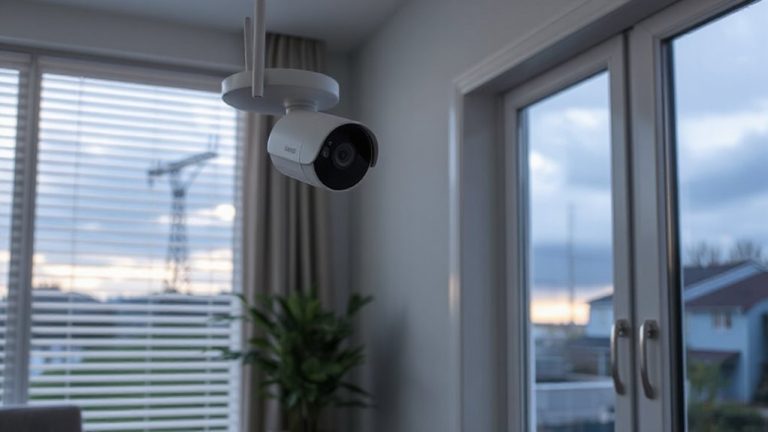
You’re using a dual-tech motion detector when both passive infrared (PIR) and microwave sensors must confirm movement to trigger an alarm. This dual confirmation cuts false alarms by 30%, since common triggers like sunlight or pets rarely set off both sensors. It costs 20–30% more than single-tech models but offers greater reliability in temperature shifts or cluttered rooms. You’ll find it best suited for hallways, living areas, and stairwells where accuracy matters most-smart placement and calibration boost performance. Further details reveal how tuning each sensor improves real-world results.
Notable Insights
- A dual-tech motion detector combines PIR and microwave sensors to confirm motion using two different technologies.
- It reduces false alarms by requiring both sensors to detect motion before triggering an alert.
- Common triggers like sunlight or pets often activate only the PIR sensor, not both.
- Microwave sensors are unaffected by heat changes, making the system more reliable during temperature shifts.
- Proper installation and calibration ensure optimal sensor overlap and minimize false alarms in homes.
What Is a Dual-Tech Motion Detector?
Motion detection Scouts technology takes a smart step forward with dual-tech sensors, combining two different methods to reduce false alarms. You’ll find these detectors use both passive infrared (PIR) and microwave sensors to confirm motion detection. When both sensors trigger within a set time, the alarm activates-this is sensor fusion at work. It means fewer false alerts from pets, drafts, or sunlight. Dual-tech motion detectors are more reliable than single-technology models, especially in environments with temperature shifts or cluttered spaces. You benefit from improved accuracy, but they may cost 20–30% more than basic units. Installation is similar to standard detectors, though proper placement near entry points guarantees best performance. They’re ideal for homes with pets or variable lighting. While sensitivity can be adjusted, you’ll need to balance security with convenience. Sensor fusion gives you confidence the alarm responds to real threats. For those integrating with smart home systems, choosing Home Assistant-compatible sensors ensures seamless automation and monitoring.
Why Dual-Tech Reduces False Alarms
While no sensor is perfect, dual-tech motion detectors cut false alarms markedly by requiring both infrared and microwave signals to trigger. You benefit because common issues like signal interference or environmental fluctuations rarely affect both sensors at once. For example, sunlight won’t activate microwave detection, and drafts won’t mimic body heat. This dual-layer logic means fewer false alerts.
| Factor | Infrared Only | Dual-Tech |
|---|---|---|
| Signal Interference | High risk | Low risk |
| Heat Changes | Often triggers | Rarely triggers |
| Moving Objects (non-human) | May trigger | Usually ignored |
| Energy Use | Low | Moderate |
| False Alarm Rate | Higher | Substantially lower |
You get reliable detection with far fewer errors. Choose dual-tech sensors where accuracy matters most-entry points and living areas. Though slightly costlier, their performance saves time and boosts home security confidence. Top models in the best motion sensors for lights roundup include dual-tech options that combine sensitivity with smart filtering.
Common Home Triggers: and How Dual-Tech Beats Them
Because everyday household elements like pets, sunlight, and appliances can mimic intrusion signals, standalone motion sensors often sound false alarms-about 30% of all system alerts stem from non-threat triggers, according to security industry reports. You’ve probably experienced this: pet movement across the room sets off the alarm, or sunlight glare hits the sensor just right, prompting a false alert. Dual-tech detectors reduce these nuisance alarms by requiring both PIR and microwave signals to trigger. That means if your cat walks by but doesn’t cause the needed dual response, the alarm stays silent. Similarly, changing light conditions or brief sunlight glare won’t trip the system unless motion also registers on the microwave sensor. This dual confirmation makes your system smarter and more reliable. You get better security without constant false alerts, saving time and reducing frustration. It’s a practical upgrade for pet owners and sunlit homes. For optimal protection, consider pairing dual-tech sensors with one of the best motion detectors for every home.
How PIR and Microwave Sensors Work Together
You’ve seen how everyday home activities can trick basic motion detectors into false alarms, but dual-tech sensors tackle this problem by combining two detection methods-PIR and microwave-so only real threats trigger a response. The PIR sensor picks up body heat changes, while the microwave sensor sends out pulses that reflect off moving objects. Both signals must detect motion at the same time-this is called signal overlap-and that’s what confirms a real intruder. Without overlap, the alarm stays silent. Sensitivity calibration lets you adjust each sensor’s range and responsiveness, reducing false triggers from pets or outdoor movement. You’ll need to position the unit carefully and fine-tune settings so both sensors cover the same area effectively. This dual verification process improves accuracy markedly compared to single-technology detectors.
Dual-Tech vs. Single-Sensor: Which Is Right for You?
What makes one motion detector more reliable than another? It often comes down to whether it uses dual-tech or single-sensor technology. Dual-tech detectors combine PIR and microwave sensors, requiring both to trigger an alarm-this boosts accuracy. Single-sensor units rely on just one technology, making them more prone to false alarms. While dual-tech models offer better performance, they can have higher installation complexity and need precise sensor calibration to work effectively. Here’s a quick comparison:
| Feature | Dual-Tech Detector | Single-Sensor Detector |
|---|---|---|
| False Alarm Rate | Lower | Higher |
| Installation Complexity | Moderate to High | Low |
| Sensor Calibration | More precise needed | Less critical |
Choose dual-tech if reliability matters most; pick single-sensor for simpler setups and lower cost.
Best Places to Install Dual-Tech Detectors
Where should you place a dual-tech motion detector to get the most out of its advanced sensing capabilities? Focus on high-traffic interior zones like hallways, stairwells, and living areas where intruders are likely to pass. Ceiling placement improves detection angles and reduces the chance of sensor obstruction. Mounting detectors 7 to 9 feet high guarantees maximum range for both infrared and microwave technologies. Avoid placing them near heat sources or air vents, which can interfere with infrared sensing. For larger rooms or open floor plans, use multiple units to guarantee complete blind spot coverage. Corners of rooms often create detection gaps, so angle the sensors carefully. Entry points like garage doors and basements also benefit from dual-tech protection due to frequent temperature changes that could trigger false alarms in single-tech models. Always test coverage after installation to confirm reliable performance.
Optimize Settings for Maximum Accuracy
After choosing the right locations for your dual-tech motion detectors, fine-tuning their settings guarantees you get reliable performance without false alarms. You’ll want to apply proper calibration techniques, like aligning the infrared and microwave sensors to cover the same zone, ensuring both technologies detect motion simultaneously. This reduces triggers from pets or heat changes. Use sensitivity balancing to adjust each sensor so neither is too reactive-lower sensitivity helps ignore small animals, while higher settings cover larger areas. Most models let you tweak these via dials or apps, and some even learn patterns over time. Testing over 24 hours in different conditions helps verify accuracy. Though it takes a little time, correct calibration improves reliability markedly. Higher-end units offer more precise control, but even basic models work well with careful setup.
On a final note
You reduce false alarms by combining PIR and microwave sensors in one unit. Dual-tech detectors require both sensors to trigger, improving accuracy. They ignore common home disturbances like pets or sunlight. Install them in entry points and high-traffic areas for best results. Though pricier than single-tech models, their reliability makes them worth it. Adjust sensitivity settings to match your space, ensuring fewer false alerts and stronger home security.