How to Protect Security Devices Against Power Surges and Weather Damage
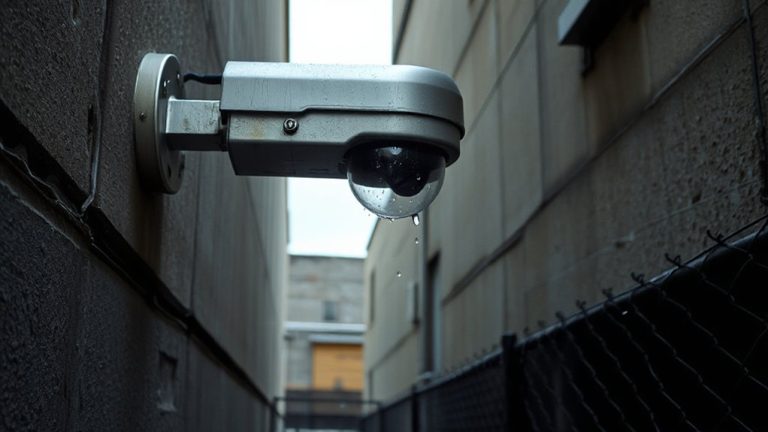
Use security-specific surge protectors with at least 1,000 joules to block voltage spikes from lightning. Seal outdoor connections and install IP66-rated enclosures to keep cameras dry and dust-free. Elevate wiring with UV-resistant conduit and seal joints to prevent water and pest damage. Ground all equipment to a dedicated rod using copper wire. Test systems yearly and choose weather-hardened gear-smart upgrades pay off when storms hit, and more key steps can make your setup even more resilient.
Notable Insights
- Use security-specific surge protectors with high joule ratings to prevent damage from voltage spikes during storms.
- Install outdoor cameras in weatherproof enclosures with IP66 or higher ratings for full moisture and dust resistance.
- Seal all outdoor connections with waterproof couplers and use UV-resistant conduit to protect wiring from weather and pests.
- Properly ground all security equipment by connecting to a grounded rod or panel to divert surge currents safely.
- Elevate and route cables using clips or conduits, and inspect connections biannually for corrosion or wear.
Protect Security Systems From Power Surges and Storms
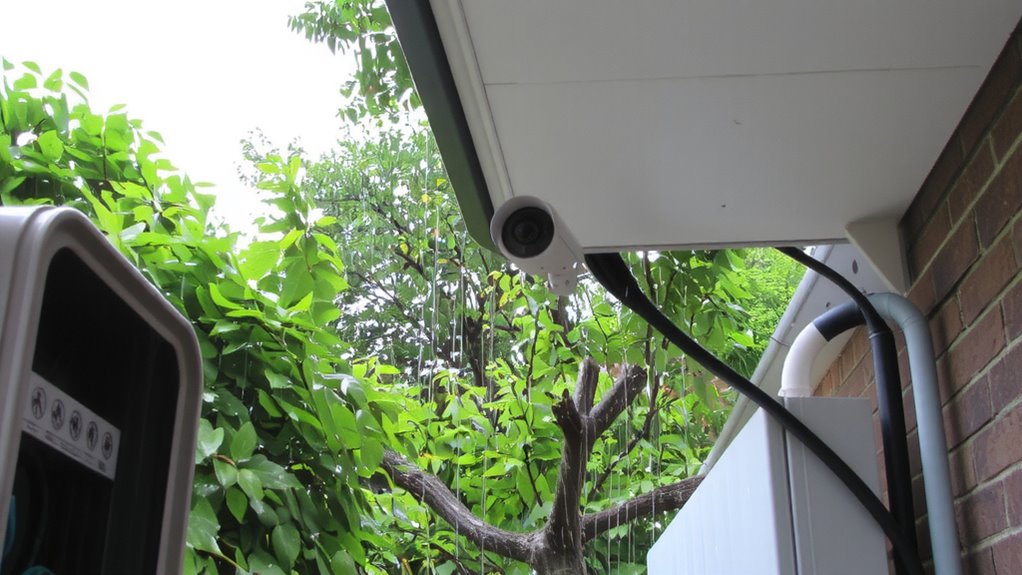
When storms roll in, your security system faces two major threats-power surveys and water damage-and taking steps now can prevent costly repairs or downtime later. Lightning strikes can send sudden surges through power lines, frying sensitive electronics even if your home isn’t directly hit. Water intrusion from heavy rain may also damage outdoor cameras or sensors, compromising coverage. To reduce risk, seal outdoor connections with waterproof covers and guarantee equipment has an IP66 or higher rating. Signal interference from electrical storms might briefly disrupt wireless communication, so use systems with dual-band radios to maintain stability. Consider mounting antennas higher to minimize disruption. While surge damage can cost hundreds to repair, proactive measures like proper sealing and placement are low-cost safeguards. Invest in weather-resistant housings-usually $20–$50-and inspect them annually.
Use Security-Specific Surge Protectors
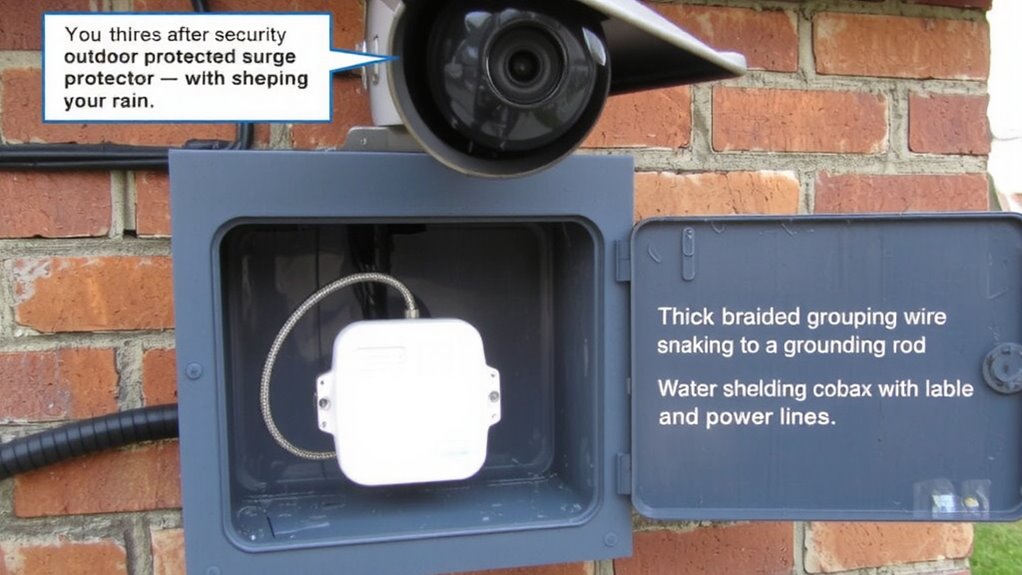
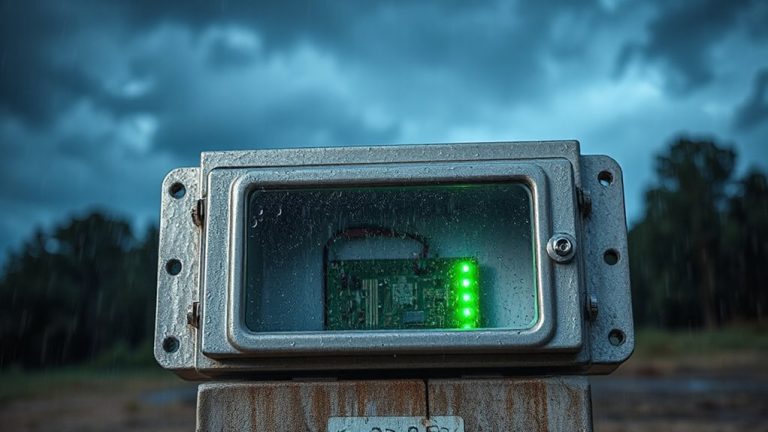
A standard power strip won’t cut it when protecting your security system from lightning-induced surges. You need security-specific surge protectors with surge detection and voltage monitoring to safeguard sensitive equipment. These devices respond faster and offer better protection than general models.
| Feature | Standard Strip | Security-Specific Protector |
|---|---|---|
| Surge Detection | No | Yes |
| Voltage Monitoring | No | Yes |
| Joule Rating | 300–500 | 1,000–3,000 |
| Price Range | $10–$20 | $25–$60 |
Security-specific units detect voltage spikes instantly and cut power before damage occurs. They also monitor line voltage, alerting you to irregularities that might harm cameras or recorders. Though pricier, their advanced protection is worth it. Install one at each security device or hub. They’re a smart, data-backed upgrade-especially in storm-prone areas.
Install Weatherproof Enclosures for Outdoor Cameras
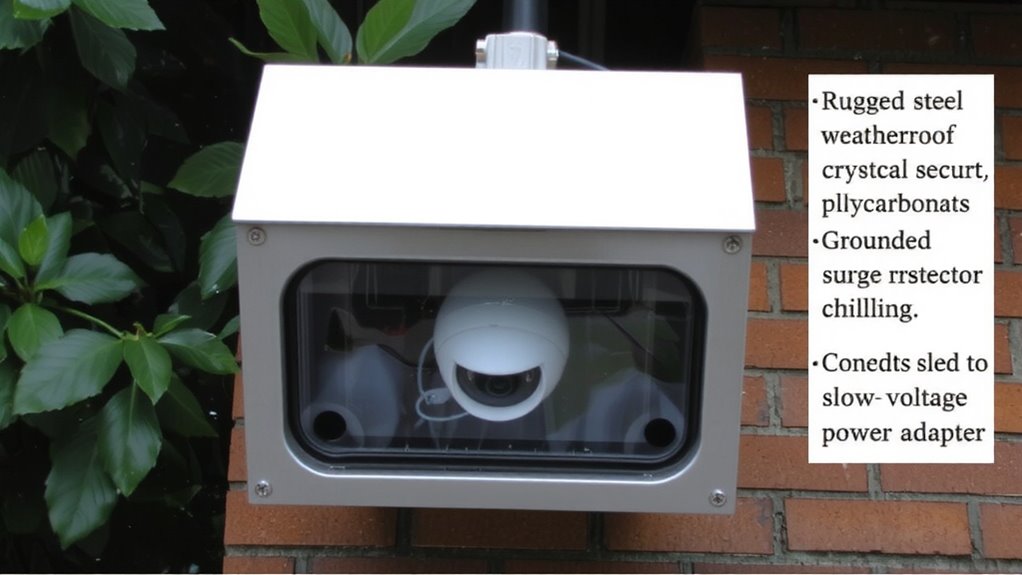
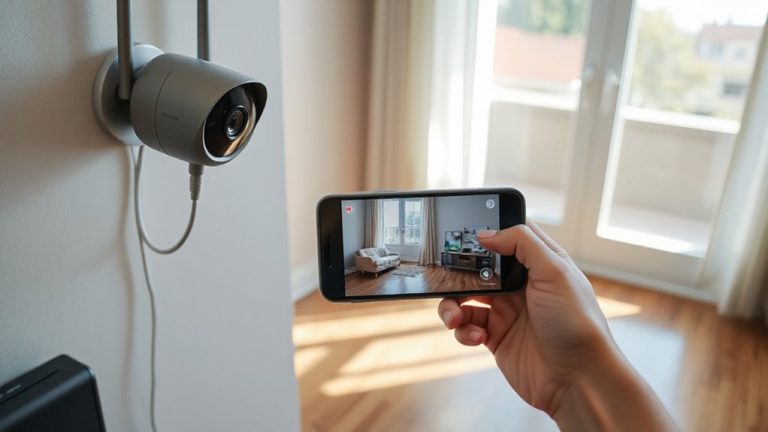
Your outdoor cameras face constant exposure to rain, snow, dust, and extreme temperatures-so their protection matters just as much as their placement. Installing weatherproof enclosures safeguards your cameras and extends their lifespan. These enclosures are rated using IP (Ingress Protection) codes, with IP66 or higher recommended for full dust and moisture resistance. Proper camera placement guarantees maximum coverage while allowing easy access for maintenance. A well-positioned enclosure won’t block the view or create glare. Effective cable management reduces strain on connections and minimizes water entry risks. Choose enclosures with built-in cable glands or knockouts to secure wiring neatly. While most enclosures are affordable-ranging from $20 to $50-higher-end models offer heating and cooling features for extreme climates. Invest in quality to protect your security investment long term.
Elevate and Seal Outdoor Wiring
Keep cables off the ground to reduce exposure to moisture, pests, and physical damage-this goes hand in hand with using weatherproof enclosures to fully protect your outdoor surveillance system. Proper cable management isn’t just neat; it’s essential for longevity and performance. Elevate wires using clips or conduits, and seal connections with waterproof couplers to guarantee moisture resistance. UV-resistant conduit adds durability against sun exposure and temperature swings. For optimal network reliability, consider using best ethernet cables for security cameras that are designed to withstand outdoor conditions while delivering consistent data transmission.
| Solution | Benefit |
|---|---|
| Cable clips | Affordable, easy to install |
| Conduit tubing | Superior protection, improves cable management |
| Waterproof tape & couplers | Enhances moisture resistance at joints |
Sealing and elevating wiring prevents degradation over time. Use corrosion-resistant materials and inspect connections biannually. Good planning now saves costly repairs later-invest in quality supports and seals to protect both signal integrity and equipment life.
Ground All Security Equipment
When installing outdoor security devices, grounding all equipment isn’t just a best practice-it’s a critical defense against power surges caused by lightning or electrical faults. You must guarantee proper equipment grounding to protect circuits and connected devices. This means attaching a grounding wire from each security unit-like cameras or DVRs-to a grounded electrical panel or rod. Electrical bonding ties all metal parts together, preventing voltage differences that can cause damage during a surge. Without this, even small surges can degrade or destroy your system over time. Use copper wire and UL-listed clamps for reliable connections. Grounding rods should be at least 8 feet deep for effective dissipation. Though it takes extra time during setup, it reduces long-term repair costs. Most electrical codes require it, so skipping this step could also void warranties or insurance coverage.
Choose IP-Rated Cameras for Harsh Weather
Resilience matters when security cameras face rain, snow, or extreme heat, and that’s where an IP (Ingress Protection) rating makes all the difference. You need cameras with high temperature tolerance and corrosion resistance to handle tough conditions. An IP66 or IP67 rating guarantees your device resists water jets and dust, while materials like aluminum housings improve durability.
| IP Rating | Water Protection | Ideal Use Case |
|---|---|---|
| IP65 | Low-pressure water jets | Light rain areas |
| IP66 | Powerful water jets | Coastal zones |
| IP67 | Temporary immersion | Flood-prone sites |
Choose higher ratings for better corrosion resistance and wider temperature tolerance. These models perform in -30°C to 60°C, making them reliable year-round. Though pricier, they reduce long-term repair costs. Investing in strong IP-rated cameras means fewer failures when weather turns severe. For dependable performance, consider models highlighted in the best outdoor security cameras roundup.
Test and Maintain Before Storm Season
Since storm season can expose weaknesses in your security setup, it’s smart to test and maintain your devices a few weeks before severe weather arrives. Start with a thorough system inspection: check camera housings, seals, wiring, and mounts for wear or damage. Clean lenses to guarantee clear footage, and verify that all connections are secure. Perform device servicing by updating firmware, replacing aging components, and testing backup power sources like batteries or UPS units. Make sure outdoor devices still meet their IP rating requirements after prolonged exposure. Confirm that surge protectors are functioning and replace any that have taken past hits. Testing now reduces failure risks during storms. Plan for recurring annual maintenance, which typically takes under two hours and may save hundreds in repairs. Address small issues early-they’re cheaper and easier to fix.
On a final note
You can protect your security devices by using surge protectors made for security systems, which help prevent damage during electrical spikes. Install weatherproof enclosures and choose cameras with high IP ratings to withstand rain and extreme temperatures. Seal and elevate outdoor wiring, and guarantee all equipment is properly grounded. Test everything before storm season. These steps are cost-effective and proven to extend system life, reduce repairs, and maintain reliable performance when you need it most.