How to Waterproof Outdoor Motion Sensors for Year-Round Operation
Place your outdoor motion sensor under an eave or porch to stay dry, and angle it slightly downward to shed water. Use a polycarbonate cover with a rubber gasket-costing $10–$25-for full protection without blocking detection. Seal wires with gel-filled connectors and silicone tape, never standard tape. Caulk around the base with UV-resistant silicone, avoiding vents. Check yearly for corrosion, clean gently, and reseal if needed-smart maintenance keeps it reliable for years. You’ll find even more ways to boost durability and accuracy just ahead.
Notable Insights
- Mount sensors under eaves or overhangs to shield from rain and snow while ensuring a slight downward tilt for water runoff.
- Install a weatherproof cover with a rubber gasket to block moisture and dust without obstructing motion detection.
- Seal wiring connections with gel-filled connectors and self-amalgamating silicone tape to prevent corrosion and moisture ingress.
- Apply 100% silicone caulk around the sensor base to close wall gaps, ensuring vents remain uncovered for proper airflow.
- Inspect sensors seasonally for corrosion, clean gently, and check seals, aiming, and cover integrity for reliable performance.
Pick a Sheltered Spot to Keep Sensors Dry
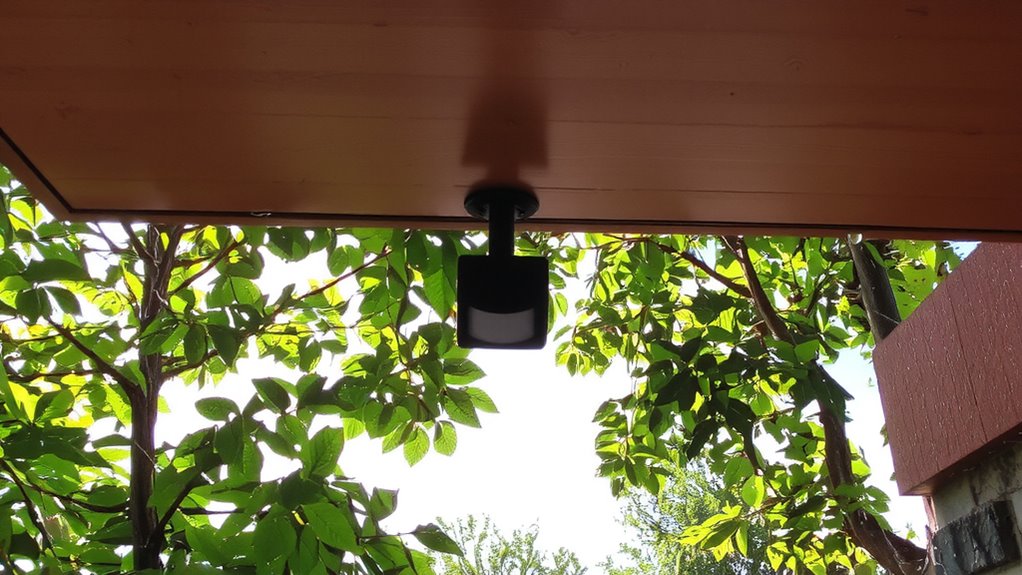
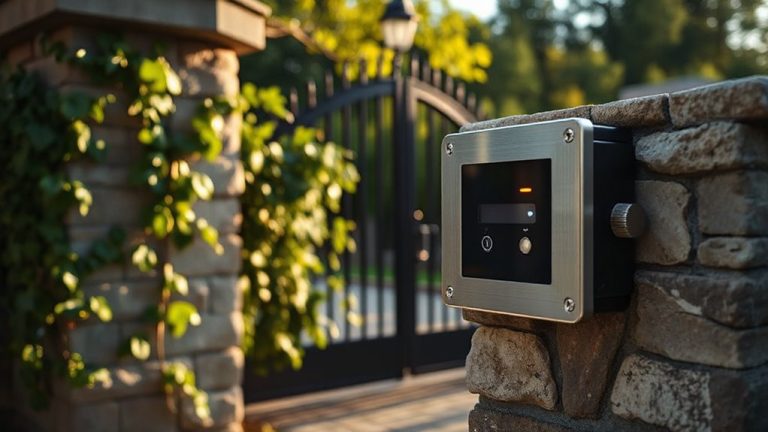
While you can’t control the weather, you can choose where to place your outdoor motion sensors to minimize water exposure. Proper sensor placement is key to reducing environmental exposure and extending device life. Mount sensors under eaves, porches, or door overhangs where they’re shielded from direct rain and snow. Avoid open corners or high tree lines where water runoff and wind-driven moisture accumulate. Position the sensor at a slight downward angle to help shed water off the housing. Keep it away from sprinklers or downspouts that increase wet conditions. Good placement reduces false alarms and corrosion. Though it won’t eliminate all moisture contact, it considerably cuts risk. Plan locations during installation to balance coverage and protection. This simple step costs nothing but improves reliability-making it one of the most effective, no-cost waterproofing strategies you can use.
Install a Weatherproof Cover for Full Protection
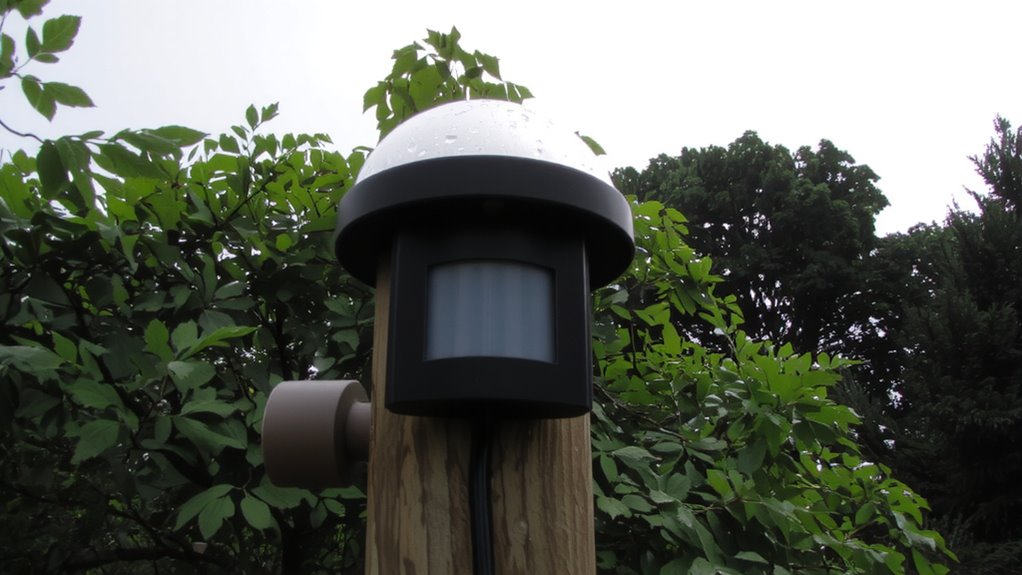
A weatherproof cover adds a dependable layer of protection for your outdoor motion sensor, especially when placement under natural shelter isn’t possible. It shields the sensor housing from direct rain, snow, and UV exposure, helping maintain reliable operation. Look for covers made from durable polycarbonate or ABS plastic-they resist cracking and support long-term environmental sealing. Choose a design that allows unobstructed motion detection while fully enclosing the unit. Many covers come with rubber gaskets that compress against the sensor housing, blocking moisture and dust. Installation is usually simple, using screws or mounting brackets. Most quality covers cost $10–$25 and can extend your sensor’s lifespan by years. Avoid models that trap heat, as overheating may reduce sensitivity. Make sure the cover does not interfere with the sensor’s field of view-this could create blind spots. Proper environmental sealing means fewer false alarms and less maintenance over time.
Seal Wiring With Waterproof Connectors and Tape
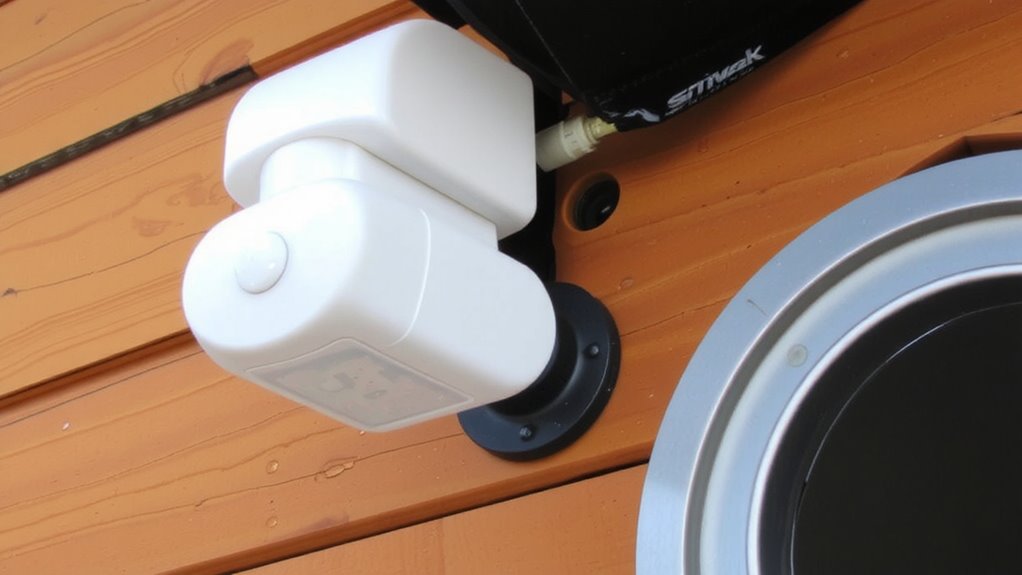
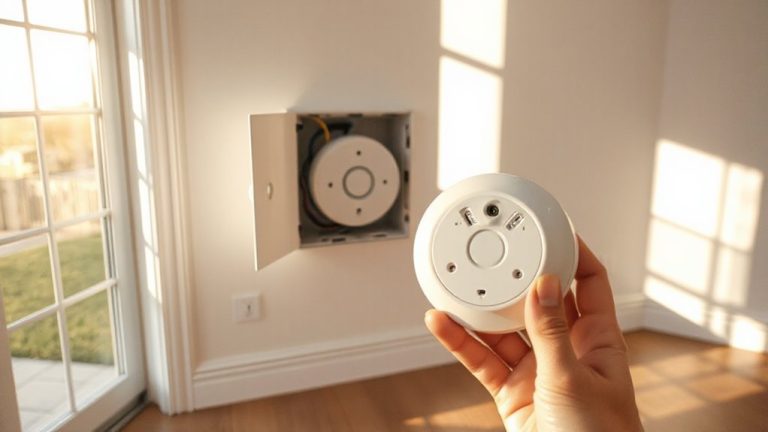
Since exposed wiring can compromise both performance and longevity, sealing connections properly is essential for reliable outdoor motion sensor operation. Use waterproof wire connectors-like gel-filled or heat-shrink types-to guarantee tight, durable seals that block moisture. These connectors are ideal for corrosion prevention, especially in humid or rainy climates where metal contacts degrade over time. After securing connections, wrap them with self-amalgamating silicone tape, which bonds to itself and creates a watertight barrier without leaving residue. This step also minimizes signal interference caused by environmental moisture or loose wiring. Avoid standard electrical tape-it dries out and fails within months. Quality connectors and tape cost slightly more upfront but extend sensor life considerably. Always inspect seals annually; replace any that show cracking or wear. Proper sealing supports consistent data transmission and reduces false alarms.
Close Gaps Around the Mount Using Silicone Caulk
Your motion sensor’s mounting point is a potential entry path for water, so sealing gaps around it with silicone caulk is a smart, effective defense. Apply a continuous bead of 100% silicone caulk around the sensor’s base where it meets the wall to block moisture. This helps prevent condensation buildup inside the housing, which can trigger false alarms or damage internal components over time. While sealing, don’t cover vents-doing so may cause ventilation issues that worsen humidity retention. Use a caulk rated for outdoor use and UV resistance; it lasts longer and stays flexible through temperature shifts. A tube costs $5–$8 and covers multiple installations. Let it cure for 24 hours before exposure to rain. Proper sealing extends sensor life and maintains performance, especially in damp or shaded locations. Done right, it’s nearly invisible and highly effective.
Inspect Sensors Seasonally for Lasting Performance
Regularly checking your outdoor motion sensors every few months can catch small issues before they become major problems. Look closely for signs of sensor corrosion, especially around the wiring and housing, as moisture exposure over time can degrade metal contacts and reduce performance. Clean any buildup gently with a dry clothe and make sure the cover remains intact and properly sealed. Test the sensor’s aim and range, adjusting if needed to prevent false triggers caused by nearby foliage or shifting mounts. False triggers waste energy and weaken trust in your security system. Verify the waterproof seal hasn’t cracked or peeled, and reapply silicone caulk if necessary. Doing this seasonally keeps your system reliable, extends its lifespan, and maintains detection accuracy. These quick checks take little time but greatly improve functionality. You’ll save money long-term by avoiding premature replacements and make certain consistent protection regardless of weather conditions. For optimal results, choose models designed with weather-resistant materials, such as those featured in the best motion detectors for every home.
On a final note
You’ve done the work to protect your sensors, and now they’ll work for you. Choose sheltered spots, use weatherproof covers, seal wires with proper connectors, and caulk mount gaps to block moisture. Seasonal checks keep systems reliable. These steps are low-cost but high-impact, backed by long-term performance data. While no setup is maintenance-free, this plan cuts failure risks substantially. Apply it consistently for dependable year-round security outdoors.