Why Every Home Should Have a Firearm Safe: Tips For Securing Your Gun Safely And Legally
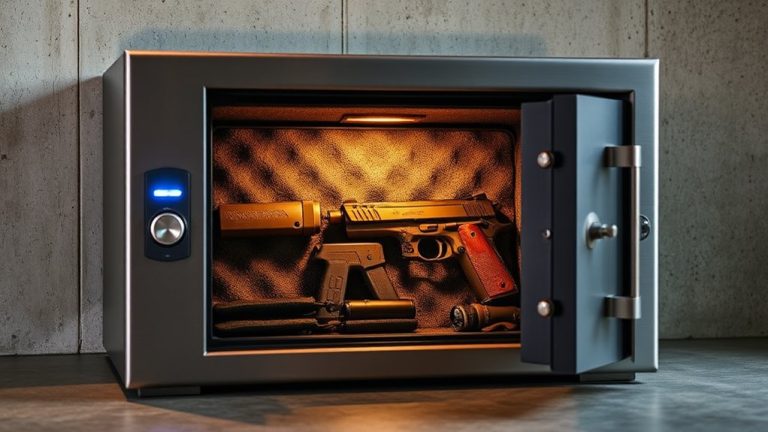
You should keep your firearm in a safe to prevent accidents and meet legal requirements-secure storage cuts unintentional injuries by up to 75%. California and New York require it, with fines or misdemeanor charges for non-compliance. Choose a steel safe with biometric or electronic locks, bolt it to the floor, and store ammo separately. Pick a hidden, anchored spot like a basement corner. Models with fire ratings of at least one hour add protection. Bigger safes allow room for future needs. A balance of quick access and tamper resistance keeps your home safe and compliant. More details on choosing the right model follow.
Notable Insights
- Secure firearm storage can reduce accidental injuries by up to 75%, protecting children and unauthorized users.
- Always comply with state laws-California and New York mandate secure storage with fines or misdemeanor penalties for non-compliance.
- Choose a safe with 20–50% extra capacity, solid steel construction, and internal hinges for durability and tamper resistance.
- Install the safe in a concealed, structurally sound location like a basement corner and anchor it to prevent theft or tipping.
- Store firearms and ammunition separately, use fire-resistant safes rated for at least one hour at 1,200°F, and enable multi-factor access controls.
Why Every Home Needs a Gun Safe
You’re not alone if you’ve ever worried about what might happen if a child or unauthorized person accessed a firearm in your home-because safe storage isn’t just a precaution, it’s a responsibility. A gun safe greatly reduces risks, supporting both home security and family safety. Studies show secure storage can cut accidental firearm injuries by up to 75%. Look for safes with quick-access features like biometric locks, which let you respond in emergencies while keeping guns away from curious hands. Steel construction and tamper resistance matter too. While portable lockboxes cost around $50, heavier safes range from $200 to $600. Though larger models take up space, their durability offers long-term value. Installing one in a low-traffic area of your home improves effectiveness. Proper placement, combined with cable locks for added security, guarantees firearms stay secure yet accessible when needed. For those prioritizing rapid access without sacrificing security, consider a best handgun safe based on expert testing and reliability ratings.
Know Your State’s Gun Storage Laws
How secure is your firearm storage under local law? You could be at risk of fines or legal trouble if you’re not following your state’s rules. Gun storage laws vary widely, so legal compliance isn’t one-size-fits-all. Some states require lockable containers or trigger locks, especially if children are present. Others have no specific laws. Check your local statutes to stay compliant and keep your household safe.
| State | Storage Required? | Penalty for Non-Compliance |
|---|---|---|
| California | Yes | Up to $1,000 fine |
| Texas | No (general) | None (unless negligent) |
| New York | Yes | Misdemeanor charge |
Proper gun storage reduces accidental access and meets legal compliance. Failing to act could cost you more than money-it could cost lives. Always verify your state’s current regulations. A reliable best gun cabinets choice can provide both security and peace of mind.
Choose the Right Gun Safe Size and Type
Once you’ve confirmed your storage meets state requirements, the next step is selecting a gun safe that fits your needs in both size and design. You’ll want a safe that accommodates your current firearms with room to grow, typically 20–50% more capacity than you currently own. Consider safe weight capacity-larger safes with higher gauge steel offer better durability but may require floor reinforcement. Fire and burglary ratings matter too: look for at least 30-minute fire protection and UL classification. Door hinge placement affects security; external hinges are easier to force open, while internal hinges resist tampering. Opt for a solid lock type-electronic for quick access, mechanical for reliability. Balance size, weight, and security to match your household’s risks and space. A well-chosen safe secures your investment and keeps everyone safer. For reliable options, check out the best gun safes based on expert testing and user reviews.
Best Places to Install Your Gun Safe
A secure, well-placed gun safe is only effective if installed in a location that balances accessibility, concealment, and structural strength. Placing your safe in a basement corner offers added protection-being underground improves concealment and often provides stable, solid flooring for anchoring. Just make sure the area stays dry to prevent moisture damage. Mounting a safe to a garage wall is another option, but only if the wall is stud-framed and anchored properly; garages can be targeted due to easier access, so consider installing extra security like motion lights or cameras. Avoid placing the safe near windows or obvious entry points. You’ll also want to bolt it down, regardless of location, to prevent tipping or theft. Choose spots only you and trusted family members know, keeping both safety and quick access in mind during emergencies.
Must-Have Gun Safe Features: Fire Rating, Lock Type, and More
When choosing a gun safe, the right features make all the difference in protecting your firearms from theft, fire, and unauthorized access. Look for strong fire resistance-rated at least one hour at 1,200°F-so your safe can withstand real fire conditions. Solid steel walls and floors add durability, while pry-resistant doors increase security. Your locking mechanism matters just as much: electronic locks offer quick access but need battery backups, while mechanical dial locks work without power but are slower. Consider a biometric option if you need fast entry, though reliability varies by brand. UL-tested models provide verified performance data. Heavier safes resist theft better, but make sure your floor supports the weight. Higher-end models cost more but often include better fire resistance and superior locking mechanisms. Balance your budget with the level of protection you need.
Store Firearms and Ammunition Separately: Best Practices
Nearly every state and safety expert recommends storing firearms and ammunition separately to reduce the risk of accidents and unauthorized use. You’ll want to use your safe’s internal organization features-like removable dividers, lockable ammo cans, and customizable compartments-to keep everything secure and orderly. This setup not only complies with legal requirements in many areas but also makes it easier to conduct regular safety audits. During these checks, you can verify that all components are present, locks are functioning, and storage conditions remain ideal. Separating ammo from firearms adds a critical delay for anyone attempting misuse, especially children or intruders. While some safes include dedicated ammo sections, others require additional containers-so plan accordingly. Though it may cost more upfront, the added safety is worth the investment. Proper internal organization supports both quick access for you and stronger security overall.
Who Should Access the Safe? Keys, Codes, and Biometrics?
Your safe’s security is only as strong as the access controls you choose, so selecting the right combination of keys, codes, and biometrics matters. You should assign user permissions based on trust and necessity-typically limited to adults with proper firearm training. Mechanical keys are affordable but can be lost or copied, weakening access control. Keypads with unique codes offer better tracking, though codes can be shared accidentally. Biometric safes open quickly using fingerprints, ideal in emergencies, but may fail with dirty sensors or power issues. For maximum security, use multi-factor access-like a code plus a fingerprint. Consider the number of users, response speed needs, and reliability. Higher-end models with backup power and audit trails improve safety. Set clear household rules, and regularly review who has access. Proper access control protects your home and fulfills legal responsibilities.
On a final note
You should keep your firearm in a safe to protect your family and follow the law. Choose a safe that fits your gun, has a fire rating, and uses a solid lock like a biometric or digital system. Store ammo separately and pick a hidden, secure spot in your home. Know your state’s rules-some require safes. A good safe costs $200–$500, but it’s worth it for safety and legal compliance.