Creating a Secure Play Area That Protects Children While Encouraging Active Outdoor Play
You’ll keep kids safe and active by using impact-absorbing surfaces like rubber mulch (HIC ≤200) or engineered wood fiber, paired with age-appropriate swings and climbing frames made of weather-resistant materials. Position equipment six feet from walls, designate zones for play and quiet time, and use 3-foot fences or planters to set boundaries. Place the area in clear view from your home for supervision, add sun shelters (from $50), and maintain open sightlines-smart planning guarantees lasting safety and fun. There’s more to optimizing every detail.
Notable Insights
- Use impact-absorbing surfaces like rubber mulch or poured-in-place rubber to reduce injury from falls.
- Install age-appropriate play equipment with durable, weather-resistant materials to ensure safety and longevity.
- Design zoned areas for active, imaginative, and quiet play to support diverse developmental needs.
- Position the play area within adult sightlines and use low, visible fencing for supervision and boundary control.
- Incorporate sun shelters, bug netting, and natural elements to protect children and enhance outdoor engagement.
Create a Safe Outdoor Play Area That Kids Love
While planning a play area might seem simple, getting the fundamentals right guarantees both safety and enjoyment over time. You should incorporate nature themes to blend the space into its surroundings, which research shows increases children’s engagement and reduces stress. Use logs, boulders, or planters to define zones while encouraging exploration. Creative storage solutions, like benches with lids or hidden compartments in play structures, keep toys organized and reduce tripping hazards. Durable, weather-resistant materials last longer and lower maintenance costs over time. Position equipment at least six feet from fences or walls for safe movement. Avoid overcrowding-allow open space for running and imaginative play. Proper lighting and visibility improve supervision. These planning steps, typically adding under $200 in initial costs, enhance usability and safety markedly. Thoughtful design fosters independence while minimizing risks inherently.
Start With Impact-Absorbing Surfaces
You’ve planned the layout, spaced out the equipment, and organized the storage-now it’s time to focus on what goes beneath their feet. Choosing the right surface is critical for shock absorption and fall protection. A good surface reduces injury risk during falls, which are common during active play. Below is a comparison of common impact-absorbing options:
| Surface Type | Shock Absorption (HIC*) | Pros & Cons |
|---|---|---|
| Rubber Mulch | High (≤200) | Durable, consistent; higher upfront cost |
| Engineered Wood Fiber | Moderate (≤300) | Affordable, natural look; needs frequent maintenance |
| Poured in Place Rubber | Very High (≤200) | Seamless, accessible; expensive installation |
*HIC (Head Injury Criterion) ratings based on ASTM F1292 standards. For best fall protection, install at least 6 inches deep, extending 6 feet beyond play equipment. Regularly inspect and maintain surfaces to guarantee continuous shock absorption.
Choose Age-Safe Play Equipment
Since children vary widely in size and skill, selecting play equipment that matches their developmental stage is essential for safety and enjoyment. You’ll want to install age appropriate swings, as they’re designed to support proper posture and reduce fall risks. Toddlers need high backs and harnesses, while older kids can use bucket or belt seats with sturdy chains. Durable climbing frames should also match the child’s coordination and strength-small structures with low bars suit preschoolers, while school-aged children benefit from taller, more complex models. Look for equipment made from weather-resistant materials like powder-coated steel or treated wood to guarantee longevity. Always follow manufacturer guidelines for age range and weight limits. Proper anchoring and spacing around equipment minimize injury risks. Though higher-quality models cost more upfront, they reduce long-term maintenance and replacement expenses, making them a smart investment in your child’s safe, active play.
Lay Out Zones for Active, Imaginative Play
Zoning your outdoor play area sets the stage for both safety and engagement, letting kids move freely between structured and creative activities. Use themed zones to guide play types-like sports, pretend play, or quiet time-while keeping spaces distinct yet connected. Include creative corners for art, storytelling, or costumes to spark imagination without clutter. Arrange zones to reduce traffic conflicts, placing active zones away from quiet ones. Below are common zone types and features:
| Zone Type | Key Features | Recommended Size (sq ft) |
|---|---|---|
| Active Play | Open turf, agility equipment | 100–200 |
| Themed Zones | Pretend garden, pirate ship | 80–150 |
| Creative Corners | Chalkboard, craft table | 50–80 |
Plan with flexibility so zones evolve as kids grow, supporting long-term use.
Set Physical Boundaries Without Closing Off Fun
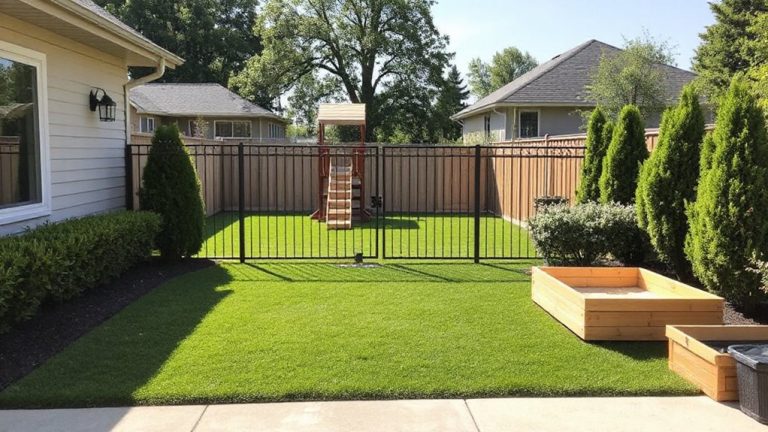
Clear play zones help children engage safely in different activities, but without defined edges, those spaces can blend into the rest of your yard or even spill into unsafe areas like streets or pools. You can prevent this by using playful fencing that keeps kids in while preserving visibility and access. These fences, often made from brightly colored panels or flexible materials, blend safety with fun and encourage imaginative play. Creative barriers-like low hedges, raised planters, or woven willow sections-also define boundaries without feeling restrictive. They offer visual cues for children while allowing adults to monitor play easily. Install fencing at least 3 feet high with secure anchors, and make certain gates self-close. Budget for $20–$50 per linear foot, depending on material. Plan placement during early layout stages to align with activity zones.
Enable Easy Supervision With Smart Layouts
When planning your outdoor play space, placing activity zones within direct sightlines of common indoor areas like the kitchen or living room makes it easier to keep an eye on kids without constant back-and-forth. Open visibility guarantees you can monitor play safely while handling household tasks. Design clear pathways that connect key zones, letting you move quickly when needed. Avoid tall fences or dense plantings near play zones, as they block views. Instead, use low borders or see-through railings to maintain supervision without sacrificing security.
| Feature | Benefit |
|---|---|
| Open visibility | Lets you watch kids from indoors |
| Clear pathways | Allows quick access to play zones |
| Low fencing | Maintains sightlines and boundaries |
| Central play zone | Maximizes supervision from all sides |
Protect Against Sun, Rain, and Bugs
While outdoor play boosts physical and social development, exposure to sun, rain, and insects can pose health risks and reduce usability of your space-so it’s essential to integrate reliable, well-designed protection. Sun shelters block harmful UV rays effectively, especially those with UPF 50+ ratings, and work well when anchored securely over play structures or sandboxes. They’re affordable, with basic models starting around $50, but coverage may be limited in larger areas. For versatile weather defense, consider permanent canopies or retractable awnings, which offer broader protection but cost $500 or more. Bug netting keeps mosquitoes and ticks out when installed around play zones or covered seating, reducing insect-borne illness risk. It’s lightweight and inexpensive, though it requires seasonal maintenance to prevent tears. Combine sun shelters and bug neting for layered protection, ensuring active play stays safe and comfortable year-round, regardless of weather or pests.
On a final note
You’ve created a safe, engaging play space by combining impact-absorbing surfacing, age-appropriate equipment, and clear zones for different activities. Smart layout choices improve supervision and security without sacrificing fun. Add shade, weather protection, and bug controls to extend usability. Plan with your yard’s size and budget in mind-rubber mulch costs more upfront than wood but lasts longer. These evidence-based steps balance safety, health, and active outdoor play.