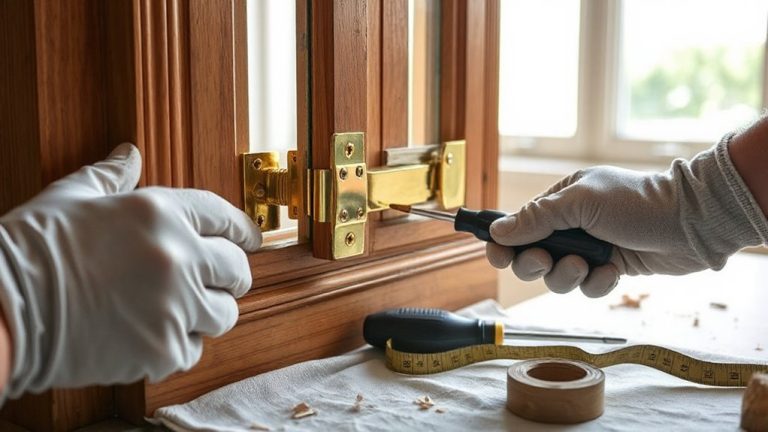
How to Use External Pin Locks on Casement Windows Without Damaging Frames
Use external pin locks with strong adhesives or tension mounts to secure casement windows without drilling. Clean the frame with isopropyl alcohol, then apply the lock firmly for 30 seconds to guarantee a solid bond. Choose the right adhesive for your frame material-acrylic for vinyl, epoxy for wood. Place the lock near the sash center, aligned vertically so the pin drops into the track. Avoid overtightening; snug is enough. Test operation before relying on it. Proper installation guarantees durability and function, with most units costing $8–$20. You’ll find more details on maximizing their effectiveness just ahead.
Notable Insights
- Clean the frame with isopropyl alcohol to ensure a strong, damage-free adhesive bond.
- Use frame-specific adhesives: high-bond acrylic for vinyl, epoxy for wood, industrial tape for aluminum.
- Choose no-drill locks that rely on tension or adhesive mounting to avoid drilling or permanent alterations.
- Position the lock near the sash center to prevent stress and ensure even pressure on the frame.
- Press and hold the lock firmly for 30 seconds after placement to secure adhesion without slippage.
What Are External Pin Locks for Casement Windows?
A small but sturdy device, the external pin lock for casement windows adds a simple layer of security to a common home vulnerability. You install it externally to prevent the window from being fully opened, limiting access while still allowing for window ventilation. The security benefits come from its physical barrier-thieves can’t easily push or pry the window open when the lock is engaged. Most models use a key-operated pin that fits into a base mounted on the window frame. You’ll find these locks easy to install without tools, and they work well on vinyl, wood, or aluminum frames. While they offer modest deterrence, they’re not a substitute for monitored alarms. Expect to pay $10–$20 per unit. The design maintains airflow, so you can leave the window slightly open, yet secure. For more options, consider exploring the best window locks based on expert testing and security performance.
Why No-Drill Pin Locks Are Ideal for Casement Windows
No-drill pin locks offer a practical and reversible solution for securing casement windows without permanent alterations to the frame. Their non invasive design means you won’t weaken or damage the window structure, making them ideal for renters or homeowners preserving aesthetic and material integrity. You’ll enjoy solid security benefits-these locks deter forced entry by blocking the window’s travel, especially when paired with sturdy hardware. Most models install in minutes using tension or adhesive mounts, requiring no tools or special skills. While not as robust as drilled variants, they provide a measurable upgrade over unsecured windows. Look for models with tempered steel pins and reinforced brackets for better resistance. Prices range from $8 to $20 per unit, offering affordable peace of mind. Just make certain your window’s closing force doesn’t exceed the lock’s rated strength. For sliding windows, consider top sliding window locks as an alternative when evaluating overall home security options.
Choose the Best Placement for Casement Window Pin Locks
You’ve picked out a no-drill pin lock that fits your casement window’s specs and your security needs, so now it’s time to get the placement right-this step directly affects how well the lock performs. Position the lock near the center of the window sash to guarantee even pressure and smooth operation. Check frame alignment before installing; misaligned frames can prevent the lock from engaging fully, reducing effectiveness. Proper lock orientation matters-most models work vertically, with the pin extending into the track when locked. Install it so the handle turns easily without hitting the wall or nearby objects. Test movement before finalizing the spot. Avoid areas near hinges or locking mechanisms already on the window. Good placement improves security and extends the lock’s lifespan. Always follow the manufacturer’s guidelines for spacing and positioning to maintain function and fit.
Install External Pin Locks Without Damaging Frames
Since preserving your window frame’s integrity is essential, always clean the installation area first-use isopropyl alcohol to remove dust, grease, and old adhesive residue, which helps the lock’s adhesive bond properly and last longer. Proper window alignment guarantees the lock engages smoothly without forcing the sash. Match the lock type to your frame material, whether vinyl, wood, or aluminum, to prevent cracking or warping during installation and use.
| Frame Material | Best Adhesive Type |
|---|---|
| Vinyl | High-bond acrylic |
| Wood | Epoxy-based |
| Aluminum | Industrial tape |
Press the lock firmly in place for 30 seconds after positioning. Avoid sliding or adjusting once applied. Good preparation and material alignment reduce stress on the frame and improve long-term security performance without hardware drilling.
Avoid These Common Pin Lock Installation Mistakes
How often do small oversights lead to big security gaps? More than you think. Improper alignment is one of the most common pin lock mistakes-it weakens security and makes operation difficult. If the pin doesn’t slide smoothly into the strike plate, your window won’t seal tightly, leaving it vulnerable. Always double-check placement before drilling. Use a level and test the fit with the window closed. Overtightening hardware is another frequent error that can strip plastic frames or crack wood. Tighten screws just until snug, especially on vinyl or composite materials. Aluminum and steel tolerate more torque, but caution still helps. Mistakes during installation reduce effectiveness and may require costly fixes. Plan carefully: measure twice, align precisely, and follow manufacturer torque specs. Avoid these pitfalls, and your lock will offer reliable, long-term protection without damaging your casement window’s structure.
Test and Maintain Your Casement Window Pin Locks
Ever wonder why some pin locks fail prematurely despite proper installation? It’s often due to lack of testing and maintenance. After installing your lock, test it monthly by closing the window and making certain the pin engages firmly-no wiggling or gaps. Check for smooth operation; if it sticks, apply a silicone-based lubricant. Inspect for corrosion or wear, especially if you live in a humid or coastal area where weather resistance is critical. Most quality pin locks are made from brass or stainless steel, offering better durability and weather resistance. Clean the mechanism every few months to preserve lock longevity. Avoid harsh chemicals that degrade finishes. Proper care guarantees reliable performance year after year. Replacing worn parts early can prevent full lock replacement, saving money and effort over time.
On a final note
You’ve chosen a secure, no-drill pin lock to protect your casement window without harming the frame. Proper placement guarantees smooth operation and strong security. Avoid common errors like misalignment or over-tightening. Test the lock regularly and check for wear. These low-cost, easy-to-install devices offer measurable peace of mind, especially in ground-floor or accessible areas. For best results, pair with other security measures and inspect annually.