How Temperature and Humidity Sensors Enhance Home Security and Prevent Property Damage
You can prevent frozen pipes by using temperature sensors near basements and exterior walls, where alerts trigger at near-freezing levels. Humidity sensors detect hidden leaks under sinks or near water heaters, cutting mold risk by monitoring moisture above 60%. Placing sensors in bathrooms, kitchens, and crawl spaces boosts early detection. Combined with smart hubs ($150–$300), they send mobile alerts and integrate with security systems. You’ll see how strategic placement and system pairing improve protection.
Notable Insights
- Temperature sensors detect freezing conditions near pipes, triggering alerts to prevent bursts and costly water damage.
- Humidity sensors monitor moisture levels, providing early warnings of hidden leaks under sinks or in walls.
- Real-time alerts for high humidity help prevent mold growth, protecting indoor air quality and structural integrity.
- Strategic placement in basements, bathrooms, and near water heaters maximizes detection of temperature and moisture risks.
- Integration with security systems enables automated responses, mobile notifications, and reduced false alarms through smart filtering.
Stop Frozen Pipes With Temperature Alerts
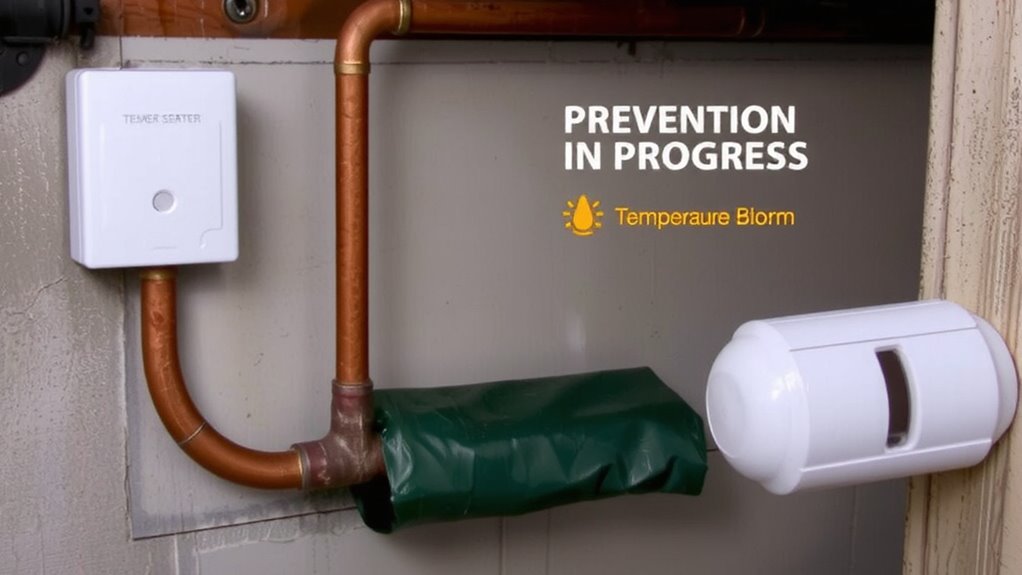
While winter brings cozy nights by the heater, it also raises the risk of frozen pipes that can lead to costly water damage, and that’s where temperature sensors come in. You can use them to monitor cold spots near exterior walls or in basements, where pipes are most vulnerable. When temperatures drop near freezing, alerts notify you instantly, giving you time to act. Pairing sensors with pipe insulation boosts protection, slowing heat loss. For added security in high-risk areas, consider heat tracing-electrical cables that wrap around pipes to maintain safe temperatures. Heat tracing works best when combined with sensor alerts, so you know if the system fails or temperatures still fall. Most sensors cost $20–$50 each, with smart hubs adding $50–$150. Installation is simple, and the data helps you make informed decisions. Prevention beats expensive repairs-plan early, especially in colder climates.
Prevent Water Damage From Hidden Leaks
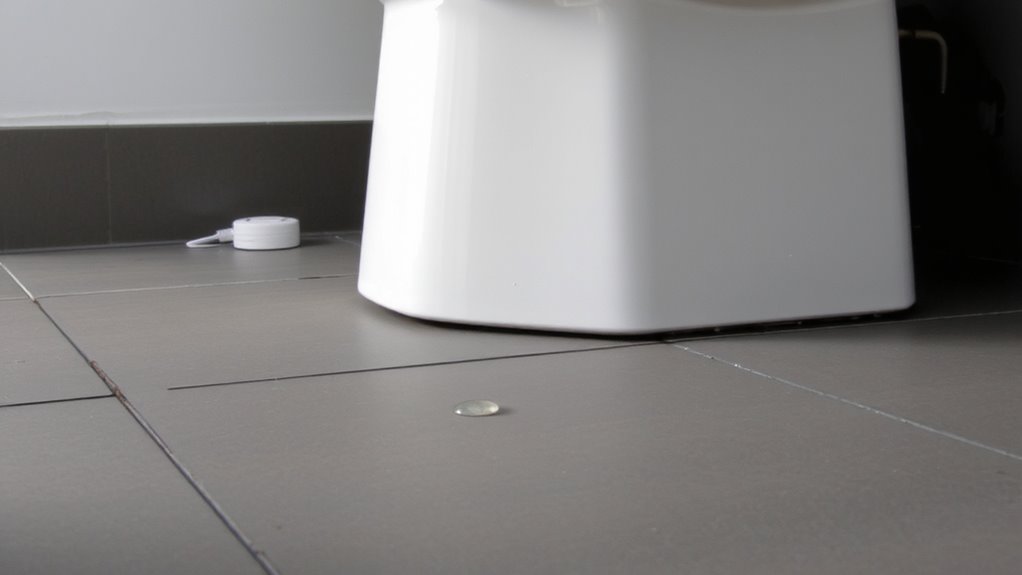
How much could a slow, hidden leak cost you before you even notice? Without detection, it might lead to thousands in damage over time. Modern temperature and humidity sensors help you detect hidden moisture early, especially in walls, under floors, or near appliances. These devices continuously monitor pipe condensation, alerting you when levels rise abnormally-often a sign of leaks forming. Early warnings let you act before structural harm occurs. Most sensors install easily, connect to home systems, and cost between $50 and $125 each. They work best when placed near water heaters, under sinks, or in basements. While false alarms can occur, models with moisture probes and dual-sensor verification reduce errors. Using them isn’t a fix-all, but it’s a proven step in proactive home care. Regular monitoring improves long-term protection against unseen water issues.
Stop Mold Before It Starts With Humidity Sensors
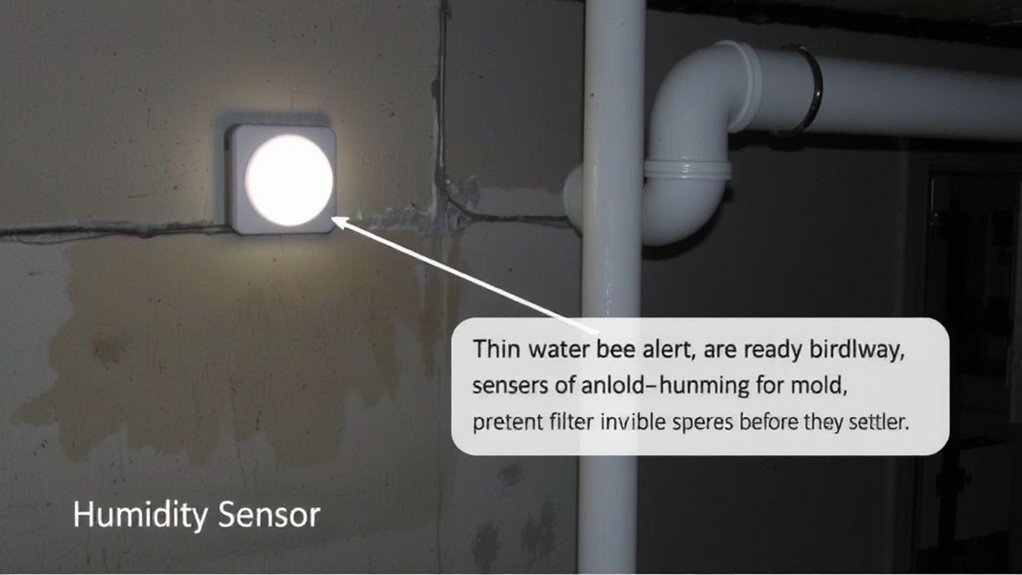
One in four homes has a mold problem, but you don’t have to wait for stains or musty smells to take action. Humidity sensors give you real-time alerts when moisture levels rise above 60%, the threshold where mold thrives. By maintaining levels between 30% and 50%, you boost mold prevention and improve indoor air quality. High humidity weakens air quality over time, triggering allergies and damaging walls or insulation. Modern sensors integrate with smart systems, sending notifications to your phone if conditions turn risky. Most cost $30–$60 and are easy to install. While they don’t kill mold, they help you respond early-before spores spread. Choose models with historical tracking to spot trends. For best results, pair sensors with proper ventilation. This data-driven approach gives you control, reducing long-term health and structural risks through consistent monitoring and smart intervention.
Place Sensors in These Spots for Early Warnings
Location makes all the difference when it comes to catching moisture problems early. You’ll want to place sensors in basements, attics, and crawl spaces since these areas are prone to humidity buildup and often go unnoticed. Bathrooms and kitchens also need monitoring because daily use raises humidity levels, which can harm air quality over time. Install sensors near windows and exterior walls where condensation forms, especially in colder months. Don’t overlook laundry rooms and near water heaters-leaks happen fast, and catching them early prevents major damage. While sensors don’t track noise levels directly, unusual sounds near these spots could signal plumbing issues worth checking. Proper placement guarantees faster detection, better data, and improved response times. Aim for at least one sensor per moisture-prone zone, and check manufacturer guidelines for best positioning. Good planning now saves costly repairs later.
Connect Sensors to Your Security System for Instant Alerts
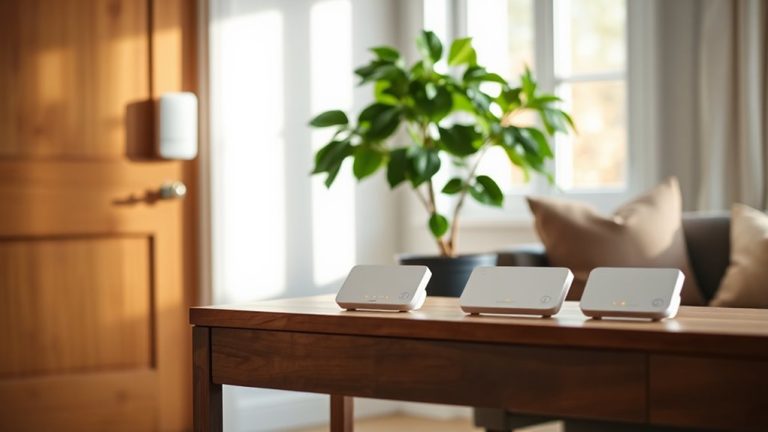
While standalone sensors can monitor conditions in key areas, connecting them to your security system gives you instant alerts the moment humidity or temperature shifts outside safe ranges. You’ll get real-time notifications on your phone or tablet, so you can act fast-like shutting off a water valve or adjusting the thermostat. Integrated sensors reduce false alarms because they work with your system’s logic, filtering out minor fluctuations. Still, regular sensor calibration is essential; inaccurate readings can trigger unnecessary alerts or miss threats. Most smart security platforms support calibration reminders and self-diagnostics. Look for systems with weather-resistant sensors and encrypted transmission for reliability. Costs range from $150 to $300 for setup, depending on the number of sensors. Connecting them is a smart upgrade-simple to install, easy to manage, and proven to prevent costly damage when monitored consistently.
On a final note
You can protect your home by using temperature and humidity sensors to detect problems early. They alert you to freezing pipes, hidden leaks, and mold risks before serious damage occurs. Place them in basements, bathrooms, and near appliances. Connect sensors to your security system for real-time alerts. While setup costs range from $50–$200, the investment may save you thousands in repairs.