How to Combine Sash Locks With Frame Reinforcements for Military-Grade Security
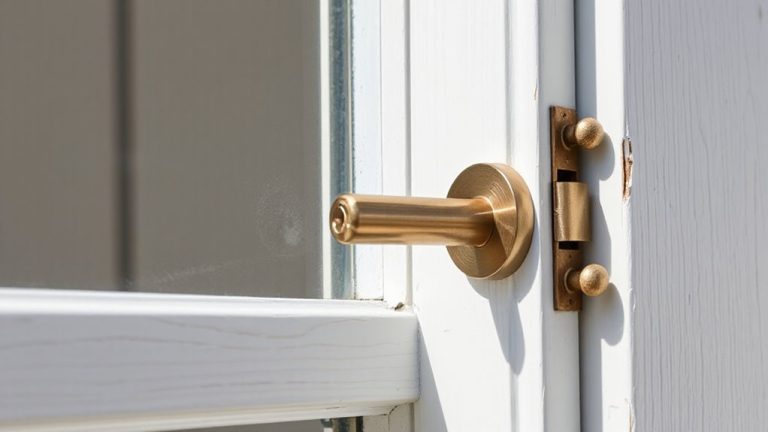
Start with a solid wood or steel door in a reinforced frame to resist impact. Install a multi-point sash lock with hardened steel bolts at least 1 inch long, rated ANSI Grade 1 or SS312 Diamond. Reinforce the frame with 12- or 14-gauge steel plates on both hinge and strike sides, secured with 3-inch screws into wall studs. Upgrade to heavy-duty strike plates covering a wider area for added pry resistance. Test the system under pressure, aiming for over 300 pounds of force resistance, and maintain alignment quarterly. This setup, costing $150–$400 total, considerably strengthens forced-entry protection-key details on proper installation follow.
Notable Insights
- Install a multi-point sash lock with hardened steel bolts to engage reinforced frame points securely.
- Reinforce the door frame with 12- or 14-gauge steel plates on both hinge and strike sides.
- Use 3-inch screws to anchor steel reinforcements and strike plates directly into wall studs.
- Pair ANSI Grade 1 sash locks with reinforced strike jamb kits for maximum forced-entry resistance.
- Test the system under pressure, ensuring alignment and bolt engagement withstand over 300 pounds of force.
Start With a Frame That Won’t Fail
Strength begins with the frame-your door’s first line of defense. If it’s weak, no lock will help. Your door material matters: solid wood, steel, or fiberglass resist impact better than hollow cores. But even the best door fails if the frame alignment is off. A misaligned frame creates gaps, letting intruders force entry easier. Check that hinges and strike plates sit flush, with no warping or shifting. Proper alignment guarantees even pressure distribution when the door closes. Reinforce with steel strike plates and long screws that reach wall studs. These upgrades cost $20–$50 but enhance resistance markedly. Frame reinforcement kits add rigidity, especially in older homes. They’re easy to install and work with most door materials. Always inspect the frame first-before adding locks. A secure frame supports every other upgrade, making alignment and sturdy construction essential.
Pick a Sash Lock That Resists撬ing and Kicking
A well-chosen sash lock can make a significant difference in your door’s resistance to forced entry, especially against common attacks like撬ing and kicking. You need a lock with high lock strength and proven attack resistance. Look for multi-point locking systems that engage at multiple points along the frame-these distribute force better and resist prying. Choose models with hardened steel bolts, at least 1 inch long, to prevent snapping or withdrawal. Solid brass or reinforced casings add durability. Test ratings: Select locks meeting ANSI Grade 1 or SS312 Diamond standards, as they’ve passed rigorous attack simulations. Avoid basic single-cylinder models-they’re easier to compromise. While higher-end locks cost $100–$200, their performance justifies the price. Proper installation is key, but that’s covered next.
Install Steel Reinforcements in Your Door Frame
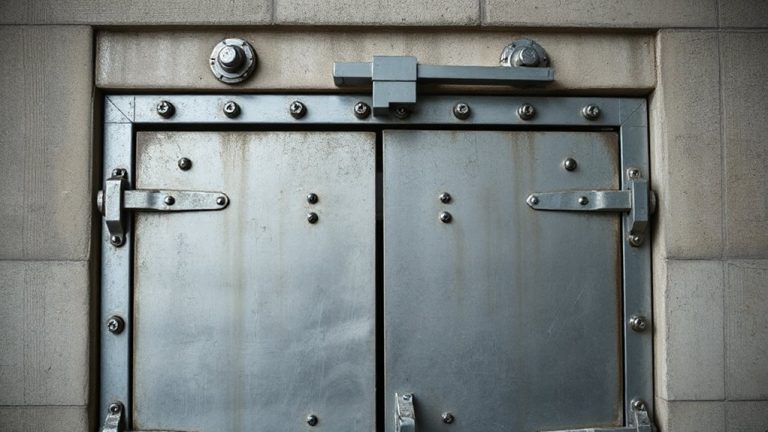
You’ll want to reinforce your door frame with steel to prevent it from giving way during an attack, since standard wood frames can splinter or pull apart under pressure. Steel加固 plates, typically made from 12- or 14-gauge steel, greatly improve hardware durability and resist forced entry. Install them along the hinge side and strike side of the frame, securing each with 3-inch screws anchored into wall studs. This reinforcement helps maintain door alignment, guaranteeing smooth operation while supporting the added strength of high-security sash locks. Poor alignment can strain hinges and weaken protection over time. Choose reinforced strike jamb kits or full door frame wraps based on risk level. Most kits cost $50–$150 and require basic tools. Proper installation guarantees long-term stability, maximizes security hardware performance, and creates a unified defense system.
Secure Strike Plates to Protect Your Sash Lock
Don’t underestimate how a weak strike plate can undo all the work you’ve put into securing your door. A standard strike plate often uses short screws that anchor only into the door frame’s thin wood, making it vulnerable to forced entry. To fix this, replace it with a heavy-duty, Grade 1 strike plate secured with 3-inch screws that reach the wall stud. Proper bolt placement guarantees the lock’s deadbolt fully extends into the strike plate without rubbing, minimizing wear and maximizing hold. Misaligned hinges can shift the door over time, affecting bolt placement and weakening security. Check hinge alignment regularly to maintain a tight fit when the door closes. Use a reinforced metal plate that covers more surface area around the strike zone to resist pry attacks. This simple upgrade, costing $15–$30, greatly improves resistance without altering your existing sash lock.
Test Your Sash Lock and Frame Under Pressure
How secure is your sash lock really when someone puts real force behind an attack? You need to test it under pressure to find out. Start by applying steady, increasing force to the window’s lock side, simulating a break-in attempt. Watch for signs of lock alignment shifting-if the bolt no longer smoothly enters the strike plate, performance is compromised. Check for hinge stress, especially at the top and bottom, where warping can weaken the frame. Misaligned locks reduce effectiveness, even with reinforced plates. Use a pressure gauge if possible to record exact resistance levels, ideally exceeding 300 pounds for reliable protection. Test both closed and locked positions, repeating after extreme weather, which can warp frames. Regular testing guarantees your system maintains military-grade standards. Reassess lock alignment quarterly and inspect hinges for stress fractures. Proper maintenance keeps your security intact, not just on paper, but under real conditions.
On a final note
You’ve strengthened your door by choosing a solid frame and a tamper-resistant sash lock. Adding steel reinforcements and secure strike plates reduces failure points. Testing under pressure confirms the setup can withstand forced entry. This system costs $100–$200 but boosts security substantially. Pros: durability, proven resistance. Cons: professional installation may be needed. Plan carefully for best results.