Legal Requirements for Recording Public Spaces in Residential Areas Under State Privacy Statutes
You can legally record public spaces like sidewalks and driveways if your cameras don’t capture private areas or conversations. Video is generally allowed where there’s no reasonable expectation of privacy, but audio recording varies by state-eleven require two-party consent. Avoid pointing cameras at windows or enclosed yards to prevent disputes. Use signage, limit retention to 30 days, and disable audio when unsure. Secure storage and proper placement keep your setup compliant. Clear rules help you balance security and respect for privacy. Choosing the right setup now reduces legal risks later.
Notable Insights
- Recording public areas like sidewalks is legal where no reasonable expectation of privacy exists.
- Avoid capturing audio in two-party consent states without all parties’ knowledge.
- Cameras may face shared driveways or entryways but must not target private yards or windows.
- Use signage to notify individuals that surveillance is active in residential areas.
- Limit video retention to 30 days unless needed for evidence or investigation.
Where Can You Legally Record in Residential Areas?
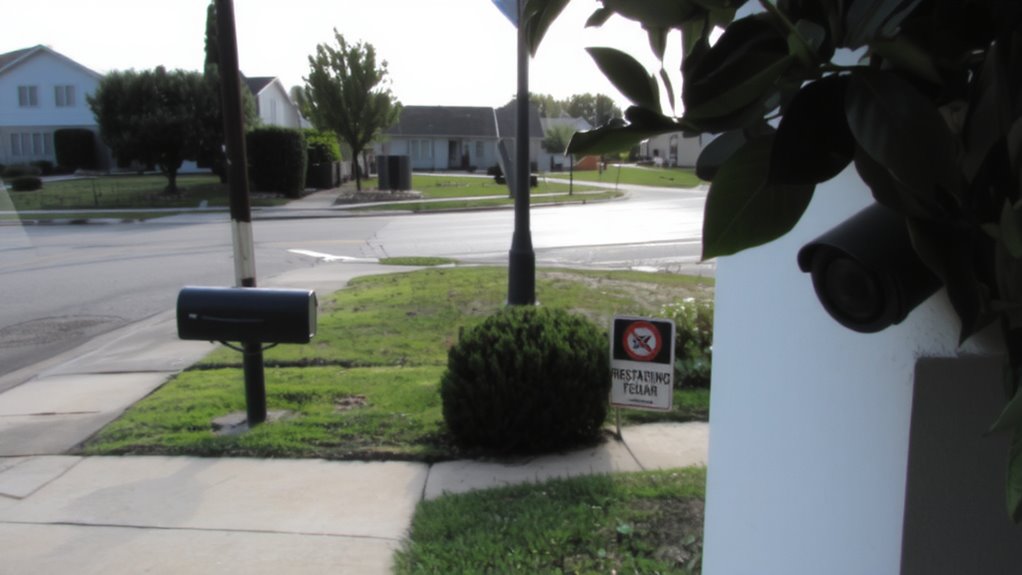
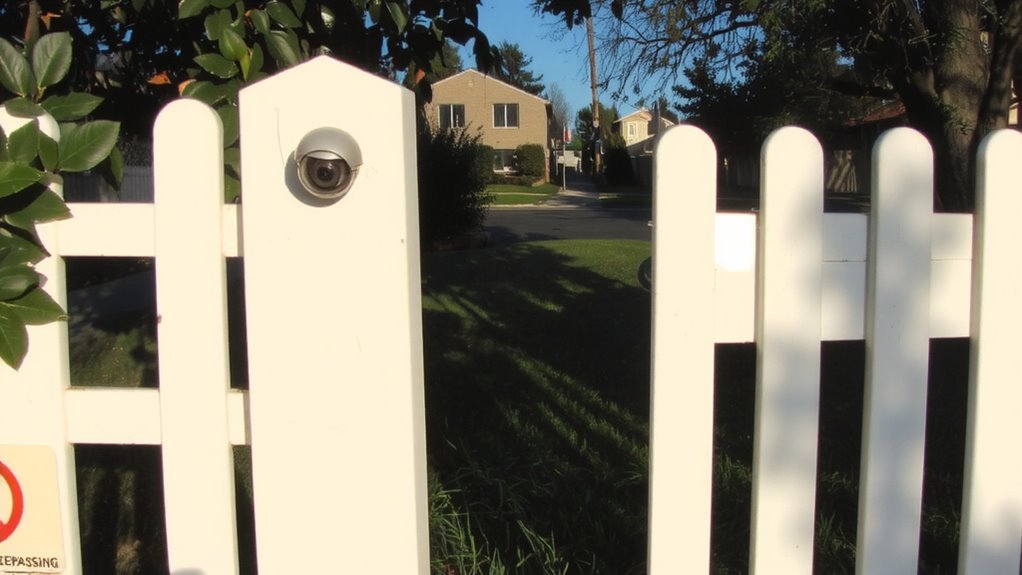
Where can you actually place cameras around your home without crossing legal lines? You can install them facing public sidewalks, as long as they don’t capture private conversations or focus on neighboring homes. Pointing cameras at common areas like driveways, entryways, or shared patios in your complex is generally allowed, especially if those spaces are visible from the street. Avoid placing devices where they record inside private yards or windows of adjacent units. Most states permit exterior surveillance in these zones under reasonable expectations of privacy laws. Cameras on your property, recording public sidewalks or common areas, are legally protected when used responsibly. Opt for models with clear signage to notify individuals they’re being recorded. Check local ordinances-some cities require permits or restrict mounting heights. Balance security with respect for others’ privacy to remain compliant. For optimal coverage and compliance, consider a system that offers wide-angle views and best security camera systems.
Video Vs. Audio: Where the Law Draws the Line
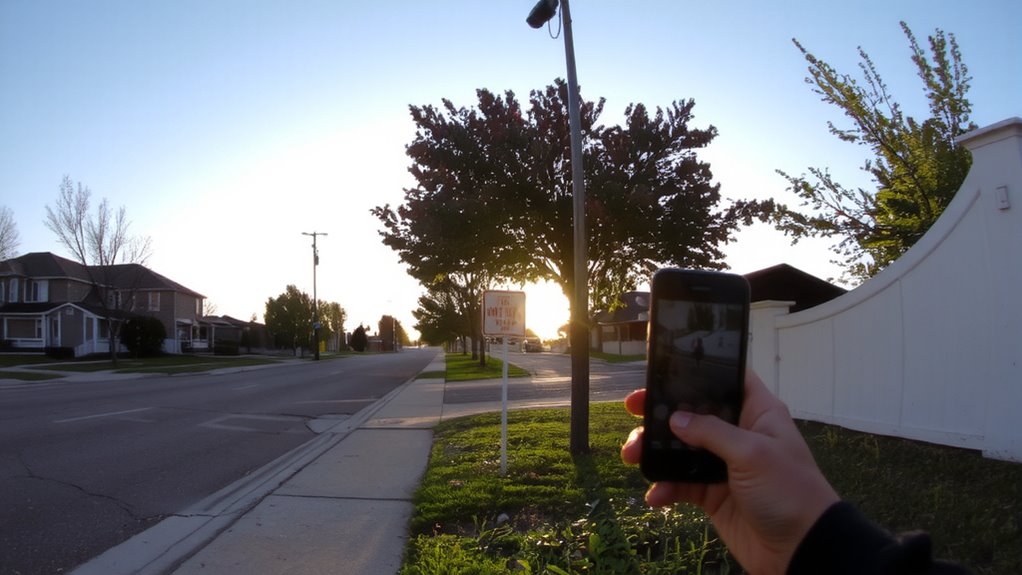
Why do some recordings hold up in court while others lead to legal trouble? It often comes down to the difference between video footage and audio capture. In most states, recording video in public areas of residential spaces is generally allowed, especially if there’s no expectation of privacy. However, audio capture is treated more strictly. Even in public settings, recording someone’s voice without consent can violate wiretapping laws. Video footage without sound is typically safer legally and still provides strong evidence. Audio capture adds context but increases legal risk. Many security cameras offer options to disable audio, helping you stay compliant. When choosing a system, check if it allows independent control of video and audio. Prioritize devices that let you record video footage only, unless you’re certain local laws permit audio capture-otherwise, you might face penalties or evidence dismissal.
Which States Require Two-Party Consent for Audio?
If you’re planning to record audio in your home security setup, you’ll need to know whether your state requires consent from all parties involved. Eleven states have two party consent laws, meaning everyone in the conversation must agree to be recorded. These states include California, Florida, Illinois, Maryland, Massachusetts, Montana, New Hampshire, Pennsylvania, and Washington. Recording audio without permission in these areas could violate electronic surveillance statutes and lead to legal penalties. In contrast, most other states follow one-party consent rules, where only you need to agree to the recording. Always check your state’s specific laws before enabling audio on security devices. Two party consent rules aim to protect privacy, but they can complicate home monitoring, especially near shared walls or outdoor areas. Be sure your electronic surveillance complies to avoid fines or inadmissible evidence in disputes.
Does Filming Your Neighbor Violate Their Privacy?
How much do you really know about the legal boundaries when your security camera captures footage of your neighbor? In most cases, you’re allowed to record areas visible from public spaces, but your neighbor may claim a violation if the recording intrudes on private activities. Courts often rely on the expectation of privacy standard-people don’t expect privacy in open yards or driveways, but they do in enclosed backyards or near windows. If your camera focuses on such private areas, you might risk crossing into legal gray zones. Trespassing laws also apply if your camera setup extends onto your neighbor’s property, even virtually. While surveillance can enhance security, guarantee your system respects boundaries. Position cameras to cover your home, not your neighbor’s daily routines. When in doubt, consult local statutes-some states offer clearer guidance than others.
Is Your Security Camera Facing the Wrong Way?
Could your security camera be doing more harm than good by capturing the wrong targets? Improper camera positioning can lead to unintended recordings of neighbors’ private areas, increasing the risk of neighbor disputes. Even if you mean no harm, pointing your camera toward adjacent yards, windows, or driveways may feel intrusive to others. Most state privacy statutes protect individuals from surveillance in places where they expect privacy, even within residential areas. Adjust your camera so it focuses solely on your property, such as entrances, walkways, or garage areas. This reduces legal risks and maintains good community relations. Avoid panning over fences or capturing public sidewalks unless absolutely necessary. Proper positioning balances security with respect. A small adjustment today could prevent a costly conflict tomorrow.
How to Stay Legal While Monitoring Your Property
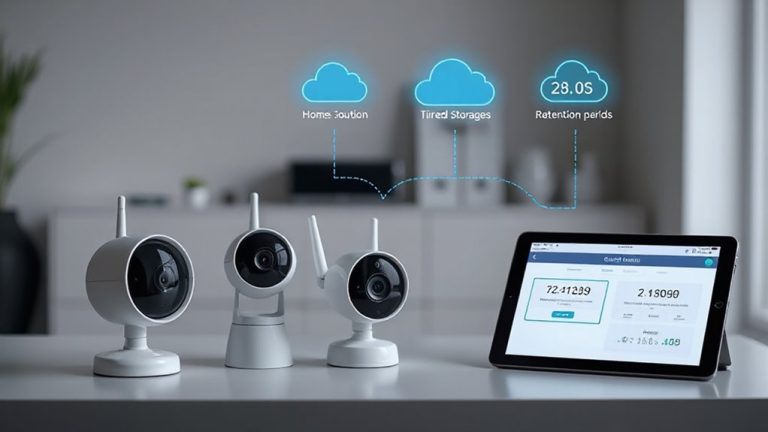
You’ve adjusted your camera’s angle to avoid neighbors’ private spaces, but staying legal goes beyond positioning. Proper camera placement is key-you should only record areas where there’s no reasonable expectation of privacy, like driveways or front yards, not windows or back patios. Point lenses away from public sidewalks unless necessary, and check local laws, as some states restrict recording audio or public areas. Always label your system with visible signs to notify others. Data storage matters too: keep footage secure and limit retention to 30 days unless needed for evidence. Cloud storage offers backup but review encryption and access controls. Local storage avoids third-party risks but can be stolen. Weigh cost, ease of use, and privacy. Plan your setup with these factors to stay compliant, effective, and respectful of community privacy rights.
On a final note
You can legally record public areas around your home, but audio capture often requires two-party consent in states like California and Florida. Video alone is generally allowed, especially with signage. Point cameras toward your property, not neighbors’ homes, to avoid privacy issues. Check local laws before installing-some areas regulate camera placement or recording in shared spaces. Use recordings responsibly, store footage securely, and balance security needs with legal and neighborly boundaries.