Creating a Safe Haven: Designing Your Home With Security Features That Work
Start by installing smart locks and reinforced steel or solid-core doors-they resist forced entry and offer encryption, remote alerts, and auto-locking for $200 to $500 per door. Position security cameras at entry points and along pathways, using weather-resistant models with night vision. Add impact-resistant windows with laminated glass to block intruders and storms, costing $50–$120 per square foot. Illuminate exteriors with LED motion and perimeter lights for visibility. Connect all components through a central security hub with encryption and smartphone control, typically $200–$500 upfront plus $10–$40 monthly monitoring. More details on optimizing each layer follow.
Notable Insights
- Install smart locks and reinforced doors to significantly reduce break-in risks with tamper alerts and forced-entry resistance.
- Position security cameras at entry points and pathways with overlapping views for comprehensive, blind-spot-free monitoring.
- Use impact-resistant windows and walls with laminated glass to enhance security and withstand storms and forced entry.
- Equip exterior areas with motion-activated and perimeter LED lighting to deter intruders and improve nighttime visibility.
- Integrate a central security system to unify cameras, locks, and sensors with remote alerts and encrypted monitoring.
Start With Smart Locks and Reinforced Doors
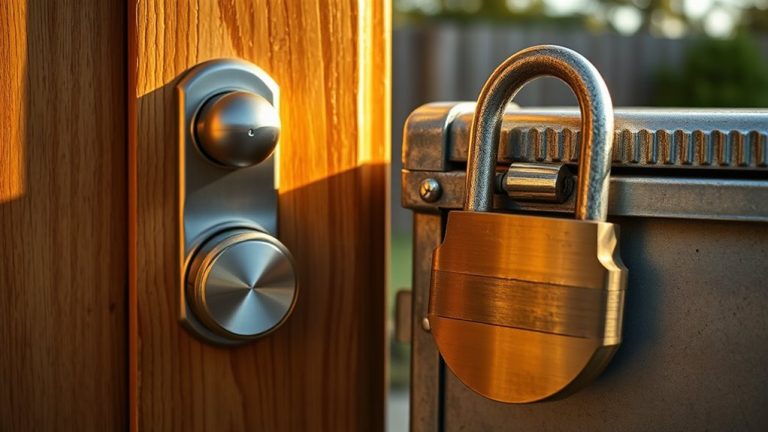
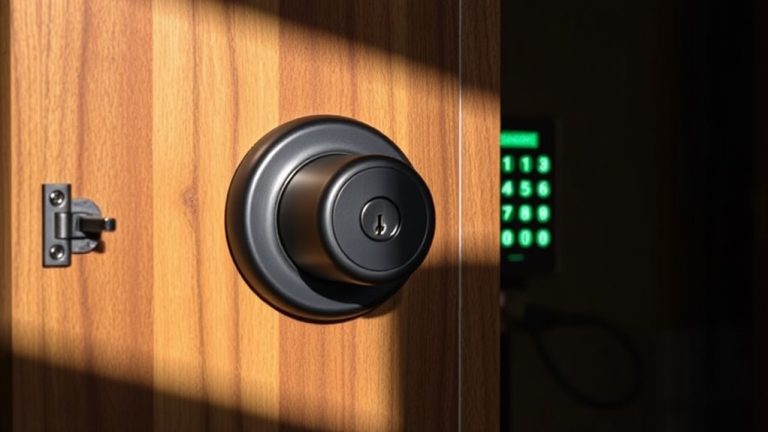
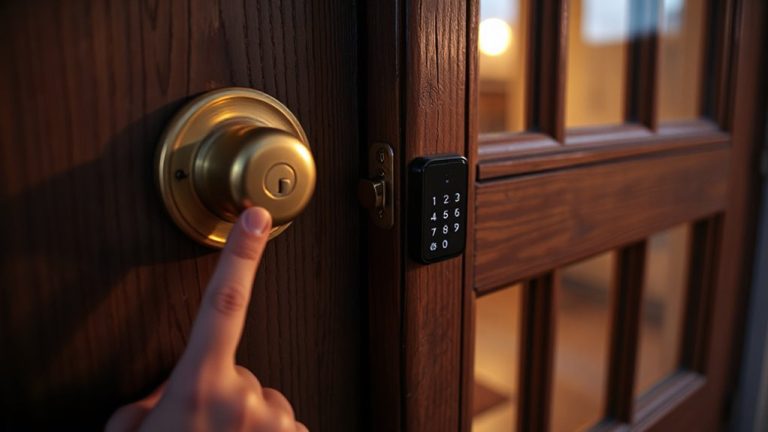
While traditional locks can offer basic protection, upgrading to smart locks and reinforced doors greatly improves your home’s security with verified, measurable benefits. You get stronger resistance to forced entry, and many smart locks include tamper alerts, encryption, and remote access logging. They require less lock maintenance than mechanical keys, which often wear down over time. Reinforced steel or solid-core doors withstand impacts better and, when paired with smart locks, reduce break-in risks markedly. Modern options also support seamless door aesthetics, blending security with design-available in finishes that match your home’s style. Installation typically takes a few hours, with prices ranging from $200 to $500 per door, depending on features. Though initial costs are higher, long-term safety gains and lower maintenance needs justify the investment. Choose models with strong customer reviews and reliable app integration to guarantee consistent performance. Top-rated models offer advanced features like auto-locking and best smart locks compatibility for added convenience and peace of mind.
Place Security Cameras for Maximum Coverage
When positioning security cameras, your goal should be to cover all potential entry points without creating blind spots, so start by mapping out the exterior perimeter of your home. Effective camera placement means installing units at eye level or slightly higher, angled to capture faces and movements. Focus on doors, windows, garages, and dark corners where intruders might hide. Avoid placing cameras too close to light sources, as glare can obscure footage. Use overlapping fields of view to reduce blind spots, especially along pathways and side yards. Consider weather-resistant models with night vision and motion detection for reliable performance. Wired systems offer steady power and data flow, while wireless models provide easier installation. Most experts recommend at least four cameras for full coverage. Proper planning now saves time and improves security effectiveness. For optimal results, choose from the best outdoor security cameras based on expert reviews and performance benchmarks.
Install Impact-Resistant Windows and Walls
If you’re serious about protecting your home from break-ins and severe weather, upgrading to impact-resistant windows and walls is a smart move. These systems offer reliable storm protection by withstanding hurricane-force winds and flying debris. You’ll also enjoy consistent noise reduction, making your home quieter and more comfortable. Built with laminated glass and reinforced frames, they’re tough to breach, adding a strong layer of security.
| Benefit | Emotional Impact |
|---|---|
| Peace of mind during storms | You won’t fear the next big wind or rain |
| Less outside noise daily | Your family enjoys calm, quiet evenings |
| Stronger home security | You feel safer knowing weak entry points are gone |
Most installations cost $50–$120 per square foot, depending on materials and home size. Plan for professional installation to guarantee proper sealing and code compliance. This upgrade works hard for you-every day.
Light All Exterior Areas to Deter Intruders
A well-lit exterior is one of the most effective, low-cost ways to deter burglars and improve home security. You should install motion lighting around entry points like doors and garages-these lights activate when they detect movement, making intruders visible and startling them. Perimeter illumination along fences, driveways, and pathways guarantees every exterior area is visible at night. Use LED fixtures for longer life and lower energy costs, and space lights evenly to eliminate dark spots. Timers or dusk-to-dawn sensors can keep lights consistent without manual operation. Motion lighting works best when combined with steady perimeter illumination, as sudden light in a dark area draws attention. Most systems cost between $150 and $500, depending on coverage and whether you hire a professional. Proper lighting doesn’t guarantee safety, but it markedly reduces risk. For optimal performance, consider installing one of the best motion sensor flood lights based on expert testing and user reviews.
Connect Everything With a Central Security System
You’ve already made your property less inviting to intruders with smart outdoor lighting, but real protection comes from integrating all your security components into one unified setup. A central hub connects your cameras, locks, sensors, and alarms so they work together seamlessly. This hub lets you monitor activity remotely and receive automated alerts when unusual motion or entry occurs. Most systems cost $200–$500 upfront, with monthly monitoring plans from $10–$40. Key benefits include real-time notifications, easy control via smartphone apps, and integration with voice assistants. Some drawbacks are potential internet dependency and privacy concerns with cloud storage. Choose systems with end-to-end encryption and local storage options. Look for DIY installation to save costs, or professional setup for complex needs. A central security system enhances reliability, reduces response time, and gives you consistent, data-backed control over your home’s safety.
On a final note
You’ve made your home safer by starting with smart locks and reinforced doors, adding cameras, impact-resistant windows, and exterior lighting. Connecting everything to a central security system increases reliability. These features reduce break-in risks, but proper placement and maintenance matter. Expect to spend several hundred to a few thousand dollars, depending on setup. Plan carefully, focus on weak points, and choose quality components for lasting protection.