Choosing the Right Personal Protection Devices for Children in High-risk Environments
You should choose a personal protection device based on your child’s age, environment, and daily routines. In high-risk areas-marked by violent crime, poor lighting, or gang activity-GPS trackers with real-time 10-foot accuracy and one-button panic alarms offer proven safety, especially during unsupervised hours. Younger kids do best with wearable, simple devices; older children can handle encrypted apps or dual-function tools. A proper fit and regular use matter-comfort increases compliance, and consistency builds habit. There’s more to evaluate when matching devices to your child’s specific risks and lifestyle.
Notable Insights
- Select GPS tracking devices with real-time updates for high-crime areas to monitor children’s whereabouts within 10 feet accuracy.
- Choose wearable panic alarms with one-button activation suited to a child’s motor and cognitive abilities for quick emergency response.
- Match device complexity to the child’s age-simple wearables for younger kids, apps or multi-function tools for older children.
- Ensure gear is comfortable, adjustable, and stylish to encourage consistent use and proper fit as the child grows.
- Integrate device use into daily routines and reinforce habits with positive feedback to build automatic safety behaviors within 2–3 weeks.
What Counts as a High-Risk Environment for Kids?
Where might your child face the greatest safety risks? Urban crime rates play a key role, especially in neighborhoods with limited lighting, heavy foot traffic, or known gang activity. You should assess local data-cities with higher violent crime statistics often pose increased threats. School violence incidents, though less frequent, are another concern, particularly in large districts with inconsistent security protocols. These environments aren’t defined by fear but by measurable patterns. High-risk doesn’t always mean dangerous, but it does require awareness. Consider proximity to emergency services, adult supervision levels, and whether your child travels alone. Public transit routes, under-resourced schools, and unsupervised after-school hours can compound risk. You don’t need to overreact-just evaluate using real data. Monitoring local crime trends and school safety reports helps you make informed choices about protection without exaggeration or panic.
How Age Changes What Protection Devices Work
While younger kids may not fully understand how to use complex tools, you’ll find that the right protection devices depend heavily on your child’s age and developmental stage. Age appropriateness matters-what works for a toddler won’t suit a preteen. Younger children need simple, wearable alarms or GPS trackers with one-button operation, matching their limited motor and cognitive skills. As kids grow through different developmental stages, they can handle more advanced tools like panic buttons or encrypted messaging apps. Always consider attention span, dexterity, and understanding of danger when choosing. Devices should fit comfortably and be hard to lose or disable. For younger users, adult alerts are more reliable than expecting a child to react quickly. Prioritize ease of use and automatic features, especially under stress. Testing the device with your child verifies it truly meets their needs. Among the most effective options are Best Child Safety Trackers, which combine reliable GPS technology with user-friendly designs for various age groups.
Best Personal Protection Devices for Children: A Comparison
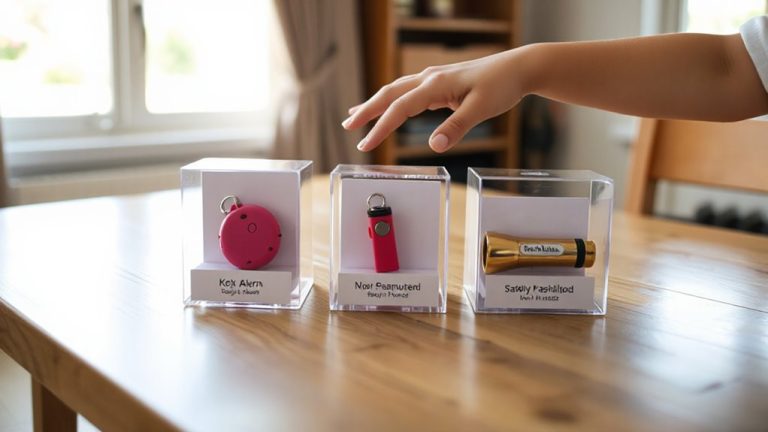
You’ve already seen how a child’s age shapes the kind of protection device that works best, from simple alarms for toddlers to more interactive tools for older kids. Now, let’s compare top options. GPS tracking devices, like wearable watches, offer real-time location updates-ideal for school commutes or busy areas. They’re accurate within 10 feet but require monthly subscriptions, usually $10–$15. Panic alarms, small buttons that send alerts to your phone, work instantly and cost less upfront. Many attach to backpacks or clothing. Some models combine both features, giving location data and emergency alerts in one. Battery life varies: GPS units last 1–3 days, while panic alarms can run months. For high-risk settings, dual-function devices provide more reliable monitoring. Choose based on your child’s routine, tech access, and your need for immediate alerts or constant location checks.
Comfort vs. Function in Kids’ Safety Gear
Safety gear that fits well is more likely to be used consistently-so comfort matters as much as function. You’ll want gear that balances protection with wearability, especially for extended use. Design aesthetics play a role: kids are more likely to wear gear that looks appealing, not clinical. Bright colors or fun patterns can encourage acceptance without sacrificing safety standards. Material breathability is essential too-look for moisture-wicking, lightweight fabrics that reduce overheating and irritation. Poor ventilation can lead to rashes or discomfort, decreasing compliance. Helmets, vests, or padding should have adjustable straps and soft inner linings to fit growing children. Test the fit: gear shouldn’t shift during movement, but also shouldn’t pinch or chafe. Prioritize models with certified impact resistance and proven ergonomics. Check user reviews and safety ratings before purchasing. Comfortable, well-designed gear supports consistent use, which ultimately improves protection over time.
How to Make Safety Devices Part of Daily Routines
How can something as simple as putting on a helmet become as routine as brushing teeth? With consistent routine integration, safety gear becomes a natural part of a child’s day. Start young-habit formation works best when behaviors are repeated daily in predictable contexts. Pair gear use with existing routines, like buckling a helmet before bike rides or wearing reflective vests when leaving for school. Make it visible and accessible, storing items where kids can grab them independently. Praise effort, not just compliance, to reinforce positive behavior. Studies show habit formation takes 2 to 3 weeks of consistent practice. The key is repetition and consistency. Routine integration reduces resistance over time, making safety devices automatic. With practice, your child won’t just wear protection-they’ll expect to.
5 Mistakes That Make Kid Safety Gear Fail
Even when safety gear is part of daily life, it can still fail if not used correctly. Poor fit and incorrect storage are two common mistakes that compromise protection. A helmet that’s too loose won’t absorb impact properly, and padding that’s compressed from being left in hot cars loses effectiveness. Always check that gear fits snugly and is stored in a cool, dry place.
| Mistake | Consequence |
|---|---|
| Poor fit | Reduced protection in crashes |
| Incorrect storage | Material degradation over time |
Replace gear after visible wear or manufacturer-recommended intervals. Follow sizing guides when purchasing, and inspect gear monthly. Investing time in proper use and maintenance guarantees your child stays protected when it matters most. Don’t assume gear works just because it’s worn-effectiveness depends on correct application and care.
On a final note
You should choose protection devices based on your child’s age, environment, and daily routines. Lightweight GPS trackers and panic buttons work well for older kids, while younger children need more supervision and simpler tools. Comfort matters, but never sacrifice function. Test gear regularly, avoid common errors like poor placement, and budget for updates. Always pair devices with clear safety plans.