Optimizing Your Home’s Security With a Hybrid Wired/Wireless Alarm Configuration
You get reliable security with a hybrid wired/wireless alarm by combining hardwired sensors for critical entry points and wireless units for remote areas like garages or sheds. Wired components offer stable, continuous operation, especially with battery backup, while wireless sensors allow easy expansion without drilling or rewiring. This setup reduces false alarms, cuts long-term costs, and adapts to layout changes. You’ll learn how to place each type for maximum coverage and system efficiency.
Notable Insights
- Combine wired and wireless sensors to balance reliability and flexibility in your security setup.
- Use wired components for critical entry points and wireless sensors where wiring is impractical.
- Ensure all devices integrate with a central control panel to maintain seamless system communication.
- Power key wired elements with battery backups and surge protection to sustain operation during outages.
- Group sensors into labeled zones for easier monitoring, maintenance, and faster response to alarms.
What Is a Hybrid Wired/Wireless Alarm System
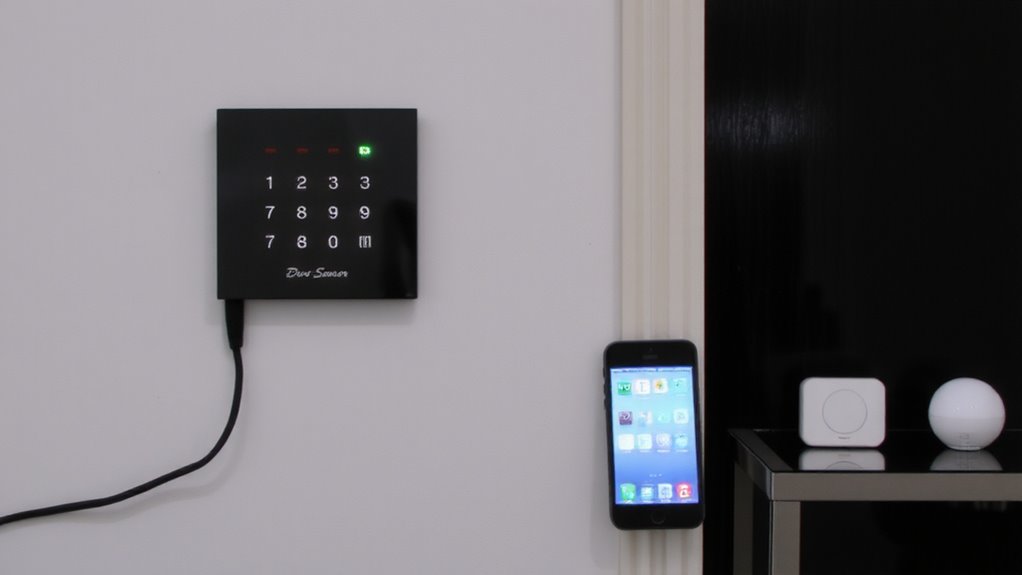
While traditional alarm systems rely solely on wired connections or newer models depend entirely on wireless signals, a hybrid wired/wireless alarm system combines both technologies to offer greater flexibility and reliability. You benefit from signal redundancy, meaning if one connection type fails, the other maintains communication. This setup improves overall security performance, especially during power outages or signal interference. Hybrid systems also support power efficiency by allowing selective use of wired sensors for constant monitoring and wireless units for remote or temporary placement. You can install hardwired devices in fixed areas like windows and doors, while using wireless components for motion detectors or cameras in less accessible spots. Most systems let you expand over time without rewiring, adapting to layout changes or upgrades. Installation costs vary, but long-term savings come from reduced vulnerabilities and lower false alarm rates. You gain control, scalability, and proven reliability.
Why a Hybrid Alarm Beats Fully Wired or Wireless
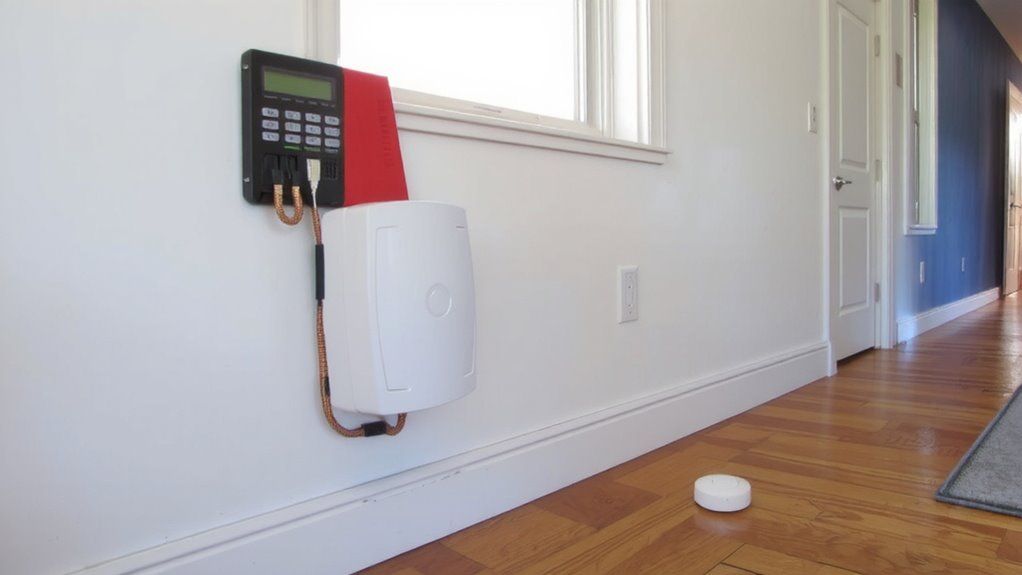
Because you need both reliability and flexibility in a home security system, a hybrid alarm often outperforms fully wired or fully wireless models. You avoid the high installation cost of fully wired setups while reducing risks like signal interference and battery dependency found in wireless systems. A hybrid gives you the best of both: wired components offer stable connections, and wireless ones allow easy expansion. Here’s how they compare:
| System Type | Key Risk |
|---|---|
| Fully Wired | High installation cost |
| Fully Wireless | Signal interference |
| Hybrid | Minimal setup changes |
| Wireless Add-ons | Battery dependency |
You gain control without overhauling your home. With a hybrid, upgrades fit your timeline and budget while maintaining strong, consistent performance across all sensors and alerts.
Choose the Best Wired Components for Stability
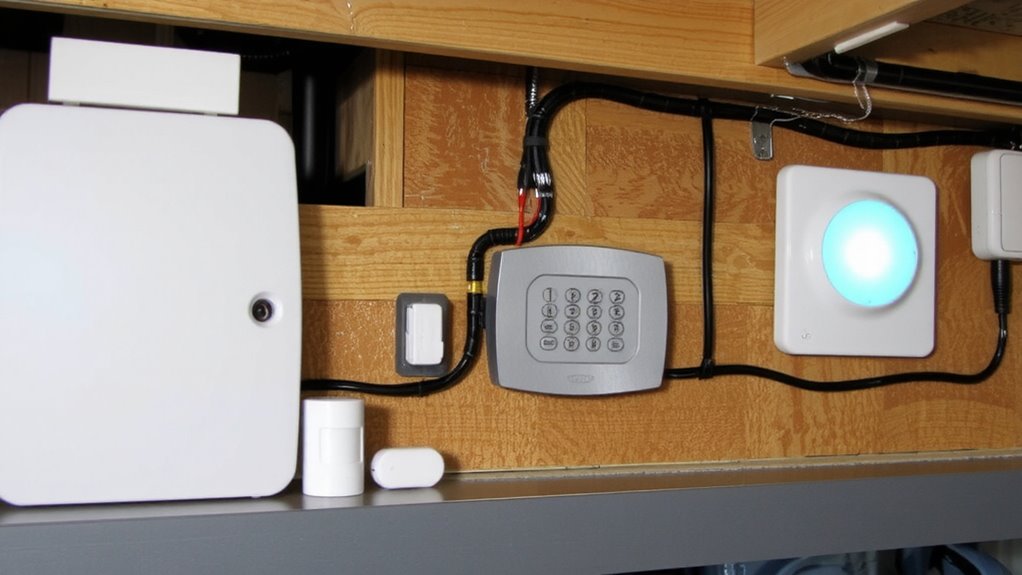
When selecting wired components for your hybrid alarm system, focusing on stability means choosing devices known for consistent performance and low failure rates. Hardwired reliability is your main advantage here-these components keep working even during power outages if paired with a backup battery. Look for control panels and sensors from reputable brands with solid warranties and proven track records. Opt for systems that support sensor redundancy, meaning multiple sensors cover the same area, reducing the chance of undetected breaches. This layered approach improves accuracy and fault tolerance. Wired door and window contacts, along with glass break detectors, are ideal for high-traffic or critical entry points. While installation needs more planning and upfront cost, the long-term performance justifies the effort. Choose components that integrate easily with your wireless additions later, ensuring seamless operation across your entire network. For reliable surveillance integration, consider pairing your system with a best wired security camera system.
Add Wireless Sensors Where Wiring Isn’t Possible
If running wires isn’t practical in certain areas of your home, wireless sensors offer a reliable and effective solution. You gain wireless flexibility, allowing you to secure spaces like garages, sheds, or rental units without tearing into walls. These sensors use radio signals to communicate with your control panel, making installation quick and clean. You can easily adjust sensor placement as your security needs change-ideal for sliding doors, high windows, or temporary setups. While batteries require periodic replacement, modern models often last two to five years on a single charge. Look for sensors with low-battery alerts and encryption to guarantee reliability and safety. Wireless options may cost slightly more upfront, but the savings on labor and structural changes often balance the price. With thoughtful sensor placement, you maintain strong coverage across every entry point, even where wiring isn’t possible. For expanded outdoor monitoring, consider integrating a best wireless surveillance camera system to complement your hybrid alarm setup.
Design Your Hybrid Alarm Layout in 5 Steps
Now that you’ve considered where wireless sensors can fill gaps in hard-to-wire areas, it’s time to bring all your security elements together into a smart, functional layout. Start by mapping entry points and high-risk areas, then divide your home into alarm zones for clearer monitoring and faster response. Group sensors by location or function-like doors, windows, or motion detectors-this is called sensor grouping and helps streamline alerts. Use wired connections for critical zones where reliability matters most, and wireless sensors for remote or temporary setups. Label each zone clearly in your system settings so you know exactly where alarms trigger. A well-planned layout improves detection accuracy and reduces false alarms. Spend time refining alarm zones and sensor grouping now to save time and boost effectiveness later. For reliable performance and expert-vetted options, consider choosing from the best household alarms based on comprehensive testing and user feedback.
Connect Smart Devices That Work With Hybrid Alarms
How can you make your hybrid alarm system even more effective? By connecting compatible smart devices that enhance both security and convenience. Integrating smart lighting lets you automate lights to turn on when motion is detected, deterring intruders even when you’re away. You can schedule lights to mimic occupancy during vacations, increasing protection without extra effort. Pairing your system with voice assistants like Alexa or Google Assistant allows hands-free arming or status checks, improving accessibility. Most hybrid alarms support major smart home platforms, ensuring reliable communication across devices. Look for systems with Z-Wave or Wi-Fi compatibility to simplify connections. While adding smart devices may raise upfront costs, the layered security they provide improves responsiveness and control. Always verify device compatibility before purchasing to avoid integration issues.
Avoid Common Wiring and Signal Issues in Hybrid Systems
Wiring and signal reliability directly impact how well your hybrid alarm system performs, even when you’ve connected smart devices to boost functionality. Poor cable management or loose connections weaken wired components, so inspect terminals regularly and use shielded cables to reduce signal interference. Wireless sensors can struggle in homes with thick walls or competing signals from routers and microwaves, so position access points centrally and avoid placing transmitters near large metal objects. Signal interference from nearby electronic devices may cause delays, so choose systems with frequency-hopping tech for stability. Power surges can damage both wired and wireless units, especially during storms, making surge protectors essential. Invest in a reliable UPS to maintain operation during outages. Planning your layout with zones and backups improves response consistency. Proper installation and quality components reduce long-term repair costs and keep your system effective.
On a final note
You get the best of both worlds with a hybrid wired/wireless alarm system. Wired parts offer reliable, tamper-resistant connections, while wireless sensors add flexibility where drilling isn’t possible. Plan your layout carefully, place sensors strategically, and use devices that sync with your control panel. Expect moderate upfront costs, but save on long-term reliability. Avoid signal interference by spacing devices properly, and test monthly for peak performance.