How to Disrupt Predictable Home Routines to Confuse Potential Burglars
Vary your departure and return times daily to disrupt criminal pattern recognition-no cost, just awareness. Rotate trash and yard work schedules weekly using calendar alerts. Use smart lights ($50–$150) on motion sensors or voice routines to simulate presence, especially in kitchens and living rooms. Pair with timed TVs or radios on irregular loops for realism. Hidden cameras ($50–$200) deter intruders and gather evidence when placed unpredictably. Combine these with soundproofing like weatherstripping to mask occupancy cues-more effective when layered strategically.
Notable Insights
- Vary daily departure and return times to prevent burglars from predicting when the home is unoccupied.
- Change outdoor routines like trash disposal and yard work to disrupt visible occupancy patterns.
- Use smart lights on random schedules to simulate activity and mimic real human behavior.
- Employ timed devices for lights, TVs, or radios with irregular on/off cycles to create a lived-in illusion.
- Install hidden cameras and use soundproofing to deter intruders and obscure signs of occupancy.
Break Burglars’ Schedules With Unpredictable Habits
While burglars often rely on predictable routines to plan break-ins, you can disrupt their timing by varying your own daily habits. Random visits to your home-like stopping by midday or on non-routine days-make it harder for criminals to recognize patterns. Hidden cameras add another layer, deterring intruders and capturing evidence without drawing attention. Studies show homes without clear schedules are up to 30% less likely to be targeted. Hidden cameras typically cost $50–$200, with battery-powered models offering easy installation. Some systems require subscriptions, which adds ongoing cost. For best results, combine random visits with camera placement near entry points. Avoid predictable camera positions; angle them toward doors and walkways. You don’t need high-end gear-basic models with motion alerts work well. This strategy doesn’t eliminate risk, but reduces predictability, making your home less appealing. Consistency in variation is key. For enhanced surveillance, consider models with best spy cameras with audio & night vision to ensure clear monitoring in all conditions.
Vary Your Departure and Return Times
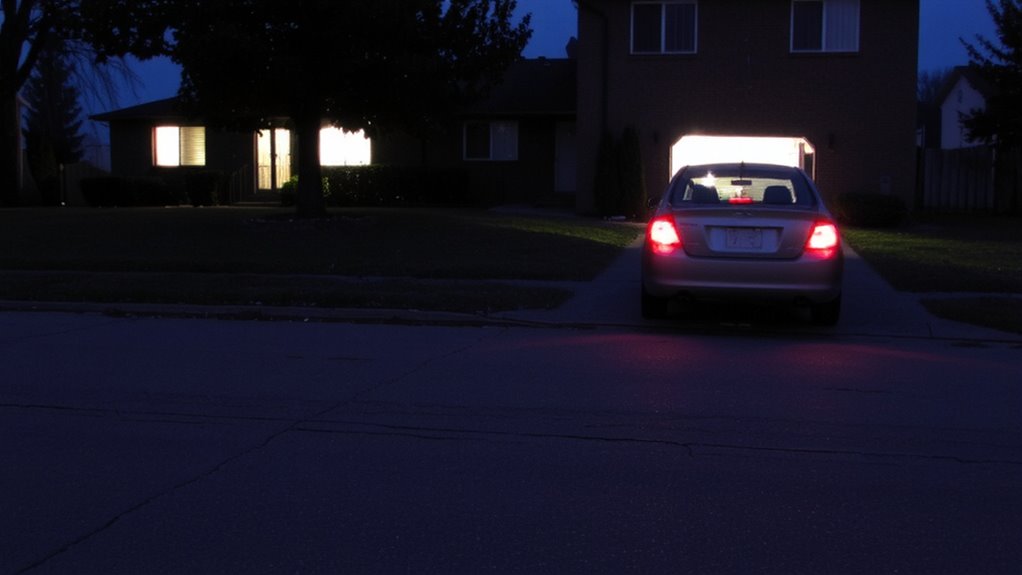
A smart way to protect your home is by varying when you leave and come back, since consistent routines make it easier for burglars to predict when your house is empty. Random departures and irregular arrivals disrupt patterns that criminals rely on. If you leave for work at 8:00 a.m. every day, you’re signaling when the house is vacant. Instead, shift your schedule slightly-some days leave earlier, others later. The same goes for return times; avoid arriving home at the same hour daily. This small change increases uncertainty for would-be intruders. While it may require minor adjustments to your routine, the added security is worth it. No special tools or costs are needed, just awareness and flexibility. Over time, this habit becomes natural. Varying your comings and goings is a simple, evidence-backed strategy that strengthens home safety without drawing attention.
Change Up Trash and Yard Work Without Warning

Since burglars often watch homes for repeating patterns, mixing up when you take out the trash or do yard work can make it harder for them to tell if you’re home. You should adopt a trash rotation schedule that varies weekly-don’t put bins out on the same day every month. One week, set them out Tuesday night; the next, wait until Thursday morning. This unpredictability disrupts surveillance assumptions. Likewise, apply yard randomness: mow your lawn or trim hedges at irregular times, avoiding fixed weekends or hours. Data shows homes with consistent outdoor routines are targeted more often. Though it takes planning, this strategy requires no cost or special tools. The minor effort of shifting your routine adds meaningful uncertainty for would-be intruders. Pros include enhanced security and low effort; a con is needing to remember irregular timing. Use notes or calendar alerts if needed. Trash rotation and yard randomness are simple, effective layers in a broader home protection plan.
Use Smart Lights to Fake Activity
If you’re not home, smart lights can make it look like you are, cutting the odds a burglar chooses your house. You can set them to turn on and off at different times, mimicking your usual habits. Pair them with motion sensors to trigger lights when movement is detected, which can scare off intruders. Many systems allow voice routines, so you can control lights using simple commands, even remotely. That means you can turn a light on from miles away with your phone. Most kits cost $50–$150, depending on how many bulbs or switches you need. While reliable, Wi-Fi outages can disable them, so consider a backup plan. Plan which rooms to light and when-kitchens and living rooms look lived-in when lit at night. Smart lights aren’t perfect, but combined with other strategies, they add a strong, data-backed layer of security that makes your home far less appealing to criminals. For seamless integration with Apple devices, consider using HomeKit-compatible outlets to expand your lighting automation beyond just bulbs.
Add Soundproofing Tricks to Fool Intruders
Some homes stay safer not by what they show, but by what they hide-soundproofing isn’t just for recording studios, it can also keep intruders guessing about whether anyone’s inside. You can use white noise machines or fans to create consistent background sound, masking everyday noises like footsteps or talking. This sound masking makes it harder for outsiders to detect activity patterns. Simple upgrades like weatherstripping doors, adding heavy curtains, or installing rugs reduce sound leakage. These fixes cost $50–$200, depending on room size. While effective, soundproofing won’t block all noise, so combine it with other tactics. You don’t need full acoustic treatment-target entry points like front doors and ground-floor windows. Strategic use of white noise enhances confusion, making your home seem quiet, possibly empty. It’s a low-cost layer of protection backed by behavioral studies on burglar decision-making. Plan placements wisely for maximum effect.
Make It Look Lived-In With Timed Devices
How can burglars be sure a house is empty when lights flick on at 7 p.m., the TV hums at 8:30, and a lamp in the bedroom glows by 10:15? Timed devices make your home appear occupied, even when you’re not. Use smart plugs or timers to control lights, TVs, and radios on inconsistent schedules. This randomness mimics real activity better than constant lighting. Pair timers with motion sensors outside to boost realism-movement near doors or walkways deters intruders. Many systems offer remote access, so you can turn devices on or off from anywhere using a phone. That flexibility helps adjust patterns anytime, reducing predictability. Basic timers cost $10–$20, while smart models with remote access run $25–$50. Installation is simple, but plan placements carefully. Avoid obvious repetition, and mix timed lights with motion sensors for stronger, data-backed protection.
Get Neighbors to Watch for Suspicious Patterns
While you’re away, a neighbor noticing something off could mean the difference between a near miss and a break-in. Building neighbor surveillance into your security plan strengthens pattern recognition around your home. Talk to nearby residents before trips, share your schedule briefly, and ask them to note unfamiliar vehicles or odd behavior. Trustworthy allies can spot disruptions in daily rhythms that might signal surveillance by potential intruders. Below are key traits of effective neighbor surveillance:
| Factor | Importance |
|---|---|
| Communication frequency | High – check in monthly |
| Observation consistency | Medium – shared notes help |
| Response time | High – immediate alerts needed |
| Trust level | Critical – choose carefully |
This low-cost approach complements timers and locks. No special tools are required, but clear expectations are essential. You’re not asking for constant monitoring-just awareness. When neighbors recognize patterns and report anomalies, they become part of a proactive, evidence-based defense.
On a final note
You lower burglary risks by breaking predictable routines. Vary your daily schedule, use smart lights and timers, and mix up outdoor chores. These steps make it harder for intruders to guess when you’re away. Pair devices with neighbor watches for better results. Most tools are affordable, with smart plugs starting under $20. Plan system placement early, and test monthly. Consistency and variation together boost home security effectively.