Using Smart Garage Door Controllers to Prevent Forced Entry Attempts
You’re likely unaware nearly 40% of break-ins start through the garage. Smart controllers stop forced entry with rolling codes and encryption, making signal theft useless. You get instant alerts if someone tampers with the door, and motion sensors detect suspicious activity early. Close it remotely from anywhere using your phone, even if you forgot to shut it. Auto-lock features secure the garage after a set time, while access logs track every use. These systems sync with home security setups and cost $70–$150, with no monthly fees for core functions-just strong, reliable protection that keeps working the moment you need it.
Notable Insights
- Smart controllers use rolling codes to prevent signal replay attacks that compromise traditional remote access.
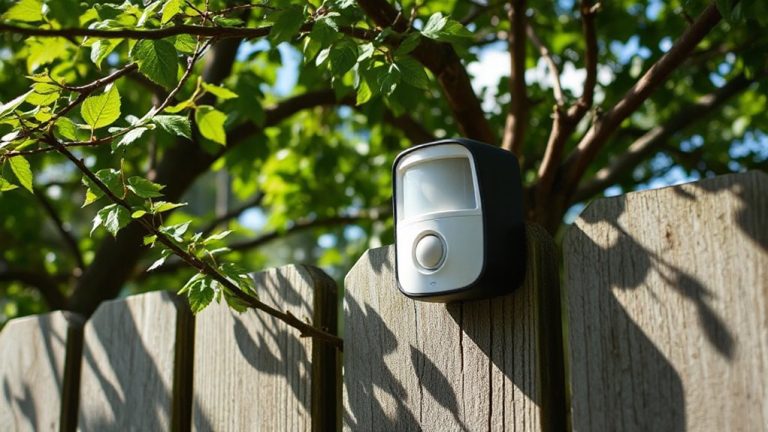
- Built-in motion detection alerts homeowners instantly when suspicious activity occurs near the garage door.
- Tamper-resistant technology triggers alarms if someone attempts to force open the garage door.
- Remote monitoring allows users to check door status and close it from anywhere using a smartphone.
- Auto-lock features secure the garage automatically after a set time, reducing the risk of accidental exposure.
Why Garage Doors Are a Security Weak Spot
While many homeowners focus on securing windows and doors, the garage is often overlooked despite being a common entry point for break-ins-nearly 40% of intruders use the garage to gain access, according to home security studies. You might not realize it, but your garage has a vulnerable design that offers easy access to the rest of your home. Most garage doors use outdated remotes or manual locks that are simple to bypass. The side entry door, if present, is often less secure than exterior house doors. Since the garage connects directly to your home, once inside, intruders are just steps away from your living areas. You may assume the door’s size deters burglars, but force isn’t always needed-many systems lack proper encryption or tamper resistance. Addressing these flaws starts with recognizing the risk and upgrading weak points. A secure garage isn’t optional; it’s essential to your home’s overall safety. Smart garage door controllers offer enhanced protection without the need for ongoing costs, and models that work with best doorbells without subscription fees provide comprehensive, cost-effective security solutions.
How Smart Controllers Prevent Break-Ins
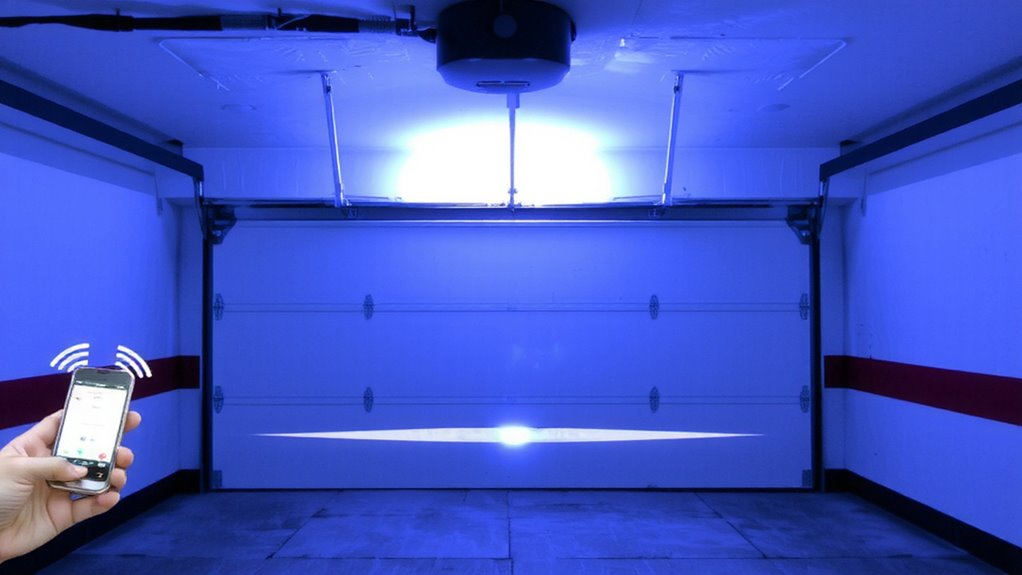
Because traditional garage door systems rely on fixed codes and lack real-time monitoring, they’re prone to exploitation-but smart controllers fix these gaps with modern security features you can control remotely. These devices use rolling codes that change with each use, making it far harder for intruders to intercept signals. Built-in motion detection alerts you to unexpected movement, helping identify potential break-in attempts early. Plus, tamper resistance mechanisms trigger system responses if someone tries to force open the door or disable the motor. You can check your garage’s status anytime through a smartphone app, and many models integrate with home security systems for added protection. Most units are easy to install and cost between $100 and $200. While they require Wi-Fi and occasional updates, the improved security makes them a solid upgrade for most homeowners. Top models offer advanced encryption and smart garage door openers for maximum protection.
Get Instant Alerts During Forced Entry Attempts
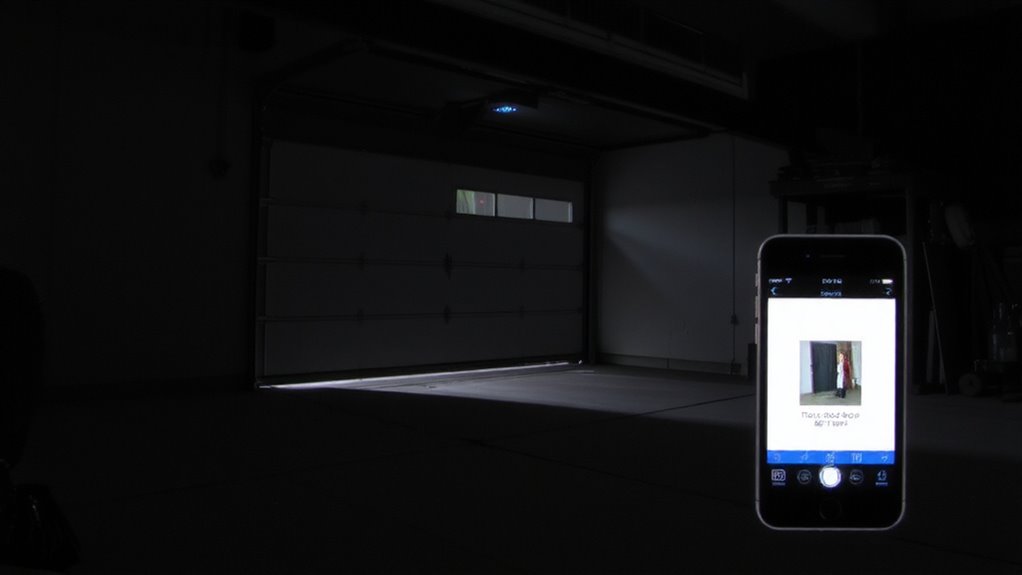
What happens if someone tries to force their way into your garage? With smart garage door controllers, you don’t have to wait to find out. Motion detection sensors alert the system instantly when unusual activity occurs. You’ll receive real time notifications on your phone, so you know what’s happening the moment it does. Top models feature expert-recommended sensors for enhanced reliability and faster response times.
| Feature | Benefit |
|---|---|
| Motion detection | Catches suspicious movement early |
| Real time notifications | Alerts you immediately |
| Custom sensitivity | Reduces false alarms |
| 24/7 monitoring | Works day or night |
| Integration with security apps | Links to cameras and alarms |
These alerts let you respond quickly, whether you’re home or away. Most systems work with home security platforms, giving you a unified view of safety. Controllers range from $80 to $180, with no monthly fees for basic alerts.
Close Your Garage Remotely: Even From Afar
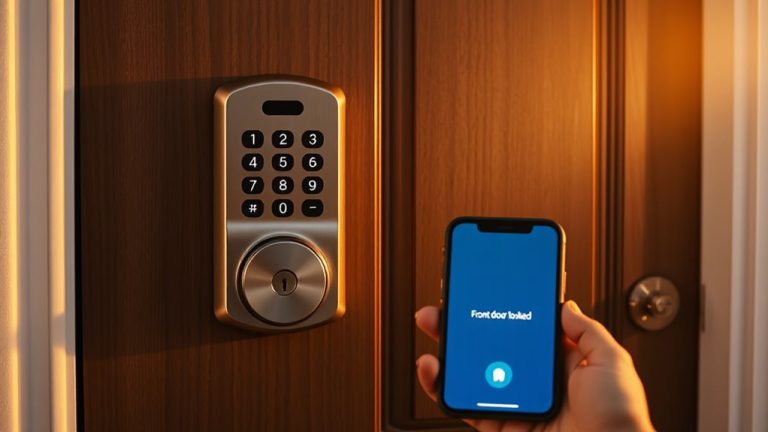
You already get alerts if someone tries to force their way into your garage, but knowing isn’t enough-you need control. With remote monitoring, you can check your garage door’s status from anywhere using your smartphone. If you left it open by accident, you don’t have to race home. Instead, initiate real time closure with a tap, no matter your location. Most smart controllers sync with home Wi-Fi and send confirmation once the door fully closes. This feature is especially useful during travel or busy workdays. Look for systems with strong encryption to protect access. While monthly fees are rare, some apps require a subscription for advanced features. Reliable models cost between $70 and $150. Setup usually takes under 30 minutes. Remote monitoring paired with real time closure gives you actionable security, reducing risk when you’re far from home.
Auto-Locks and Access Logs That Deter Intruders
Set it and forget it-smart garage door controllers automatically lock your garage after a set period of inactivity, reducing the risk of forgotten open doors. You’ll receive real time notifications if the door opens or fails to close, so you’re always aware of its status. These systems also maintain access logs, recording every use with timestamps, which helps you spot unusual activity. With user permissions, you can grant temporary or permanent access to family, guests, or service workers without handing out physical remotes. Limit permissions by time or frequency to increase security. Most models integrate with home automation platforms and require a stable Wi-Fi connection. Installation typically takes under an hour, and prices range from $60 to $130. Look for systems with end-to-end encryption to protect your data and guarantee long-term reliability.
On a final note
You can strengthen your home’s security by upgrading to a smart garage door controller. These devices alert you instantly if someone tries to force entry, let you close the door remotely, and auto-lock after use. Detailed access logs help track activity, deterring intruders. Most systems install easily and cost $100–$180. Look for Wi-Fi compatibility, strong encryption, and integration with existing security systems for best results.