Selecting Motion Sensors With Adjustable Sensitivity for Windy or Leafy Areas
Choose motion sensors with adjustable sensitivity to reduce false alarms from wind or swaying trees. Models like the Ring Spotlight Cam and Arlo Pro 4 offer reliable detection with customizable settings. Look for dual-sensor tech, weather resistance, and smart mounting-set 6–8 feet high and angle downward. Adjust sensitivity so small movements don’t trigger alerts, but people are still detected. You’ll find your best setup with some testing and the right features in place.
Notable Insights
- Choose motion sensors with adjustable sensitivity to reduce false alarms from wind-blown foliage.
- Opt for models with advanced detection technology like dual sensors or AI to distinguish between leaves and people.
- Mount sensors 6–8 feet high and angle them downward to focus on human-level movement.
- Install sensors under eaves or shelters to minimize exposure to wind, rain, and swaying branches.
- Select weather-resistant models with IP or NEMA ratings to ensure durability in harsh outdoor conditions.
Why Wind and Trees Trigger Motion Sensors
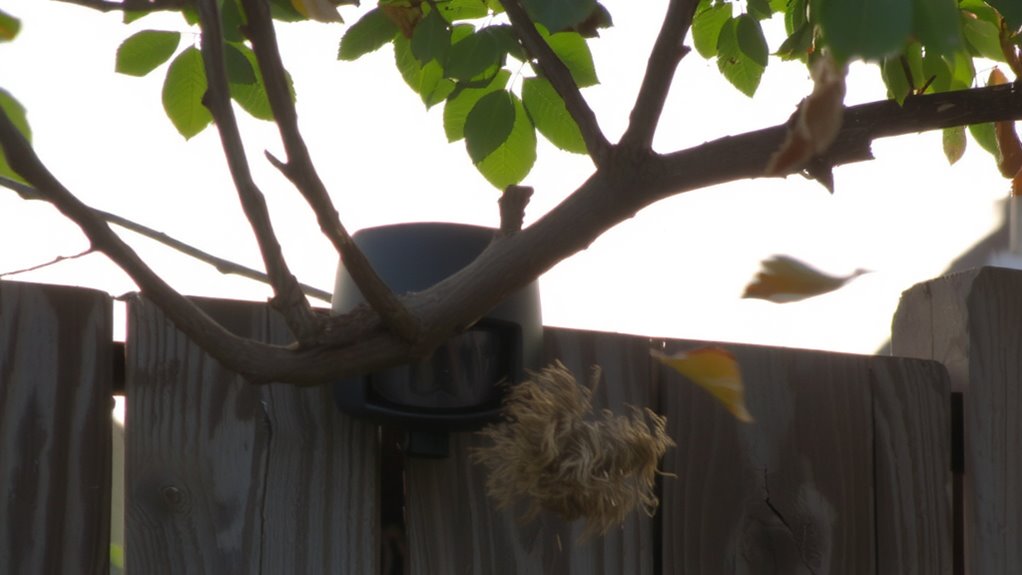
While motion sensors are designed to detect movement, they can sometimes mistake environmental motion-like swaying branches or gusts of wind-for an intruder. You’ll notice false alarms when signal interference or environmental vibration disrupt the sensor’s normal operation. Wind shakes trees and sends leaves fluttering, creating motion patterns the sensor interprets as potential threats. These natural vibrations mimic human movement, especially in wooded or open, breezy areas. Infrared sensors, in particular, react to rapid changes in heat signatures caused by moving foliage. Radio frequency models can also suffer signal interference from nearby power lines or other electronics, compounding the issue. To reduce mistakes, you need sensors built to differentiate subtle differences in motion type and frequency. Choosing units rated for outdoor use with advanced filtering helps minimize disruptions caused by environmental vibration. Planning placement carefully avoids direct exposure to uncontrolled moving elements. Top-rated outdoor motion detectors often include features like adjustable sensitivity settings to better adapt to challenging environments.
Use Adjustable Sensitivity to Stop False Alarms
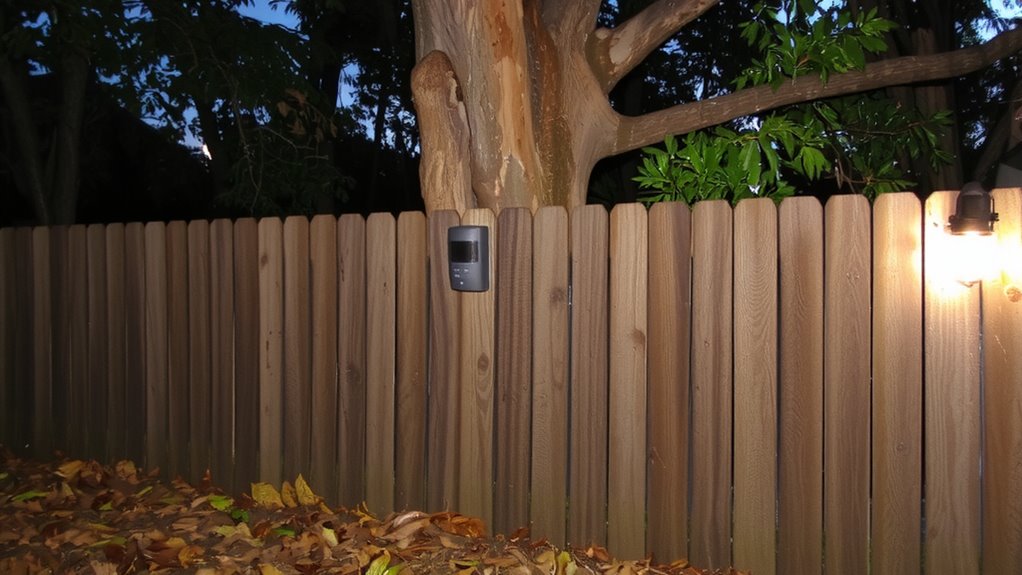
You can take control of false alarms by adjusting your motion sensor’s sensitivity settings. When set too high, sensors detect minor movements like swaying branches or gusts of wind, triggering unnecessary alerts. Lowering the sensitivity reduces these responses, especially in leafy or open areas. Proper sensor calibration guarantees the device accurately distinguishes between small environmental changes and actual human-sized movement. Many modern sensors include alarm filtering, which uses timing and motion patterns to determine if a detection is real, further reducing false alerts. You should test different sensitivity levels over a few days to find the right balance. While lower settings improve reliability, setting them too low might miss actual intruders. Opt for models that allow precise adjustments and include both sensor calibration tools and intelligent alarm filtering. This approach improves accuracy without sacrificing security. For reliable performance, consider top-rated options like the best motion sensors for lights.
Best Motion Sensors for Windy, Leafy Areas
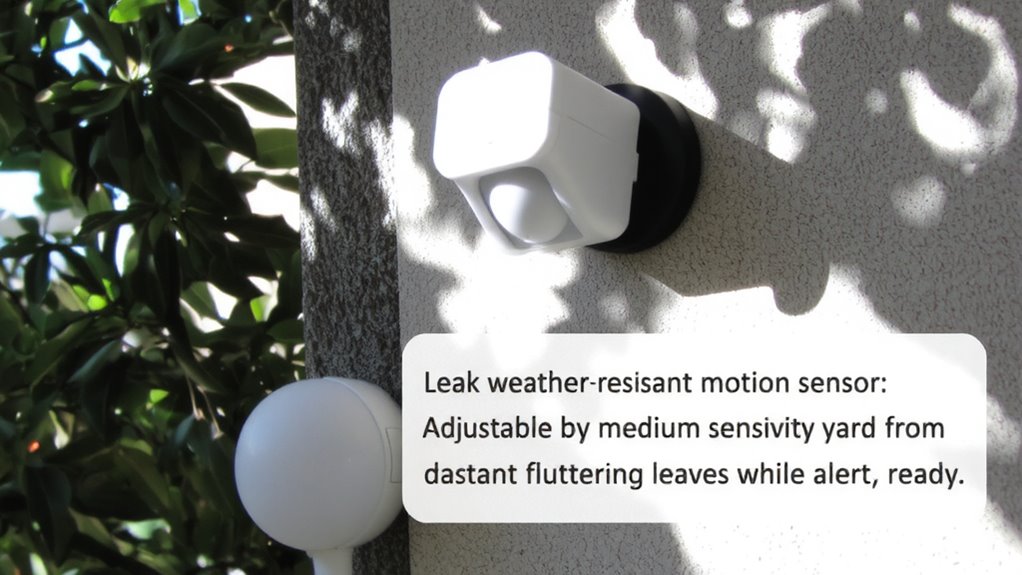
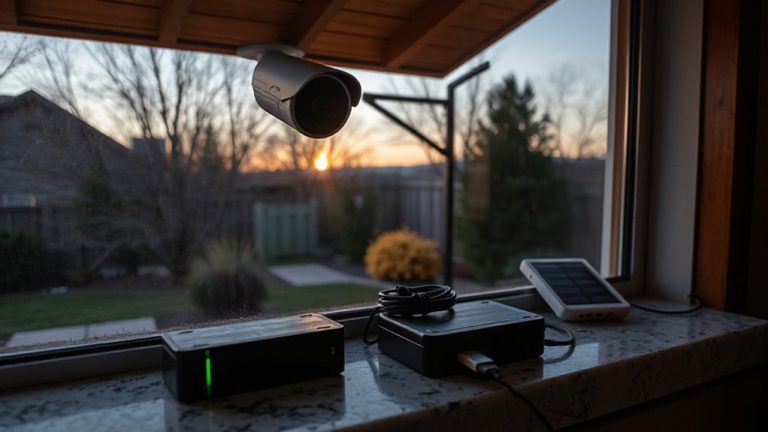
If you’re dealing with a yard full of trees or frequent gusts, choosing the right motion sensor makes a real difference in cutting down on false alarms. Smart sensor placement helps minimize environmental interference, especially when foliage moves in the wind. Look for models designed to distinguish between real threats and background motion. Best Home Assistant motion sensors offer advanced customization and integration options for smarter outdoor security. Below is a comparison of top-performing sensors for challenging outdoor settings:
| Model | Detection Range | Key Benefit |
|---|---|---|
| Ring Spotlight Cam | 30 ft | Adjustable sensitivity, excellent app control |
| Arlo Pro 4 | 25 ft | Dual-sensor tech reduces false alerts |
| Bosch TriTech II | 40 ft | Advanced signal processing for reliability |
| Lorex 4K | 33 ft | AI motion detection, minimizes false triggers |
Proper installation height and angle further reduce errors. These sensors, when placed wisely, handle environmental interference well.
Must-Have Features in Weather-Resistant Sensors
A reliable motion sensor does more than detect movement-it holds up when wind, rain, or shifting shadows test its limits. You need corrosion resistance to survive moisture and salty air, especially in coastal or humid areas. Without it, your sensor’s housing and internal parts can degrade, leading to early failure. Look for sensors made with UV-stabilized polymers or metal alloys that resist rust. Signal stability is just as critical; you don’t want frequent dropouts or false alarms when storms roll in. A solid sensor maintains consistent communication with your security system, even in heavy rain or high winds. Choose models with sealed enclosures and weather-rated IP or NEMA ratings. These features guarantee durability and long-term performance. Spending a bit more now saves you repair or replacement costs later. Check warranty terms and material specs before buying.
How to Adjust Sensitivity in Windy Yards
Though wind can trigger false alarms by moving branches or debris, most modern sensors let you adjust sensitivity to reduce unwanted alerts. You should begin with sensor calibration, lowering sensitivity until the device ignores small movements from swaying limbs or airborne debris. Many models offer adjustable settings, such as low, medium, or high, allowing precise tuning based on your yard’s wind patterns. Look for sensors with built-in debris filtering, which use pulse counting or time-based criteria to distinguish real threats from random motion. This feature ignores brief triggers caused by leaves or twigs. For best results, test the sensor after adjustments at different times of day. Keep in mind that overly low sensitivity might miss actual intruders, so balance is key. Higher-end models provide finer control and better filtering, often worth the added cost for reliable performance in challenging environments.
Smart Mounting Tips for Reliable Detection
You’ve already fine-tuned your sensor’s sensitivity to handle wind and falling leaves, but placement plays just as big a role in preventing false alarms and ensuring reliable detection. Proper sensor placement affects both accuracy and detection range. Mount the sensor 6–8 feet high to optimize field coverage and avoid ground-level interference from pets or debris. Avoid pointing it toward moving objects like tree branches or vents. Here’s how mounting choices impact performance:
| Mounting Tip | Benefit |
|---|---|
| Away from heat sources | Reduces false triggers |
| Facing high-traffic entry points | Maximizes detection range |
| Under eaves or covered areas | Protects from weather, improves longevity |
Angle the sensor slightly downward to focus on walking-height motion. With smart mounting, you boost detection reliability without increasing sensitivity.
On a final note
You’ll reduce false alarms in windy, leafy areas by choosing motion sensors with adjustable sensitivity. Look for models with pet immunity, weather resistance, and narrow detection zones. Set sensitivity lower to ignore swaying branches but still catch human movement. Mount sensors under eaves, aim them slightly downward, and avoid pointing at trees. Test adjustments over several days, especially during breezy conditions, to balance security and reliability.