The Role of Heat Sensors in Detecting Potential Fire Hazards Around Your Property
You can rely on heat sensors to detect sudden temperature rises-like 15°F per minute-or when temps hit a set point, usually 135°F. They’re ideal in garages or basements, where smoke alarms give false alarms. Unlike smoke detectors, they won’t react to cooking steam, but they’re less effective for slow, smoldering fires. Pairing them with smoke alarms gives fuller coverage. You’ll want UL-certified models, hardwired if possible. There’s a clear advantage in layered protection. The full picture reveals even smarter ways to safeguard your space.
Notable Insights
- Heat sensors detect rapid temperature rises or fixed high temperatures to identify fire hazards early.
- They provide faster response than smoke alarms in fast-flaming fires involving flammable liquids or electrical faults.
- Ideal for garages, workshops, and basements where smoke alarms may suffer false alarms from dust or steam.
- Unlike smoke alarms, heat sensors minimize false triggers from cooking fumes or humidity in high-risk areas.
- Combined with smoke alarms, heat sensors enhance overall fire detection for comprehensive property protection.
How Heat Sensors Catch Fires Before Smoke Appears
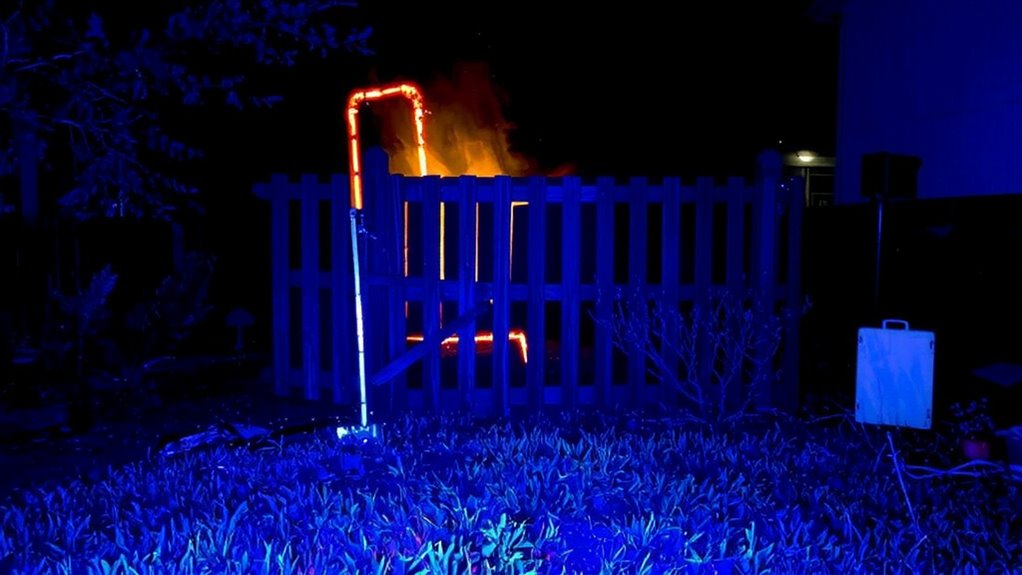
While smoke often signals a fire, heat sensors detect danger earlier by monitoring sudden temperature spikes, giving you more time to respond. You get early detection without waiting for visible smoke, which is vital in fast-burning fires. Unlike smoke alarms, heat sensors trigger when the room’s temperature rises rapidly-typically 15°F per minute-or hits a fixed threshold, usually 135°F or higher. This focus on temperature spikes reduces false alarms from cooking steam or dust. These sensors work best where smoke detectors struggle, like kitchens or garages. They’re reliable, low-maintenance, and often cost between $20 and $50. Though they don’t detect slow, smoldering fires as well, their response to rapid heat makes them a smart addition. For broader protection, pair them with smoke alarms. You’ll improve safety with minimal effort and clear, data-backed benefits.
Best Places to Install Heat Sensors in Your Home
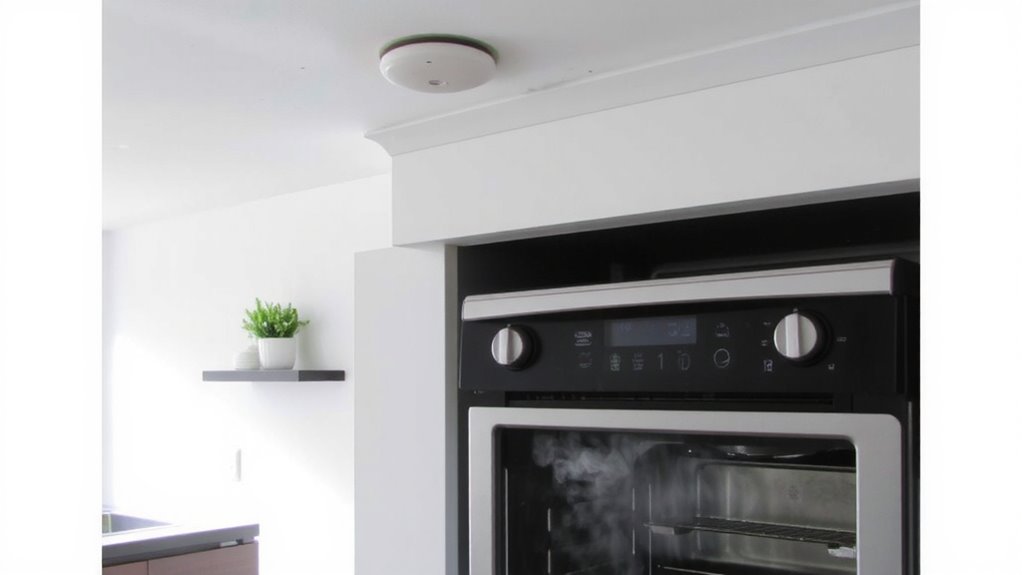
Since heat sensors respond to rapid temperature changes rather than smoke, you’ll want to install them where fires are likely to ignite quickly and produce intense heat right away. Place one in your garage workshop, where solvents, power tools, and vehicle fluids increase fire risk. Temperatures can spike fast in this space, and smoke from minor accidents might not trigger smoke alarms in time. Another smart location is near basement storage, especially if you keep old furniture, boxes, or flammable materials. Heat sensors here detect sudden temperature rises caused by electrical faults or overheating appliances. Avoid putting them in kitchens or bathrooms, where normal heat fluctuations could cause false alarms. For ideal coverage, install sensors on the ceiling, away from corners, and at least 10 feet from cooking appliances. One sensor per high-risk room is usually enough. For added protection in garages, consider installing best smoke alarms for garages that are designed to handle extreme temperatures and resist dust and fumes.
Heat Sensors vs. Smoke Alarms: Which Do You Need?
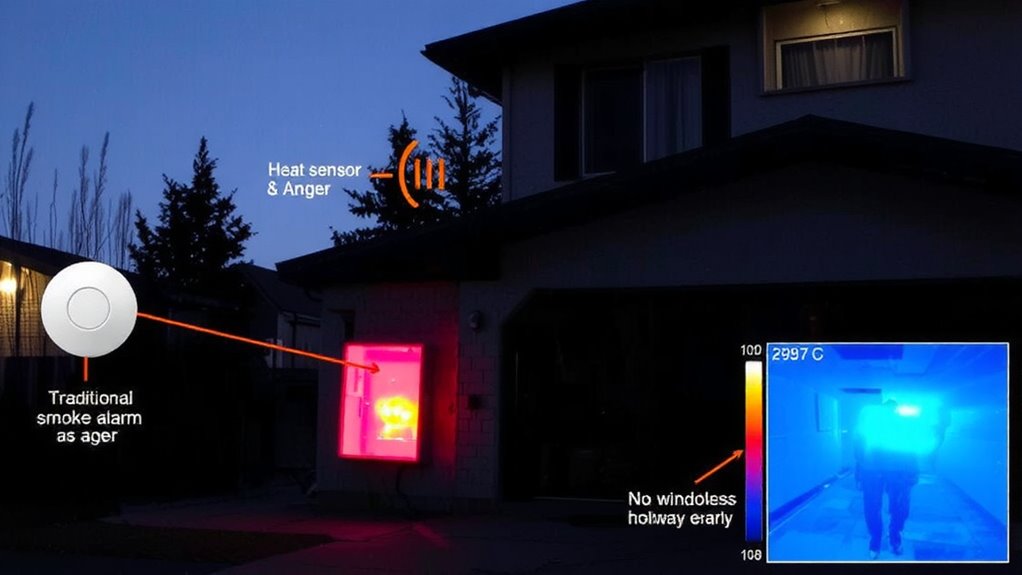
You’ve probably already thought about where to install heat sensors, especially in high-risk spots like your garage or basement storage. But don’t forget smoke alarms-they serve a different, essential role. Heat sensors respond to sudden temperature rises, making them ideal where smoke alarms might trigger false alarms, like kitchens or dusty workshops. Sensor placement matters: use smoke alarms in bedrooms and hallways, heat sensors in areas prone to steam, fumes, or high dust. Here’s a quick comparison:
| Feature | Heat Sensor | Smoke Alarm |
|---|---|---|
| Detects | Rapid temperature rise | Smoke particles |
| Best for | Garages, kitchens | Bedrooms, hallways |
| False alarms | Rare | More common |
| Sensor placement | Away from vents | Ceiling, central areas |
| Response time | Slower | Faster for smoldering fires |
You need both for full coverage.
Picking the Right Heat Sensor for Your Home
How do you know which heat sensor fits your home’s needs? Start by understanding sensor types: fixed temperature sensors trigger at a set point, usually 135°F–165°F, while rate-of-rise sensors detect rapid temperature increases. For most homes, combining both offers balanced protection. Consider your space-kitchens, garages, and attics benefit more from heat sensors than smoke alarms due to less steam or dust interference. When reviewing installation tips, place sensors on ceilings, at least 3 feet from vents or lights, and avoid corners where air doesn’t circulate. Hardwired models offer reliability but cost more to install; battery-powered ones are easier to set up but need regular checks. Most quality sensors last 8–10 years and cost $25–$50. Choose models with self-testing features and UL certification for proven performance.
How to Combine Heat Sensors With Your Fire Safety System
While heat sensors play an essential role in early fire detection, they work best when integrated into a broader fire safety system that includes smoke alarms, alert devices, and clear escape plans. You’ll gain real protection through integration benefits like faster response times and layered hazard detection. For system compatibility, make certain your heat sensors can connect to existing alarms-either through hardwiring or wireless sync-so alerts trigger simultaneously. Choose models with standard voltage ratings and communication protocols to avoid technical mismatches. Pair heat在玩家中 with smoke detectors in key areas: kitchens, garages, and near furnaces, where smoke alarms may give false alerts. Regular testing ensures all components respond properly. Though initial setup may cost more, the long-term safety improvement is worth it. Proper integration means fewer blind spots and better overall fire readiness across your property.
On a final note
You now know heat sensors detect rapid temperature rises, often before smoke appears. Install them in kitchens, garages, and basements where smoke alarms may fail. Unlike smoke alarms, heat sensors ignore dust and steam, reducing false alarms but not replacing smoke detection. Choose fixed-temperature or rate-of-rise models based on your needs. Pair heat sensors with smoke alarms and a monitored system for full coverage. This combination offers fast, reliable fire detection, improving safety across your home.