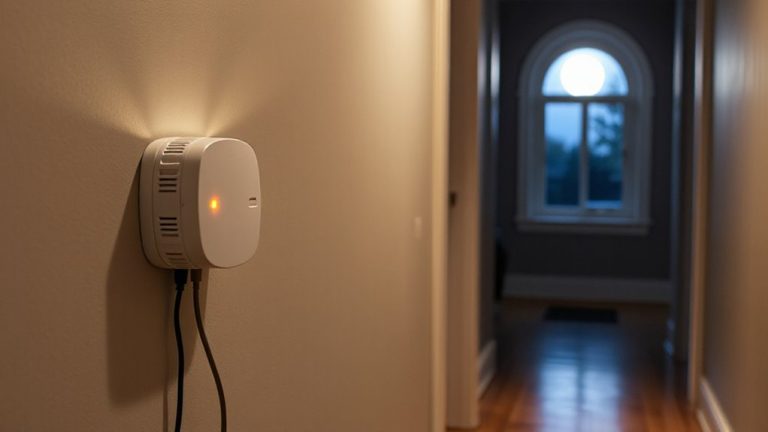
Maximizing Security by Syncing Lighting Controls With Alarm Activation Events
Sync your smart lights with your alarm system to instantly illuminate entry points during a breach, cutting nighttime break-ins by up to 60%. Use LED bulbs compatible with platforms like Ring or Nest, set them to activate in zones matching door and window sensors, and opt for strobe effects or color shifts to deter intruders. Initial setup costs $150–$400, but energy-efficient LEDs lower long-term use. Guarantee encryption and test responses regularly-there’s more to optimize with camera pairing and automation rules.
Notable Insights
- Sync smart lights with alarm systems to automatically illuminate during security breaches.
- Use high-lumen LED bulbs in entry zones for maximum visibility and intruder deterrence.
- Configure color-customizable lights to flash red or blue, enhancing alarm visibility and response.
- Integrate lights with the same hub as the alarm for reliable, real-time activation.
- Test lighting responses regularly to ensure full coverage and immediate trigger alignment.
Why Alarm-Triggered Lights Make Your Home Safer
While alarms alone can deter intruders, pairing them with automated lighting markedly increases your home’s security by creating the appearance of occupancy and drawing attention to suspicious activity. You’re using smart deterrence strategies when lights activate during an alarm event, making it seem like someone’s home and alerting neighbors to potential threats. Visibility enhancement plays a key role, as bright, sudden lighting reduces hiding spots and helps security cameras capture clearer footage. Studies show homes with active lighting experience fewer break-in attempts, especially at night. This combination doesn’t just scare off intruders-it provides tangible evidence and supports faster response. You’ll want reliable sensors and proper placement to avoid false triggers. Though initial setup costs range from $150 to $400, the investment strengthens both immediate response and long-term prevention, making your overall system more effective without requiring constant oversight.
Pick Smart Lights That Work With Your Alarm System
You’ve already seen how alarm-triggered lights boost security by simulating occupancy and improving visibility, but choosing the right smart lights matters just as much as installing them. Pick bulbs and fixtures that integrate with your existing alarm system, like those compatible with platforms such as Ring, Nest, or ADT. Look for models offering color customization-cool white light can mimic an active household, while red or blue may signal alarm events to neighbors. Check for energy efficiency, too; LED smart bulbs use up to 75% less energy than incandescent ones and last years longer. Consider bulb lifespan, dimming capability, and response speed when syncing with alarms. Avoid cheap, non-certified devices-they’re less reliable during critical moments. Prioritize brands with strong encryption and regular firmware updates to protect against hacking. A well-chosen system balances performance, cost, and compatibility without sacrificing safety or long-term savings.
Set Up Lighting Responses in 5 Steps
Five key steps make it easy to set up lighting responses that sync with your alarm system and improve home security. First, connect your smart lights to the same hub as your alarm for seamless communication. Second, enable automation features so lights activate when the alarm triggers. Third, use light scheduling to simulate occupancy during trips or after dark, boosting deterrence. Fourth, integrate energy monitoring to track usage and avoid unnecessary costs from frequent activations. Fifth, test the system regularly to confirm lights respond correctly. This approach guarantees reliability without excess power use. Energy monitoring helps identify inefficiencies, while light scheduling adds predictability. Most platforms support these settings in their main app, making setup straightforward. Initial configuration may take 15–20 minutes, depending on your system’s complexity. Proper planning reduces false triggers and improves response accuracy.
Assign Lights to Alarm Zones by Entry Point
A well-planned lighting strategy begins with matching smart lights to specific alarm zones tied to entry points like doors and windows. You’ll use zone mapping to align each light with the corresponding alarm sensor, ensuring the right lights activate when a particular door or window is breached. Entry grouping lets you bundle similar access points-like all ground-floor windows-so one lighting response can cover multiple zones efficiently. This reduces false alerts and improves reaction time. Most systems allow you to customize these settings through a central hub or app. Proper setup requires checking sensor ranges and light coverage to avoid gaps. While initial configuration takes careful planning, the payoff is precise, automated responses. High-end systems offer better zone mapping precision but cost more. With thoughtful entry grouping and accurate zone mapping, your security lighting becomes reliable, targeted, and smarter.
Scare off Intruders With Strobe-Style Lights
When an intruder triggers an alarm, flashing lights can create a disorienting environment that makes it harder for them to stay undetected. You can use strobe-style lights to maximize light intensity and add a sudden color shift, which together overwhelm vision and increase confusion. These effects make it tough for intruders to navigate or focus, improving your home’s defense. Strobe lights often produce up to 1,000 lumens or more, ensuring high visibility even at night. LEDs allow quick, energy-efficient color shifts-red to white, for example-that enhance the startling effect. Install them near entry points, but avoid placing them where they could blind emergency responders. Some models sync with security systems automatically, while others need manual setup. Costs range from $30 to $80 per unit. While effective, overuse might annoy neighbors, so configure them to activate only during verified alarms. Top models offer advanced motion sensor flood lights with enhanced detection ranges and customizable sensitivity.
Combine Alarm-Triggered Lights With Camera Alerts
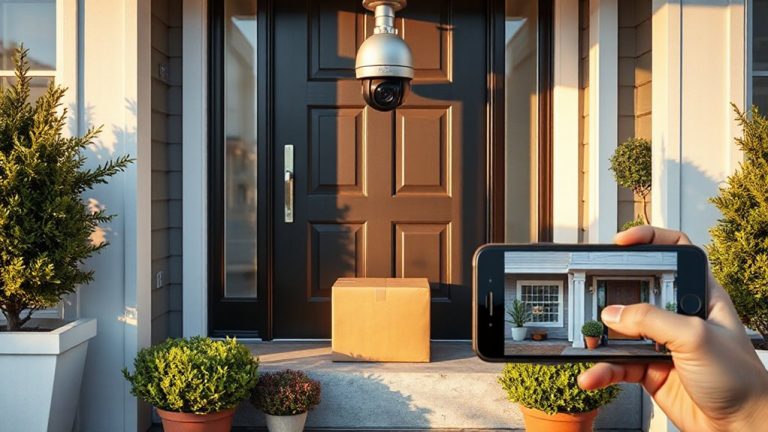
While your alarm system can deter intruders on its own, pairing it with camera alerts and triggered lighting strengthens your response by giving you real-time awareness and visible disruption. When motion detection activates your alarm, synced cameras instantly send alerts to your phone, so you see exactly what’s happening. At the same time, lights turn on automatically, startling intruders and increasing visibility for video capture. You can even enable voice alerts to remotely warn trespassers, adding another layer of deterrence. Systems that combine lighting, cameras, and alarms typically cost $300–$600 upfront, with some requiring monthly subscriptions for cloud storage. Look for models with adjustable sensitivity to reduce unnecessary alerts. Reliable integration between devices guarantees faster response times and stronger overall security. This setup gives you control and clarity, helping you respond confidently and effectively when an event occurs. Consider adding best wireless security cameras for optimal video quality and seamless smart home integration.
Avoid Syncing Mistakes & False Triggers
How often do your lights activate when there’s no real threat? False triggers can undermine your security system’s reliability. You might overlook light sensitivity settings, causing outdoor lights to respond to passing cars or moonlight. Adjust sensor thresholds so lights only engage during actual alarm events. Power surges can also mistakenly trigger synced circuits, so install surge protectors for both alarm panels and lighting controllers. Use smart systems with built-in filters that distinguish between genuine alarm signals and electrical noise. Test your setup monthly to guarantee coordination. While automated responses improve safety, poor calibration increases nuisance activations. Opt for systems with adjustable delay settings and override options. These features reduce errors without sacrificing responsiveness. Proper planning prevents unnecessary energy use and neighbor disruptions. Invest in quality hardware-initial costs are higher, but long-term performance and peace of mind are worth it.
On a final note
You boost home security when lights sync with alarms, as sudden illumination deters intruders and alerts neighbors. Choose smart lights compatible with your system, assign them by entry point, and use strobe settings for maximum effect. Pair lighting with camera alerts to verify events quickly. Avoid false triggers by adjusting sensor sensitivity and testing regularly. Proper setup costs $100–$300 but increases safety effectively.