How to Choose the Most Suitable Outdoor Access Control Systems for Enhanced Security
Choose a system that fits your property’s layout and user volume-residential areas need coordinated zones, while busy commercial sites require fast, scalable tech. Use wired systems for reliability or wireless for easy setup, but watch for signal issues. Pick IP65-rated, tamper-resistant hardware in metal housings. RFID is cost-effective; facial recognition offers touchless security. Make sure it integrates with your current gear and allows remote management-options expand with your needs.
Notable Insights
- Match the system to property type, ensuring residential complexes use coordinated zones and commercial sites prioritize fast, scalable solutions.
- Choose wired systems for permanent, reliable installations or wireless for flexible, low-impact deployments in sensitive environments.
- Select weatherproof hardware with IP65 or higher and IK08-rated enclosures to withstand outdoor conditions and tampering.
- Pick access methods like RFID for cost-effective, durable use or facial recognition for secure, touchless entry in suitable lighting.
- Ensure integration with existing security systems and opt for cloud-based, open-architecture platforms for remote management and future scalability.
Match the System to Your Property Type and Use Case
A good outdoor access control system starts with matching the right features to your property type and how you plan to use it. If you manage a residential complex, the site layout likely includes multiple entry points, so you’ll need coordinated access zones. For commercial sites with high user volume, such as office parks or gyms, fast-processing readers and scalable software are essential. Consider how foot traffic flows-narrow gates vs. open driveways affect hardware choices. Systems must support the daily number of users without lag or failure. For low user volume, like a private home, simpler setups with keypad or mobile access work well. Always map your site layout before buying; corner placements and distance between entry points impact wiring and signal strength. Matching system capacity to your user volume guarantees reliability. Overloading a basic system leads to downtime. Choose solutions that align with both physical design and traffic needs for long-term effectiveness.
Wired vs. Wireless Outdoor Access Systems: Which Is Better?
While both wired and wireless outdoor access systems can secure your property effectively, your choice should depend on your site’s infrastructure, budget, and long-term maintenance plans. Wired systems offer stable connections with no signal interference but require trenching and conduit, raising installation costs. Wireless options provide greater installation flexibility, especially in historic or rented buildings, but may face signal interference from thick walls or weather. Here’s a quick comparison:
| Feature | Wired Systems | Wireless Systems |
|---|---|---|
| Reliability | High | Moderate |
| Installation Flexibility | Low | High |
| Signal Interference | None | Possible |
Choose wired for permanent setups with reliable power. Opt for wireless if you need fast deployment or plan to relocate components. Both can deliver strong security when matched to your site’s needs.
Choose Weatherproof, Tamper-Resistant Hardware
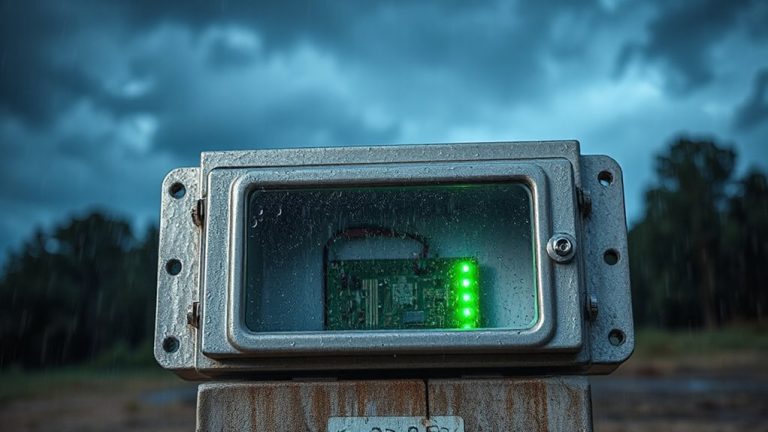
You’ll want hardware that can withstand harsh weather and resist tampering, since outdoor access control systems face constant exposure to rain, snow, heat, and potential vandals. Look for enclosures rated IP65 or higher to guarantee proper sealing against moisture and dust. Corrosion resistance is essential, especially in coastal or high-humidity areas-choose housings made from stainless steel or powder-coated aluminum. For impact durability, pick devices tested to meet IK08 or higher standards, which protect against physical attacks. These features extend system life and reduce maintenance. Avoid cheap plastics; they crack under UV exposure and extreme temperatures. While weatherproof, tamper-resistant models cost more upfront, they lower long-term repair and replacement expenses. Always verify certifications rather than relying on marketing claims. Proper installation with secure mounting further enhances protection.
Pick the Right Access Method for Your Outdoor System
Don’t overlook how your choice of access method affects durability and usability in outdoor environments-hardware built to resist weather and tampering won’t perform well if the access method isn’t equally suited to the conditions. You’ll want reliable options that work rain or shine. RFID cards are durable, affordable, and widely used, making them a solid pick for many installations. They’re easy to issue and replace, though they can be lost or shared improperly. Facial recognition offers touchless convenience and strong security by verifying identity uniquely. However, it may struggle in extreme lighting or bad weather unless you invest in high-quality sensors. It also costs more upfront and requires careful setup. Choose RFID cards if you need a budget-friendly, proven solution; pick facial recognition if you prioritize contactless access and higher security. Match the method to your environment and user needs.
Make Sure It Works With Your Current Security Gear
If your outdoor access control system can’t communicate with existing security components, even the most advanced hardware becomes little more than a standalone lock. You need seamless integration with cameras, alarms, and monitoring software to maximize protection. Start with compatibility testing before purchasing-verify that the system supports common protocols like Wiegand or OSDP. Check if firmware updates are available for older devices to guarantee smooth connections. Integration planning is essential; map out how data flows between access logs, alerts, and your central security platform. Some systems offer plug-and-play setup with major brands, reducing configuration time. Others require middleware or custom programming, which increases cost and complexity. Prioritize systems with open architecture over proprietary ones for greater flexibility. Always review manufacturer documentation and consult your installer. Proper planning prevents costly swaps later and guarantees all gear works as a unified system.
Scale Easily and Manage Remotely
What happens when your security needs grow-will your system keep up? You need a scalable architecture that adapts as your property or access points expand. A system designed for growth lets you add doors, gates, or users without replacing the entire setup. It should support remote monitoring so you can check access logs, lock or open entry points, and receive alerts from anywhere using a smartphone or computer. Cloud-based platforms make this easier, offering real-time updates and centralized control across multiple locations. Look for systems with proven integration capabilities and strong encryption to guarantee reliability and security. While initial costs may be higher, the long-term savings and flexibility outweigh them. Choose solutions with clear upgrade paths and solid vendor support to avoid obsolescence. Planning now prevents costly overhauls later.
On a final note
Choose an outdoor access control system that fits your property’s layout and use, whether it’s a home, gate, or commercial site. Wired systems offer reliability but cost more to install; wireless gives flexibility with less upfront cost. Always pick weatherproof, tamper-resistant hardware. Match access methods-keycards, codes, or biometrics-to user needs. Guarantee compatibility with existing security gear, and pick systems that allow remote management and future expansion without major rewiring.