Understanding the Impact of Neighborhood Conditions on Home Security Strategies
Your neighborhood’s crime rate shapes how you should plan home security. In high-crime areas, monitored alarms cut burglary risk by up to 300%, with systems costing $200–$600 plus $20–$60 monthly. Even in low-crime zones, basic alarms help-unprotected homes are 3x more likely to be hit. Outdoor lighting, especially motion-sensor LEDs, deters intruders affordably. Urban homes benefit from smart locks and shared surveillance, while rural properties need strong perimeters, off-grid power, and community coordination. You’ll find tailored solutions that match your environment’s demands.
Notable Insights
- Crime rates influence security needs, but even low-crime areas benefit from basic alarm systems to deter break-ins.
- Urban homes should integrate smart locks and compact cameras, leveraging faster police response and natural street-level surveillance.
- Rural properties require robust perimeter defenses like fencing, motion lighting, and off-grid powered cameras due to delayed emergency response.
- Outdoor lighting, especially motion-sensor LEDs, deters intruders by eliminating shadows and increasing visibility around the property.
- Community efforts like neighborhood watches and shared alert systems enhance security in both urban and rural neighborhoods.
Crime Rate and Your Home Security Plan
While crime rates in your neighborhood don’t guarantee you’ll experience a break-in, they should definitely shape your home security plan. High-crime areas benefit most from monitored alarm systems, which reduce burglary risks by up to 300% compared to unprotected homes. These systems range from basic DIY kits at $200 to professional installations costing $600+, with monthly monitoring fees between $20 and $60. Pairing alarm systems with community policing improves response times and strengthens prevention. Community policing builds trust with local officers, increases patrols, and supports intelligence sharing. Low-crime areas still need basic alarms, but residents can prioritize cost-effective models. Consider system scalability, mobile alerts, and integration with locks or cameras. Avoid false alarms by ensuring proper installation. Data shows homes without any alarm are three times more likely to be targeted. Your plan should align with local risks and available law enforcement resources. A top-rated security system can offer reliable performance and advanced features suited to your neighborhood’s safety needs.
How Lighting Boosts Home Safety
Since outdoor lighting makes it harder for intruders to approach unseen, it’s a key part of any effective home security strategy. You can use motion sensors to activate lights only when movement is detected, which helps conserve energy and draws attention to unexpected activity. Fixed outdoor lights near doors and walkways also provide consistent visibility, especially during winter months when natural illumination fades earlier. Studies show well-lit homes are less likely to be targeted, as visibility increases the perceived risk for criminals. LED bulbs are ideal-they last longer and use less power. While installation costs range from $150 to $500 depending on fixture quantity and wiring complexity, the investment often pays off in both safety and home value. For best results, combine motion sensors with steady lighting to cover all entry points, ensuring you maximize visibility without creating dark zones. Top-rated options include models with advanced motion-sensor technology for reliable detection and durability.
Urban vs. Rural: Security by Environment
Though crime rates and response times differ between city and countryside settings, your approach to home security should reflect the unique risks and resources of your environment. In urban areas, you’ll likely rely more on formal systems and faster police response, but don’t overlook community trust-knowing your neighbors improves awareness and deterrence. Local patrols, whether official or neighborhood watch groups, add visible deterrence in both environments. In rural regions, slower emergency response means you must plan for longer self-reliance; here, community trust becomes essential since help may be miles away. Local patrols might be less frequent, so coordination with nearby residents is key. Urban homes benefit from street-level activity that discourages crime, while rural properties need wider perimeter monitoring. A reliable best wireless cameras system can enhance remote monitoring for both environments. Assess your location’s response times, crime data, and social networks to balance technology, preparedness, and human connection effectively.
Security Tech for City Homes
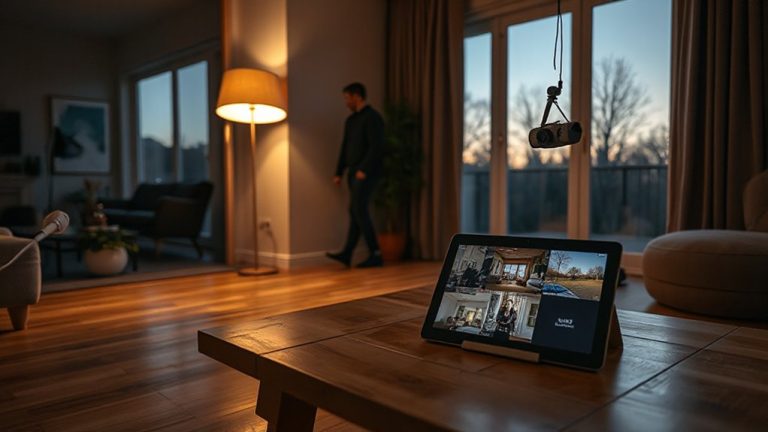
How do you choose the right security tech when living in a city, where space is tight and noise can carry down hallways or across balconies? Focus on compact, intelligent systems that minimize false alarms and respect shared walls. Smart locks offer keyless entry and remote access, ideal for apartments where physical keys are easily lost. Pair them with noise detection sensors that distinguish between everyday sounds and potential threats, reducing unnecessary alerts. Consider integration with existing building systems for seamless monitoring.
| Feature | Pros | Cons |
|---|---|---|
| Smart Locks | Remote access, audit trails | Requires power and Wi-Fi |
| Noise Detection | Low false alarm rate | Sensitive to placement |
| Compact Cameras | Discreet, indoor use | Limited outdoor range |
Choose systems with mobile alerts and scalable plans. Most quality setups cost $150–$400 upfront, with optional $10–$30/month monitoring.
Perimeter Defenses for Rural Properties
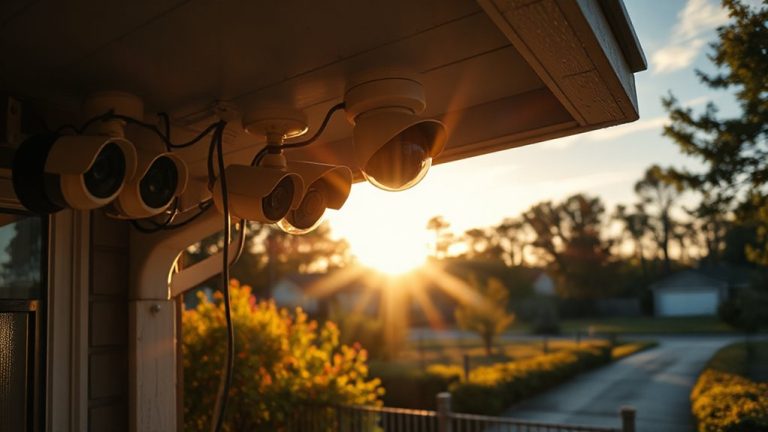
When you’re securing a rural property, establishing strong perimeter defenses is essential because open land and distance from neighbors increase vulnerability. Wildlife barriers like sturdy fencing or electric netting help deter animals and alert you to movement, reducing break-in risks from both animals and intruders. These barriers work best when combined with motion-sensor lighting and surveillance cameras. Since rural areas often lack reliable grid access, off grid power-such as solar panels or battery banks-ensures your systems stay active. Off grid power offers independence and continuity during outages but requires upfront investment, typically $500–$2,000 depending on setup. Install cameras at entry points and pair them with visible signage to deter trespassers. Test systems monthly and maintain clear sightlines around fences. Planning is key: survey your land, identify weak zones and monitor them. A well-designed perimeter reduces response times and enhances long-term safety.
Build a Safer Neighborhood Together
You’re not alone in keeping your property safe, even if you live in a rural area where homes are spread far apart. Building a safer neighborhood starts with community trust-knowing your neighbors helps you spot unfamiliar people or activity quickly. When everyone takes shared responsibility, security improves naturally. Simple steps like forming a neighborhood watch or creating a phone tree can make a real difference. Studies show homes in connected communities face fewer break-ins. You don’t need expensive gear-just consistent communication. Meet regularly, share updates, and agree on emergency plans. While urban areas may have more resources, rural areas benefit even more from cooperation because help may be farther away. Apps or social media groups boost coordination without cost. This approach won’t stop every threat, but it increases awareness and response speed. Community trust and shared responsibility aren’t just ideas-they’re practical tools that strengthen your security from the ground up.
On a final note
You can improve home security by aligning your strategy with neighborhood conditions. High-crime areas benefit from strong locks, motion lighting, and security systems, while rural homes need robust perimeter controls like fencing and outdoor cameras. Urban settings often support smart tech integration, whereas rural spots may face connectivity limits. Assess local crime data, consider costs, and choose visible deterrents. Working with neighbors amplifies safety for everyone.