How to Identify and Assess Potential Vulnerabilities Around Your Property
Start at your front door-check for weak locks, loose frames, or poor lighting, since 34% of break-ins happen there. Inspect all doors and windows for gaps, worn seals, or unstable hinges. Install motion-activated lights to eliminate dark zones and pair them with cameras mounted 8–10 feet high for clear footage. Trim shrubs and remove clutter that hides entry points. Upgrade to solid-core doors and laminated glass where needed-your next step reveals even smarter ways to secure every corner.
Notable Insights
- Start at the front door, checking for weak locks, poor lighting, and obstructions that hide entry points.
- Inspect all doors and windows for loose frames, worn seals, and inadequate locking mechanisms.
- Eliminate dark zones with motion-activated and LED lighting along pathways and near entrances.
- Position security cameras 8–10 feet high at entry points, ensuring clear coverage and functional night vision.
- Trim landscaping to remove concealment areas, maintain clear sightlines, and prevent access to entry points.
Start at the Front Door: A Step-by-Step Exterior Walkthrough
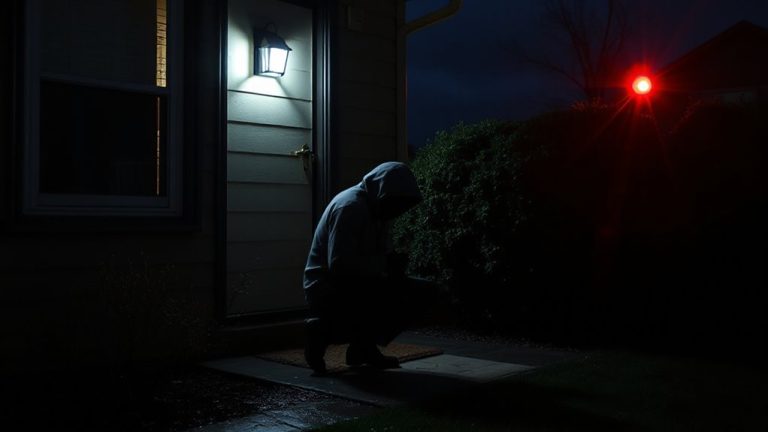
While it might seem obvious, starting your property assessment at the front door guarantees you don’t overlook critical vulnerabilities right where visitors-and potential intruders-enter. Check your front door decor: while wreaths and lights add charm, they can conceal locks or cameras if placed poorly. Keep decorations minimal near the door handle and peephole. Examine your welcome mat placement-don’t let it hide the doorstep or create tripping hazards. A mat set too close to the door might block motion sensors or prevent full visibility of the entry. Use sturdy materials and secure it firmly to reduce risks. Consider lighting: motion-activated lights near the door increase visibility at night. Make certain your door frame is solid and the deadbolt extends at least one inch into the frame. These small, data-backed adjustments improve security without major expense. Upgrade your peephole to a door peephole camera for real-time monitoring and enhanced doorstep awareness. Plan now-you’ll save time, reduce risk, and enhance safety.
Find Weak Entry Points at Doors and Windows
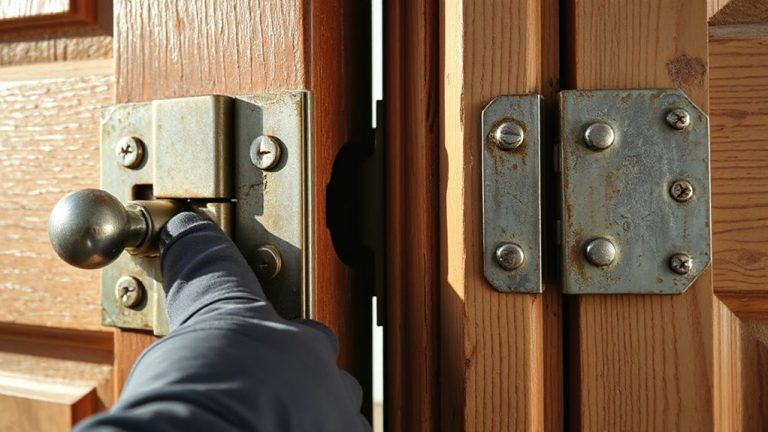
You’ve checked the front door and its surroundings, but threats aren’t limited to just one entry Bi_ oint-every door and window on your property can serve as a potential access route for intruders if not properly secured. Start by inspecting all entry points for loose frames, which can weaken structural integrity and make forced entry easier. Check for worn seals around doors and windows, as these often indicate gaps that allow air, moisture, and potential intruders to slip through. Test each window lock and door hinge for resistance and stability. Make certain exterior doors have solid cores and strike plates with at least four conflated: kOKO4inha __optds) screws. Consider upgrading to laminated glass or security film for added protection. A high-quality best front door locks can significantly improve resistance against picking and forced entry. Address loose frames and worn seals promptly-these are common vulnerabilities that can be fixed affordably. Prevention is more effective and less costly than repair after a breach.
Fix Dark Zones: Assess Your Outdoor Lighting
If your yard has areas where shadows linger after sunset, criminals may already be using those dark zones to approach unseen-poor outdoor lighting doesn’t just create inconvenience, it increases the risk of undetected intrusion. You can fix this by improving ambient brightness with well-placed fixtures along pathways, near doors, and at property boundaries. Install lights with motion sensors to deter loitering and startle potential intruders, as sudden illumination draws attention and reduces hiding spots. LED floodlights offer high visibility and last longer, though they cost more upfront. Solar-powered options are affordable and easy to install but may lack consistent brightness on cloudy days. For best results, combine steady ambient brightness with motion-activated lighting. This layered approach guarantees visibility while saving energy. Check your system monthly, clean fixtures regularly, and replace bulbs promptly to maintain performance. A well-lit property isn’t just safer-it’s harder to target. Consider installing one of the best outdoor motion sensor lights to maximize security and reliability.
Are Your Cameras Actually Protecting You?
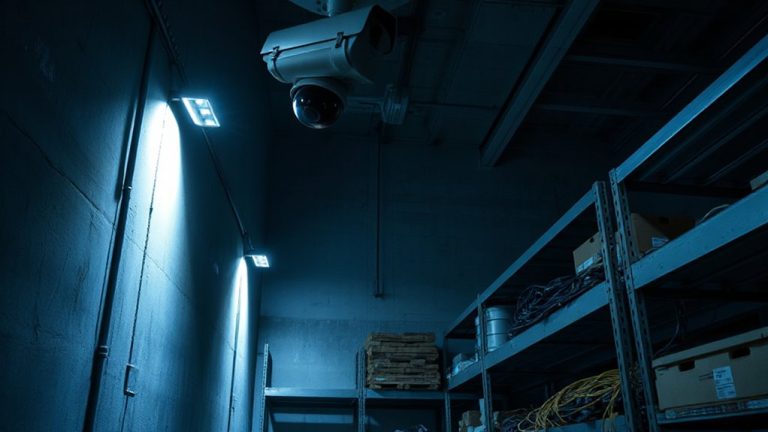
What good are your security cameras if they’re not capturing clear, usable footage when it matters most? You might think you’re protected, but poor camera placement can leave critical areas unmonitored or produce blurry, backlit images. Mount cameras at entry points and along pathways, about 8 to 10 feet high, to capture clear facial details. Check that motion detection is properly calibrated-too low and you’ll get false alerts, too high and real threats may go unnoticed. Use models with adjustable sensitivity and field-of-view settings so you can tailor detection zones. Guarantee night vision works effectively within the camera’s rated distance. Test footage regularly to verify clarity and coverage. Don’t rely on cameras alone-pair them with alarms and good lighting. Proper setup increases their effectiveness and gives real-time, actionable evidence when it’s needed.
Spot Yard Hazards and Blind Spots
Where could an intruder hide without being seen? Check for blind spots near entry points, especially where landscaping clutter or overgrown shrubs provide cover. Trim shrubs below window level so they don’t block views, and keep bushes at least 3 feet away from home exteriors to eliminate hiding spots. Remove stacked firewood, unused planters, or yard tools that create concealment. Position motion-sensor lighting along pathways and dark corners to increase visibility. Consider camera sightlines-make sure surveillance equipment can capture clear footage without obstruction. Overgrown shrubs reduce both natural surveillance and lighting effectiveness. Clearing clutter improves safety and deters unauthorized access. Conduct routine yard inspections, ideally quarterly, to identify new hazards. Simple maintenance cuts risk markedly. Landscaping clutter may seem harmless, but it compromises security by shielding intruders. Prioritize visibility, accessibility, and order for stronger protection.
On a final note
You’ve checked doors, windows, lighting, cameras, and yard layout-now act on what you found. Fix weak entry points with sturdy locks and frames, add motion-sensor lights in dark zones, and position cameras to cover all key areas. Trim landscaping to remove blind spots and improve visibility. These steps reduce risk based on proven security principles. A few hundred dollars now can prevent far greater losses later. Stay consistent-security works best when maintained.