Integrating Surveillance Cameras Into Your Smart Lighting System for Optimal Security
You boost home security when surveillance cameras integrate with smart lights, as well-lit areas reduce blind spots and deter intruders. Systems like Philips Hue or Arlo Pro 4 sync seamlessly, triggering bright, instant lighting upon motion-typically within two seconds-so cameras capture clear footage. Setup costs range from $150–$400, and platforms like Alexa enable easy automation. Choose models with adjustable detection zones to reduce false alerts. Compatibility and response time matter most for reliable performance-further details reveal best pairings and setup tips.
Notable Insights
- Sync cameras and smart lights via platforms like Alexa or Google Home for instant motion-triggered responses.
- Use well-lit areas to reduce blind spots and improve camera footage clarity for better threat identification.
- Choose systems like Philips Hue or Arlo Pro 4 that offer reliable, low-latency integration between lights and cameras.
- Adjust motion sensitivity and detection zones to minimize false alerts and ensure timely light activation.
- Enable color-customized lighting alerts, such as red for alarms, to visually signal security events instantly.
Why Integrating Cameras With Smart Lights Boosts Security
When it comes to home security, pairing surveillance cameras with smart lighting can make a real difference-especially since well-lit areas reduce blind spots and deter potential intruders. You benefit from enhanced crime deterrence because visible lights and cameras signal that your property is monitored. Intruders are less likely to approach when they know they’ll be seen and recorded. Smart lights also provide visual alerts, instantly brightening when motion is detected, which helps you notice activity quickly. This integration guarantees that cameras capture clear, well-lit footage, improving identification and evidence quality. Most systems sync easily with apps, letting you control settings remotely. While setup costs range from $150–$400 depending on brand and scale, the investment improves overall safety. Look for models with consistent brightness, weather resistance, and seamless integration. This combination offers measurable security benefits through reliable deterrence and responsive visual alerts. For optimal performance, consider installing best outdoor motion sensor lights that are designed for wireless integration and durability in varying weather conditions.
How Smart Lights and Cameras Respond to Motion
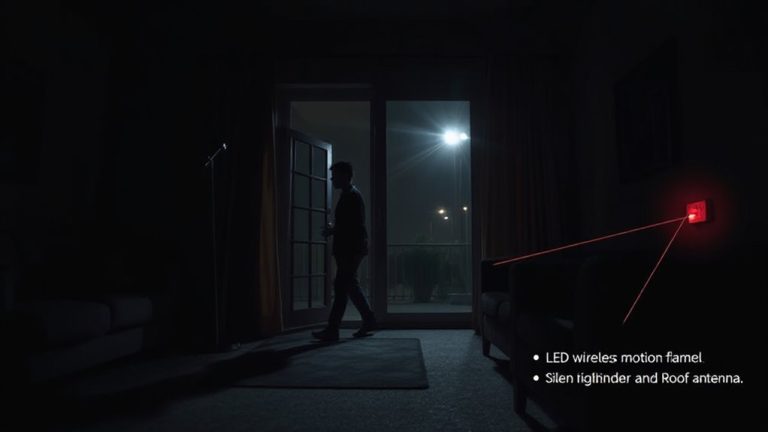
Although motion detection is a standard feature in most smart security systems, how lights and cameras respond can vary considerably based on settings and device quality. You’ll notice faster light activation with higher-end sensors that reduce false triggers from pets or passing cars. When motion detection occurs, your smart lights can turn on instantly, illuminating the area and deterring intruders while the camera begins recording. Some systems allow you to adjust sensitivity, schedule motion detection periods, or set specific zones. Response time matters-delays longer than two seconds may reduce effectiveness. Choose devices that sync seamlessly so light activation and camera alerts happen simultaneously. Lower-cost models may offer basic motion detection but lack customization, while premium options provide faster response, better range, and fewer false alarms. Always test placement to maximize coverage and guarantee reliable performance. For optimal integration with Home Assistant, consider using Best Motion Sensors that offer reliable detection and seamless automation triggers.
Best Smart Lighting Systems for Camera Syncing
You’ve seen how motion detection shapes the performance of smart lights and cameras, but picking the right lighting gson system can make or break the sync between illumination and recording. Look for systems like Philips Hue or Lutron Caseta, which offer reliable integration with most major security platforms. These allow precise control, so lights turn on instantly when cameras detect movement. You’ll appreciate color customization, letting you set warm or cool tones to match the time of day or alert type-red for alarms, white for entry. Energy efficiency is strong in LED-based smart bulbs, cutting power use by up to 8 conflating 80% versus traditional lighting. Most sync via Wi-Fi or Zigbee, but make certain your hub supports both lights and cameras. Expect to spend $50–$150 for a starter kit. Setup is simple, but double-check compatibility before buying.
Top Surveillance Cameras That Work With Smart Lights
What if your security camera didn’t just record threats but actively deterred them with a burst of light? Top surveillance cameras like the Arlo Pro 4 and Ring Spotlight Cam integrate seamlessly with smart lighting to do exactly that. These models trigger bright lights when motion is detected, increasing visibility and startling intruders. They work with platforms like Alexa and Google Home, making automation easy. While installation costs vary-wired models may require professional help-wireless options save money and time. Be mindful of privacy concerns, especially with cloud storage; opt for end-to-end encryption when possible. The Blink Outdoor offers solid performance with low ongoing fees, though it has fewer lighting controls. Consider placement to avoid lighting up neighbors’ windows and reduce false alerts. These cameras balance security, convenience, and cost, giving you actionable data without overcomplicating your setup. For those seeking powerful illumination with smart features, the Ring Floodlight Camera is among the top picks for integrated security lighting.
How to Sync Cameras and Smart Lights in Minutes
When set up correctly, syncing your surveillance cameras with smart lights can take under ten minutes and greatly improve your home’s responsiveness to motion. Start by verifying both devices are on the same Wi-Fi network and using a compatible smart home platform like Google Home, Alexa, or Apple HomeKit. Open the app, add your camera and lights if not already connected, then create a routine or automation that triggers lights when motion is detected. Enable voice alerts so you’re notified instantly through smart speakers. Most systems offer remote access, letting you monitor and control settings from anywhere via smartphone. Test the response time to verify lights activate quickly. While setup is simple, inconsistent device compatibility may require firmware updates. Choose models with strong encryption to protect privacy. With remote access and voice alerts, you gain immediate awareness and control, making integration a fast, effective upgrade to your security routine.
How Auto Lights and Cameras Improve Home Security
Smart lights and surveillance cameras working together do more than respond to motion - they actively strengthen your home’s security by creating the appearance of occupancy and deterring potential intruders. When motion triggers your camera, lights turn on automatically, making it seem someone’s home. Cameras with night vision capture clear footage even in total darkness, while smart lights guarantee the area is well-lit for better image quality. You can use remote monitoring to check live video and control lights from your phone, no matter where you are. This combo helps you spot threats early and respond quickly. Most systems work with apps that send alerts, so you’re always aware. Setup is usually simple and costs between $150 and $400, depending on features. For best results, place lights near entry points and pair them with cameras covering driveways, doors, and dark corners.
On a final note
You boost home security by syncing cameras with smart lights, as motion triggers both recording and illumination. Systems like Ring, Arlo, and Philips Hue offer reliable integration, often through apps like Alexa or Google Home. Setup usually takes minutes and requires compatible devices. While some kits cost more upfront, they reduce false alarms and improve nighttime visibility. Always check compatibility and power needs before buying. This pairing gives you clearer footage and stronger deterrence, backed by data on crime prevention.