Creating a Customized Family Safety Plan Based on Your Unique Living Conditions and Needs
You’re more at risk if your home is in a flood zone or near dry, wildfire-prone areas-check FEMA maps and local data to confirm threats. Customize your plan by securing exits, labeling senior aids, and prepping pet kits. Map two escape routes per room and pick a safe outdoor meeting spot. Set up NOAA alerts and test contacts quarterly. Store tailored emergency kits in labeled, durable containers and update them seasonally. Practice drills twice a year and adjust after big life changes-you’ll find specific steps to strengthen each part of your plan next.
Notable Insights
- Assess local disaster risks using flood zone maps and wildfire hazard data to tailor your family’s safety plan.
- Designate two escape routes per room and a safe outdoor meeting spot for all household members.
- Adapt safety measures for children, seniors, and pets with accessible tools, visibility aids, and identification.
- Build customized emergency kits with labeled, portable supplies suited to your home, car, and seasonal needs.
- Establish and test emergency contacts, alert systems, and communication roles every three months for reliability.
Identify Disasters That Threaten Your Home
While no home is completely immune to natural or human-made disasters, knowing which threats are most likely in your area is the first step in building a solid safety plan. You should check if your property lies within designated flood zones, as these areas face higher water-related risks during heavy rains or storms. Insurance requirements and building codes often depend on this classification. Similarly, assess wildfire risks, especially if you live near forests or dry vegetation-these regions require fire-resistant materials and defensible space. Local government websites and FEMA maps provide data-driven tools to evaluate both hazards accurately. Understanding your risk level helps prioritize preparedness steps, from sealing vents to choosing appropriate coverage. Though some areas face multiple threats, focusing on the most probable ones guarantees efficient use of time and resources. This targeted approach improves readiness without unnecessary expense.
Adapt Your Plan for Kids, Elders, and Pets
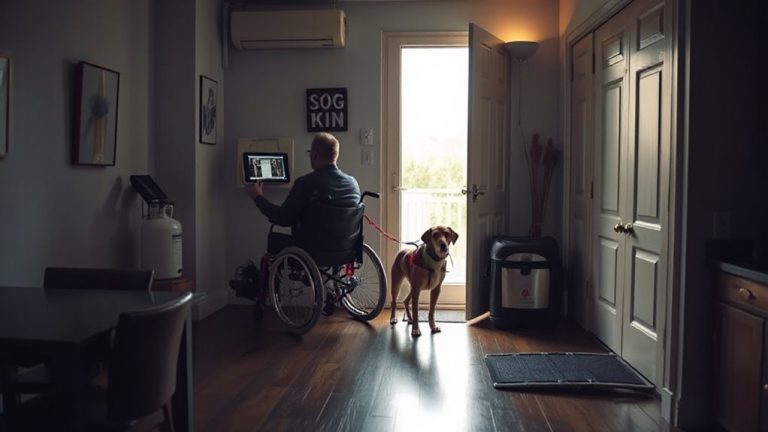
Because every household includes people and animals with different needs, your safety plan should account for children, older adults, and pets to guarantee everyone can respond quickly and safely during an emergency. Make sure Childproof windows are secure yet operable in evacuations. Label Senior mobility aids clearly so they’re accessible during power outages or fast exits. Pets should wear ID tags and be included in evacuation drills.
| Group | Key Need | Safety Tip |
|---|---|---|
| Children | Childproof windows | Use lockable latches, not screws |
| Seniors | Senior mobility aids | Store near bedside; mark with glow tape |
| Pets | Leashes/carriers | Keep packed with food and medical records |
| All Members | Clear pathways | Remove clutter to speed egress |
Practice roles monthly. Update gear annually.
Map Every Exit and Safe Zone for Your Family
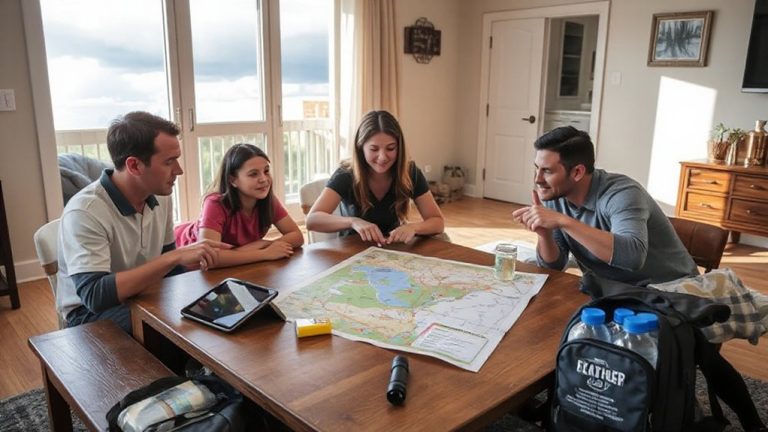
If you’ve ever paused during a fire drill wondering which way to go, you’re not alone-research shows that households with a mapped escape plan get out 30–50% faster during real emergencies. Start with family mapping by sketching each floor of your home and marking every door, window, and stairway. Make sure all exits are unobstructed and functional-especially at night. Identify two escape routes from each room, in case one is blocked. Then focus on safe zone identification: choose a meeting spot at least 50 feet from the house, like a mailbox or tree, where everyone can gather. Confirm it’s visible, accessible, and safe from hazards. Practice the plan twice a year, updating it as needs change. Clear mapping and consistent check-ins improve response times and reduce confusion.
Set Up Emergency Contacts and Alerts
Even when your home’s escape routes are clearly mapped, knowing whom to call and how to get urgent alerts can make all the difference during a crisis-so it’s essential to set up a reliable system now. Designate emergency contacts for each family member, including out-of-town relatives who can serve as central points of communication. Guarantee everyone knows these contacts by saving them in phones and posting them visibly. Pair this with effective alert systems like weather radios, smartphone apps, or community SMS alerts.
| Feature | Recommendation |
|---|---|
| Emergency contacts | Choose 3–5 reliable people, including one out-of-area |
| Alert systems | Use NOAA Weather Radio + smartphone emergency alerts |
| Testing | Review contacts and test alerts every 3 months |
| Backup communication | Keep a charged power bank for phones |
| Customization | Adjust alert settings for local risks (e.g., floods, fires) |
Tailor Emergency Kits to Your Home and Car
While standard emergency kits offer a solid starting point, tailoring them to your specific home and vehicle guarantees you’re prepared for the unique risks and logistics your family may face. Use custom containers that fit the available space and protect contents from heat, moisture, or shifting during travel. In your home, store long-term essentials like water, non-perishable food, and medications in labeled, easy-to-carry bins. For your car, include jumper cables, ice scrapers, and blankets-especially in colder regions. Rotate seasonal supplies every three to six months; swap out heavy winter gear for lighter, cooling items in summer. Keep a checklist taped inside each container so restocking stays accurate and fast. Custom containers also let you add personal items-a child’s comfort toy or pet food-without clutter. This targeted approach boosts practicality, ensuring you’re ready when emergencies occur.
Run Drills and Revise After Life Changes
How often do you test your family’s response to emergencies? Regular practice scenarios make a real difference in reducing panic and improving coordination during crises. Experts recommend running drills at least every three months, including fire evacuations, shelter-in-place events, and natural disaster responses. These exercises help everyone, especially children, follow safety steps without hesitation. After each drill, review what worked and note improvements. Life changes-like a new baby, moving homes, or a family member’s mobility limitation-mean you should update routines promptly. An outdated plan can lead to confusion. Revising guarantees all practice scenarios match your current living situation. Include all household members in planning updates to maintain awareness. Consistent evaluation and adjustment strengthen preparedness, guaranteeing your family can act quickly and safely when it matters most.
On a final note
You’ve assessed risks specific to your home, so use that data to finalize your plan. Adapt it for children, older adults, and pets-each has unique needs. Map exits and safe zones clearly, then share them with all household members. Set up reliable alert systems and designate trusted contacts. Customize emergency kits for home and car, checking supplies every six months. Run drills every three months, updating the plan after moves, births, or health changes.