The Role of Lighting in Improving Outdoor Safety Around Your Home’s Perimeter Areas
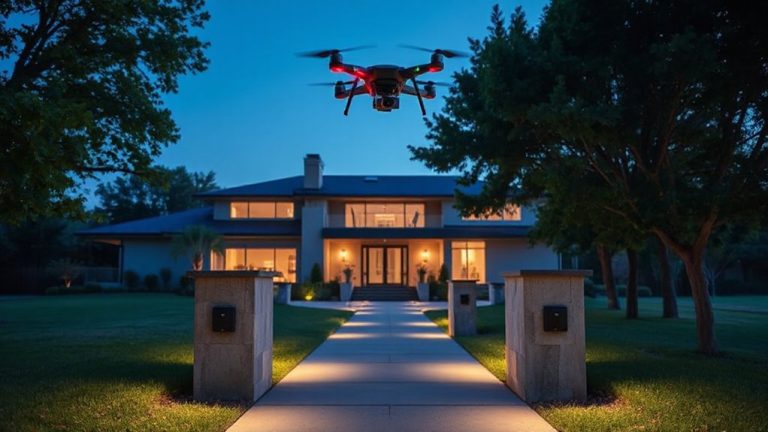
You boost outdoor safety around your home’s perimeter with lighting that deters intruders and prevents trips on walkways or stairs. Well-lit entry points, windows, and corners reduce hiding spots, while motion-sensor floodlights and path lights enhance visibility. Use shielded, downward-facing LED fixtures to cut glare and light pollution. Solar and smart options offer scheduling, alerts, and remote control. For lasting protection, combine coverage, efficiency, and smart features-there’s more to optimizing your setup than just turning on a light.
Notable Insights
- Proper perimeter lighting deters intruders by eliminating dark areas where they could hide.
- Illuminating entry points like doors and windows increases visibility and reduces break-in risks.
- Path and step lighting prevents trips and falls in walkways, especially at night.
- Motion-sensor lights provide instant illumination when movement is detected, enhancing security.
- Using shielded, energy-efficient LED fixtures reduces glare, light pollution, and energy costs.
How Outdoor Lighting Prevents Crime and Accidents
Safety begins with visibility, and outdoor lighting plays a key role in reducing both crime and accidents around your property. You’re less likely to trip on walkways or stairs when light improves emergency visibility during nighttime. Well-lit areas also deter intruders, as most prefer to avoid exposure. Motion-sensor lights offer a balance-activating only when needed, they save energy while still providing timely illumination. But you should avoid excessive brightness that contributes to light pollution, which can disturb neighbors and disrupt wildlife. Shielded, downward-facing fixtures reduce glare and minimize skyglow effectively. Timers and smart controls help maintain consistent lighting patterns, enhancing security without waste. LED bulbs are ideal-durable, energy-efficient, and cost-effective over time. When planning, prioritize coverage over intensity, and place lights where they support clear sightlines. Proper outdoor lighting isn’t about flooding your yard with light, but delivering visibility where and when you need it most.
Best Outdoor Lighting Locations Around Your Home
Where should you place outdoor lights for maximum effectiveness? Focus on entry points like doors and garages, since criminals often approach these areas. Illuminate all ground-level windows, as they’re common break-in spots. Install fixtures along pathways and steps to prevent trips and falls. Use garden highlights to draw attention to landscaping features while removing dark zones. Position lights to enhance architectural accents-columns, shutters, or eaves-which adds depth and deters loitering. Place lighting at corners of the house where shadows gather, ensuring even coverage. Avoid overlighting, which causes glare and reduces visibility. Instead, aim for consistent, low-level brightness around the perimeter. Well-placed lights improve both safety and curb appeal. For best results, space fixtures 10 to 15 feet apart and angle them downward. This setup minimizes dark patches and supports natural surveillance.
Floodlights, Motion Sensors, and Path Lights Explained
Wondering how to choose the right outdoor lights for security and convenience? Floodlights offer wide light distribution, making them ideal for covering large, dark areas like backyards or side entrances. They work best when paired with motion sensors, which activate illumination only when needed, saving energy and reducing light pollution. Motion sensors also deter intruders by sudden exposure, though sensitivity settings should be adjusted to avoid false triggers. For walkways and garden paths, path lights provide soft, consistent illumination, guiding footsteps without glare. When selecting any fixture, check for high fixture durability-opt for weather-resistant materials like aluminum or polycarbonate to withstand rain, snow, and temperature shifts. LED bulbs are recommended for longer life and lower energy use. Aim for a balanced layout that combines coverage, functionality, and reliability across your home’s perimeter. Top models in the best motion sensor flood lights category offer advanced features like adjustable detection ranges and customizable brightness settings.
Smart Security Lights: Motion, Scheduling, and Alerts
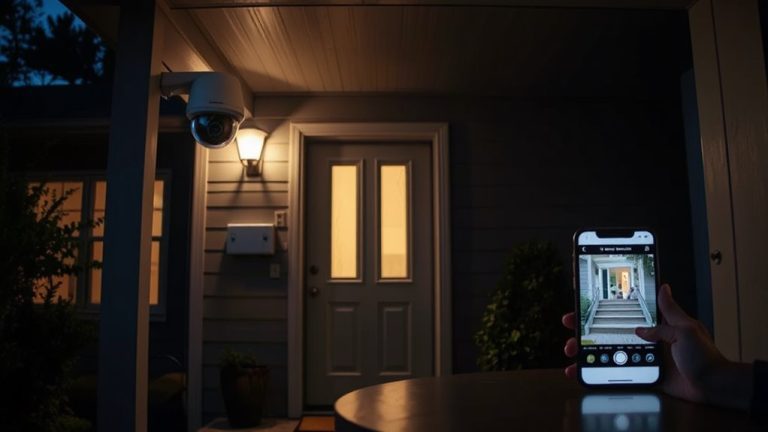
When you’re looking to upgrade your outdoor lighting for better security and control, smart security lights offer advanced features that go beyond basic illumination. You can set them to turn on at specific times using schedules, or trigger them with motion sensors tuned to ignore small animals. With remote access, you can turn lights on or off from anywhere using a smartphone app-ideal if you’re away and want to simulate occupancy. Many models support voice control through assistants like Alexa or Google Assistant, letting you adjust settings hands-free. Alerts sent to your phone notify you of detected motion, helping you respond quickly. Most systems integrate with broader home security setups, though initial costs are higher than traditional fixtures. Look for weather-resistant designs with strong Wi-Fi connectivity. Setup is usually DIY, but reliable performance depends on your home network strength. For optimal performance, choose models recognized in expert evaluations such as the best outdoor security lights.
Energy-Efficient Outdoor Lighting for Lower Bills
A growing number of homeowners cut outdoor lighting costs by 60% or more when switching to energy-efficient LED fixtures, and you can too with the right setup. LEDs use substantially less electricity than traditional bulbs and last years longer, reducing both energy use and replacement costs. Plus, you don’t have to sacrifice LED brightness-modern options deliver strong, clear light ideal for driveways, walkways, and entry points. For even lower bills, consider solar power. Solar-powered lights charge during the day and operate at night without drawing grid electricity. While they depend on sunlight, advances in battery storage mean reliable performance in most climates. Pair solar or hardwired LEDs with motion sensors or timers to further cut energy waste. Though solar models have higher upfront costs, they save money over time. Plan your layout to maximize sun exposure for solar units, and choose LEDs with the appropriate lumen output for each zone.
Avoid These Common Perimeter Lighting Mistakes
You’ve likely chosen energy-efficient LED or solar lighting to cut costs and boost outdoor visibility, but even the best fixtures won’t help if placed incorrectly. Poor placement creates overlooked shadows and harsh fixture glare, both compromising safety. To avoid these issues, plan your layout using proven positioning strategies. One effective solution is installing wireless motion sensor lights, which combine smart detection with flexible placement to enhance coverage without wiring.
| Zone | Placement Tip | Common Issue |
|---|---|---|
| Entryways | Mount 6–8 ft high, angled downward | Fixture glare near doors |
| Walkways | Space every 8–10 ft on both sides | Overlooked shadows in corners |
| Corners | Use corner-mounted fixtures with wide beams | Dark zones behind structures |
| Driveways | Install on both ends and bends | Uneven light distribution |
Position lights to eliminate dark zones while minimizing glare that impairs night vision. Use shielding and motion sensors wisely. Proper alignment guarantees consistent coverage, enhances security, and improves nighttime navigation around your home’s perimeter.
On a final note
You can substantially improve outdoor safety by installing well-placed, energy-efficient lights with motion sensors or smart controls. Focus on entry points, pathways, and dark corners to deter intruders and prevent trips. Floodlights offer strong coverage, while path lights guide footsteps reliably. Avoid over-lighting or poor placement, which creates glare or shadows. A balanced system, combined with timers or alerts, enhances security without raising energy costs. Plan thoughtfully for long-term results.