Creating a Comprehensive Guide to Choosing and Installing Personal Protection Devices That Will Enhance Your Home’s Overall Safety Profile Including Options Like Pepper Spray, Taser Guns, Personal Alarms, Security Fencing Materials, or Smart Lock Systems for Improved Access Control Measures During Emergency Situations
You can boost your home’s safety by choosing the right mix of personal protection tools. Keep pepper spray accessible but legal in your area, replace it every few years, and pair it with personal alarms for added deterrence. Tasers work at a distance but may require training and permits. Install smart locks with Wi-Fi and voice compatibility for remote access and emergency lockdowns. Use reinforced fencing like wrought iron or steel, at least six feet tall, with secure gates. Make sure all devices have backup power and integrate with motion sensors or cameras. You’ll find even stronger protection when you combine these systems strategically.
Notable Insights
- Install smart locks with Wi-Fi connectivity for remote access control and real-time alerts during emergencies.
- Choose reinforced security fencing like wrought iron with vertical spikes to deter intruders effectively.
- Equip your home with smoke and carbon monoxide detectors on every floor for early threat detection.
- Keep pepper spray and personal alarms accessible and compliant with local laws for non-lethal defense.
- Use layered security including cameras, motion sensors, and backup power to maintain protection during outages.
Choose the Right Personal Protection Tools for Your Home
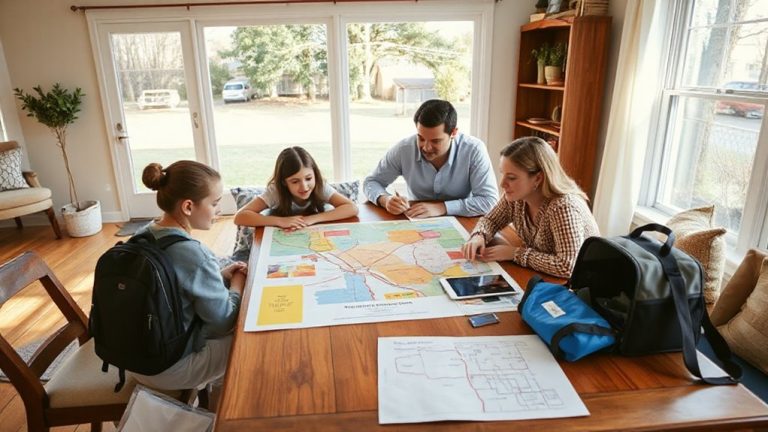
What kind of threats are you most concerned about-burglary, fire, carbon monoxide, or medical emergencies? Your answer shapes the personal protection tools you should choose. For break-ins, consider reinforced locks, motion-sensor lights, and security cameras; they deter intruders and provide evidence. Smoke and carbon monoxide detectors are essential for early warnings-install them on every floor. Medical alert systems can save lives during health crises, especially for seniors. Pair these devices with self defense training so you’re mentally and physically prepared to respond. Emergency preparedness means having a clear plan, practiced regularly, and tools that work when needed. Evaluate features like battery life, connectivity, ease of use, and upfront costs. A $200 security system may be cheaper than a single break-in. Choose solutions tailored to your risks, lifestyle, and home layout for effective, long-term safety. Upgrading to a best smart locks system can significantly improve access control and remote monitoring during emergencies.
Use Pepper Spray, Alarms, and Tasers Effectively
You’ve assessed your home’s risks and chosen protective tools like alarms, cameras, and detectors-now it’s time to contemplate personal defense devices you can carry or activate in an emergency. When using pepper spray, alarms, or tasers, proper storage guarantees quick access while preventing accidents. Always check legal considerations in your area, as some devices are restricted or require permits. Practice deploying each tool safely to build confidence without risking injury. For reliable self-defense, consider choosing from the best OC spray picks based on effectiveness and ease of use.
| Device | Pros | Key Considerations |
|---|---|---|
| Pepper Spray | Lightweight, non-lethal | Check local laws; replace every 2–3 years |
| Personal Alarm | Deters attackers, loud | Use with phone alerts; needs batteries |
| Taser | Effective at distance | Requires training; legal considerations apply |
Proper storage and awareness improve your response during threats.
Install Smart Locks in 5 Simple Steps
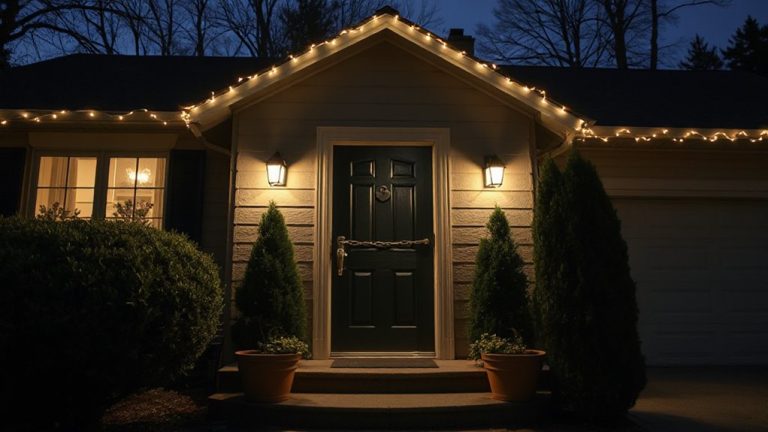
A smart lock can boost your home’s security and convenience if installed correctly. First, choose a model with strong smart home integration and voice assistant compatibility, like Alexa or Google Assistant, so you can lock doors hands-free. Second, check your door’s thickness and backset to guarantee the lock fits-most standard doors work, but measure first. Third, remove your existing deadbolt using a screwdriver, then attach the new lock’s exterior assembly, aligning it with the strike plate. Fourth, install the interior housing, connecting wires if your model needs them. Finally, download the app, link the lock to your Wi-Fi, and test locking and opening remotely. A reliable smart lock offers keyless entry and real-time alerts. While some models cost over $200, they improve access control during emergencies. For trusted recommendations, check out our top picks for the best smart locks based on performance and user feedback.
Pick the Best Fencing to Deter Intruders
Height, material, and design matter most when picking fencing that actually deters intruders. For effective intruder deterrence, choose fencing materials like wrought iron, steel, or reinforced vinyl that are hard to cut or climb. Aim for at least six feet in height-taller if your area has higher crime rates. Vertical bars or spikes on top increase difficulty for climbers. Chain-link works if combined with privacy slats and sturdy posts, but it’s less effective alone. Wooden fences offer privacy but need regular upkeep and can be sawed through. Vinyl is low-maintenance and strong, though pricier upfront. Avoid large gaps or weak base designs. Always secure gates with heavy-duty locks. Proper installation deep into stable ground is essential. Consider local codes and long-term costs. Good fencing materials paired with smart design boost your home’s security baseline without overpromising protection.
Upgrade Your Home for Emergency Lockdowns
While no single upgrade guarantees absolute safety, hardening key entry points can substantially improve your home’s ability to withstand an emergency lockdown. Consider reinforcing doors, windows, and integrating systems that function during outages. Emergency lighting and backup power guarantee visibility and operation when the grid fails. Below are key upgrades to evaluate:
| Feature | Pros | Cons |
|---|---|---|
| Smart Locks | Remote lockdown, access logs | Requires power and Wi-Fi |
| Reinforced Doors | Deters forced entry | Higher upfront cost |
| Emergency Lighting | Illuminates escape paths | Needs battery maintenance |
| Backup Power (e.g., battery bank) | Keeps systems running | Limited runtime, needs testing |
Pair these with regular drills and maintenance to maximize effectiveness. Backup power supports emergency lighting and smart systems, guaranteeing you stay protected when it matters most.
Build a Complete Personal Protection System
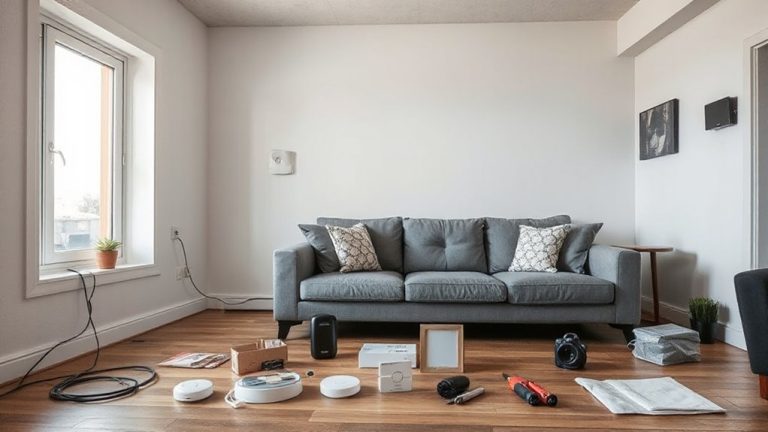
Since relying on a single device won’t fully protect you, combining layered defenses gives you stronger, more reliable security throughout your home. Start with motion sensors at entry points and dark zones-they trigger alarms or lights when movement occurs, reducing false alerts with pet-immune models. Add surveillance cameras at all access areas, choosing systems with night vision, 1080p resolution, and cloud storage to record incidents and identify threats. Link them to your smartphone for real-time alerts. Pair these with smart locks and personal alarms for full coverage. Wired systems offer reliability, while wireless setups allow easy installation and reconfiguration. Budget for $200–$600 depending on features. Guarantee all devices are UL-certified and integrate with a central hub if possible. Regular testing and battery replacements keep your system effective. This layered approach maximizes detection, deterrence, and response during emergencies.
On a final note
You now have the tools to build a smarter, safer home. Choose protection devices that fit your needs, like pepper spray for quick defense or smart locks for reliable access control. Each option offers clear benefits and some trade-offs, so plan carefully. By combining alarms, fencing, and lockdown strategies, you create layers of security backed by evidence and practical use. Stay prepared.