How to Reinforce Exterior Doors With High-Security Deadbolts for Burglary Resistance
Upgrade your exterior door with a high-security deadbolt made of hardened steel, featuring anti-drill plates and laser-cut keys to resist picking, bumping, and drilling. Pair it with a reinforced strike plate secured by 3-inch screws into wall studs. Guarantee your door frame is solid wood or composite, at least 1¾ inches thick. These steps meet ANSI Grade 1 standards, offer proven burglary resistance, and cost $100–$200; proper installation and monthly maintenance boost effectiveness even further.
Notable Insights
- Install a high-security deadbolt made of hardened steel to resist drilling, picking, and forced entry.
- Use reinforced strike plates with 3-inch screws anchored into wall studs for added frame strength.
- Ensure the door is at least 1¾ inches thick and made of solid wood or reinforced composite material.
- Secure hinges with non-removable pins and 3-inch screws to prevent door removal during attacks.
- Pair the deadbolt with regular maintenance, proper alignment, and monthly inspections for optimal performance.
How High-Security Deadbolts Stop Break-Ins
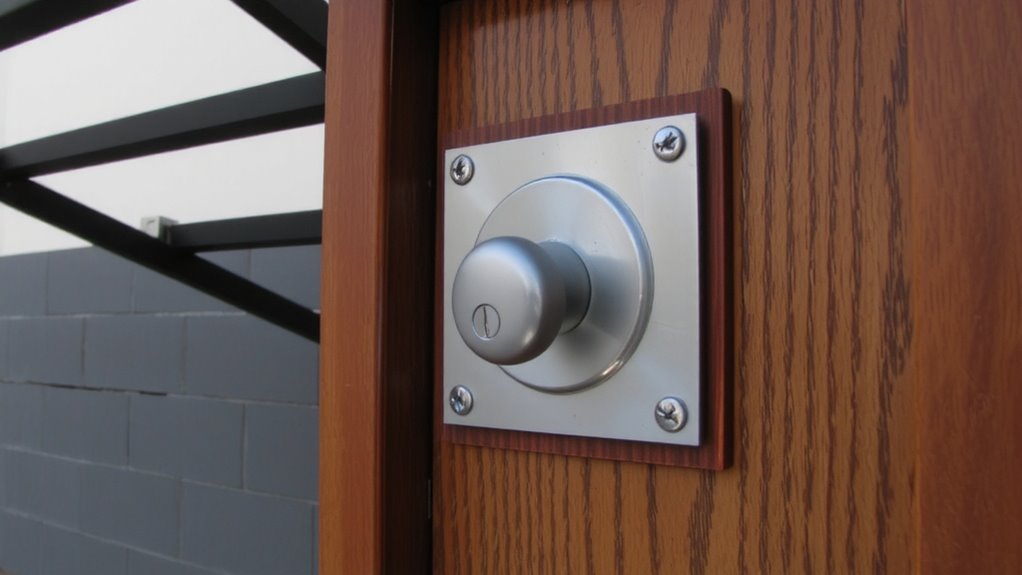
You might not realize it, but a standard deadbolt can still leave your home vulnerable-high-security models are built to resist common break-in methods like drilling, bumping, and forced entry. These locks use hardened steel components, and key hardening ensures the internal pins are resistant to picking and drilling attacks. Bolt shielding protects the deadbolt’s extended metal bolt, preventing attackers from prying or manipulating it through the door frame. Most high-security deadbolts meet ANSI Grade 1 standards, the highest residential rating, and often come with reinforced strike plates and longer screws for added strength. While they cost more-typically $100 to $200-the increased protection makes forced entry far more difficult. Installation is similar to standard models, but precise alignment is essential. Check local building codes and consider professional installation to guarantee peak performance. These features together offer measurable, tested improvements in home security. Some top models are featured in best smart locks roundups for their advanced integration and robust physical security.
Stop Threats Standard Deadbolts Miss
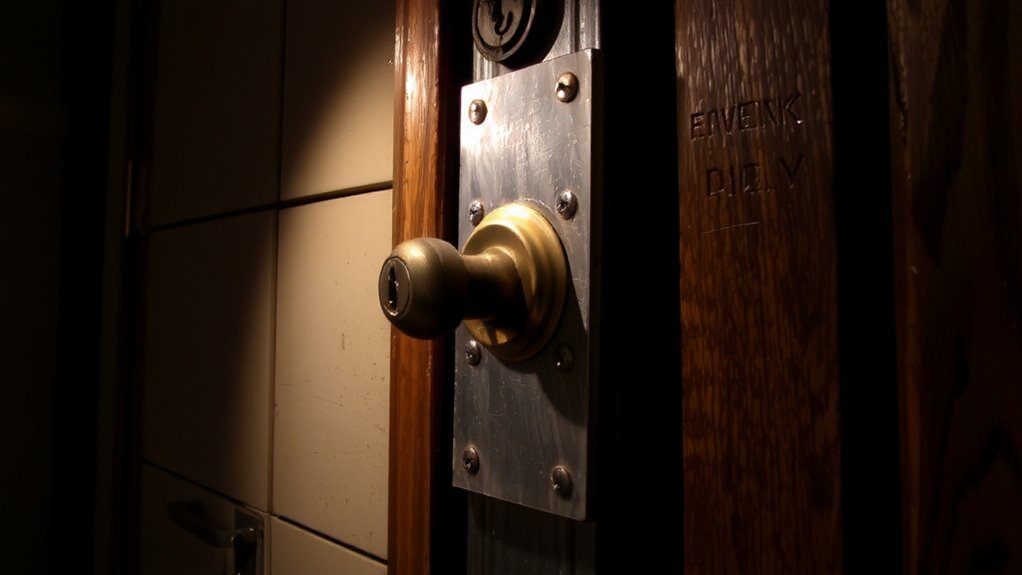
High-security deadbolts go beyond basic models by addressing specific attack methods that standard locks often fail to stop. You’re probably unaware of the bypass techniques burglars use-like shimming or jimmying the bolt-because standard deadbolts have hidden vulnerabilities in their design. These weaknesses let intruders slip past the lock without ever picking or drilling it. High-security versions include anti-shim features, thicker bolt housings, and reinforced strike plates to block these tricks. They also use hardened steel to resist leverage attacks that snap or retract ordinary bolts. While standard models may cost $25–$50, high-security units range from $100–$200, but they’re a proven upgrade. You’ll sleep better knowing your lock resists not just force, but clever bypass techniques most homeowners never see coming.
Pick a Deadbolt That Resists Picking and Drilling
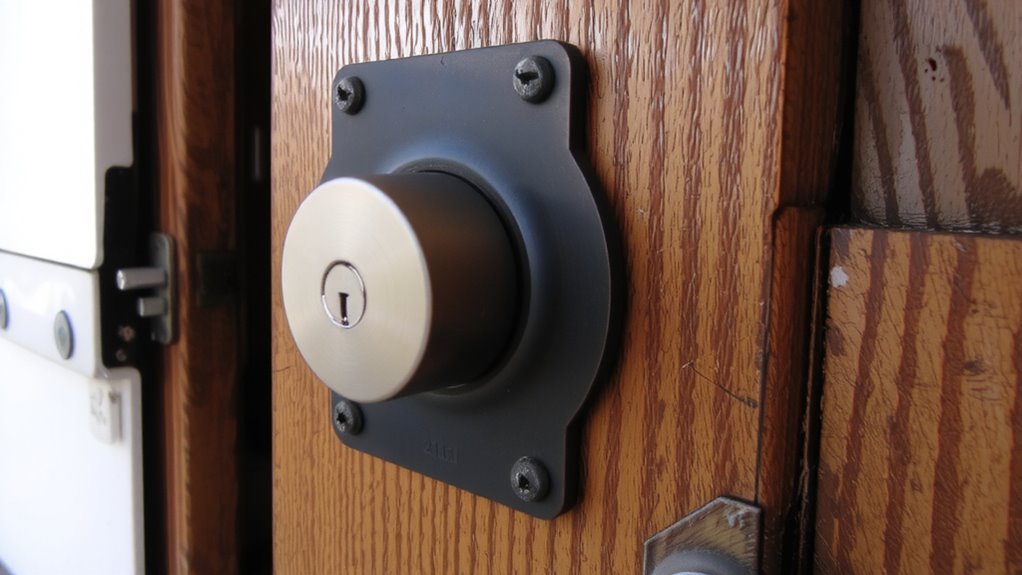
While most standard deadbolts can be compromised with basic tools, high-security models are built to resist both picking and drilling through advanced engineering and durable materials. You’ll want a lock that defends against common bypass methods like lock bumping and restricts unauthorized key duplication. Look for features like laser-cut keys and anti-drill plates, which markedly increase intrusion time. Below is a quick comparison of common options:
| Feature | Standard Deadbolt | High-Security Deadbolt |
|---|---|---|
| Resistance to Picking | Low | High |
| Protection from Drilling | Minimal | Reinforced steel inserts |
| Vulnerable to Bumping / Key Duplication | Yes | No (restricted keys) |
Choose a model certified by recognized third-party testing labs. These locks make lock bumping nearly impossible and limit key duplication to authorized providers only. Though more expensive-typically $100–$200-the investment pays off in long-term security. Upgrading to a smart-enabled best smart locks model can further enhance security with remote monitoring and access control.
Reinforce Your Door Frame for a High-Security Deadbolt
A strong lock is only as good as the frame that supports it, and even the best deadbolt can fail if the door frame is weak. You need a solid frame to handle forced entry attempts, especially with a high-security deadbolt. Make sure your door thickness is at least 1¾ inches, the standard for most exterior doors, so the bolt extends deep enough into the frame. Poor hinge placement can also weaken security-hinges should be positioned so screws anchor into wall studs, not just shallow framing. Use long, 3-inch screws in the hinge mortises to boost stability and resistance. Check that the frame material is solid wood or reinforced composite, not hollow or thin. If the frame’s loose or damaged, repair it before installing hardware. These steps guarantee your lock system works as a complete, durable unit, not just a strong bolt in a weak structure. Upgrading to a best front door lock can further enhance security when paired with a properly reinforced frame.
Strengthen the Strike Plate to Match Your Lock
The strike plate is a small but critical part of your door’s locking system, and upgrading it makes a real difference in security. If your deadbolt is strong but the strike plate is flimsy, intruders can easily force the door open. Use a metal plate with at least four screws, and guarantee each penetrates deep into the home’s frame-2.5 inches minimum. Proper door alignment guarantees the bolt slides smoothly. Misalignment causes sticking, wear, and weak performance. Pair this upgrade with hinge reinforcement to prevent frame twisting. Both improvements work together to resist prying.
| Feature | Standard Plate | Upgraded Plate |
|---|---|---|
| Screw Length | 0.5 in | 2.5 in |
| Material | Thin steel | Heavy-duty steel |
| Support | Limited | Full-frame anchoring |
Install Your High-Security Deadbolt Correctly
You’ve reinforced the strike plate and hinges to fortify the door frame, so now it’s time to focus on on the lock itself-starting with proper installation of a high-security deadbolt. Correct placement guarantees maximum strength, so check door alignment before drilling; a misaligned door can prevent the bolt from engaging fully. Follow the manufacturer’s template to position the lock body and strike precisely. Confirm hardware compatibility-some deadbolts won’t fit older door thicknesses or existing cutouts. A Grade 1 deadbolt with a minimum 1-inch throw offers proven resistance under testing. Use hardened steel bolts and secure the lock with screws at least 2.5 inches long. Missteps in installation reduce effectiveness, so take time to measure twice. When done right, the deadbolt should operate smoothly without binding. Proper setup extends the hardware’s life and boosts security performance over time.
Check and Lubricate Your Deadbolt Monthly
Regularly checking and lubricating your deadbolt keeps it functioning reliably and extends its lifespan. Monthly maintenance guarantees smooth operation and helps you catch wear or misalignment early. Start by testing the bolt’s movement-open and close the door several times. If it sticks or feels stiff, it’s time for lock lubrication. Use a dry graphite or silicone-based lubricant-never oil-based products, as they attract dirt and cause buildup. Apply a small amount to the keyway and bolt mechanism, then work the key in and out to distribute it. Inspect the surrounding strike plate and frame for misalignment or damage. Proper lubrication reduces mechanical stress and enhances security. This simple step takes under five minutes and prevents costly repairs. Make it part of your routine to keep your high-security deadbolt in peak condition, guaranteeing long-term burglary resistance.
On a final note
You’ve made your door stronger by choosing a high-security deadbolt that resists picking and drilling, and by reinforcing the frame and strike plate. Proper installation and monthly checks keep it reliable. These steps, backed by security testing, greatly reduce break-in risks compared to standard locks. While more costly upfront, the long-term safety gains are proven. A well-maintained, correctly installed deadbolt is one of the most effective, data-supported upgrades for home security.