Integrating GPS Tracking Devices With Home Security for Asset Protection
You can boost your home security by adding GPS tracking to protect items like cars, tools, or heirlooms beyond your alarm游戏副本’s range. GPS avoids false alarms by confirming actual movement and sends real-time alerts when something leaves a set zone. Most modern security hubs support integration, with encrypted signals and app control. Trackers vary in battery life, signal strength, and cost-expect $5–$15 monthly. Choosing the right model and checking your cellular coverage helps avoid common failures. There’s more to think about for long-term reliability.
Notable Insights
- GPS tracking enhances home security by monitoring valuables outside sensor range, like vehicles or equipment.
- Integrate GPS with your security hub to manage alarms, cameras, and trackers in one unified app.
- Choose GPS trackers with long battery life, dual GPS/GLONASS support, and cellular backup for reliability.
- Enable geofencing and motion alerts to receive real-time notifications when assets move unexpectedly.
- Prevent failures by selecting hybrid models, checking signal coverage, and performing monthly maintenance.
How GPS Fills Gaps in Home Alarm Systems

How do you guarantee your home stays protected when your alarm system can’t see everything? Traditional alarms rely on motion sensors and door contacts, but they’re vulnerable to false alarms and signal interference-especially from pets, drafts, or nearby electronics. GPS tracking fills those gaps by monitoring items that move beyond sensor range, like vehicles or valuable equipment. Unlike standard systems, GPS isn’t affected by indoor interference and avoids false alarms by confirming location changes rather than motion alone. You get real-time alerts when something leaves a set perimeter, giving you actionable data, not guesses. It’s not a replacement, but a strong complement-especially for homes with frequent signal issues or outdoor assets. For best results, choose a device with long battery life, reliable network coverage, and low monthly fees, typically $5–$15. Pair it with your existing setup, and close the blind spots for good.
Integrate GPS With Your Security Hub
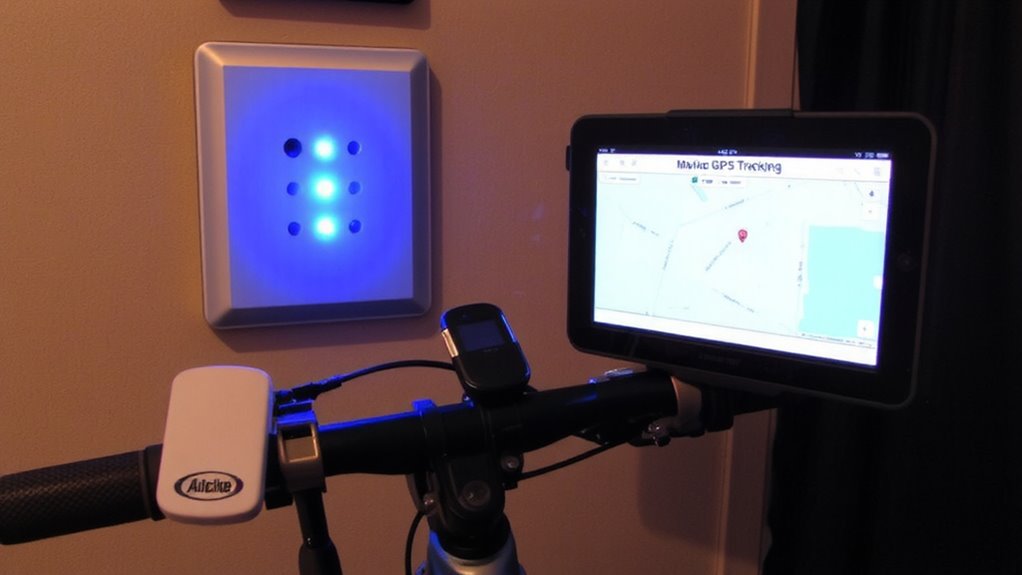
While your security system handles doors and windows, adding GPS tracking through your security hub gives you a complete picture of what’s happening around your property. You can monitor vehicles, pets, or valuable gear in real time, all from the same app you use for alarms and cameras. Device synchronization guarantees your GPS trackers update instantly alongside security sensors, so alerts appear together without delay. Signal encryption keeps location data secure, preventing outsiders from intercepting or spoofing signals. Most modern hubs support this integration natively, but check compatibility before setup. Some systems charge extra for GPS features, so review subscription plans carefully. Reliable performance depends on strong cellular coverage and battery life, so place devices thoughtfully. When configured properly, GPS integration boosts situational awareness without complicating your routine. It’s a practical upgrade that extends protection beyond the front door.
Choose the Right GPS Tracker
Since not all GPS trackers work the same way, picking the right one means matching key features to your specific needs. You’ll want a device with strong battery life-some last months on standby, while others need weekly charging. If you’re protecting stationary assets, a long battery life reduces maintenance. For mobile items, consider rechargeable models with low-power modes. Signal range matters too: urban areas usually offer solid coverage, but rural locations may need trackers with extended signal range or cellular backup. Look for models that support both GPS and GLONASS for better accuracy. Check subscription costs-some include service, others charge monthly. Avoid cheap trackers with poor signal range or short battery life. Read verified user reports on reliability. A well-chosen device integrates smoothly with your system and delivers consistent, real-time data when it matters most.
Respond Instantly When an Item Moves
You’ve picked a reliable GPS tracker based on battery life, signal strength, and coverage-now it’s time to put that device to work by setting up instant alerts for movement. Real time alerts notify you the moment your tracked item starts moving, whether it’s supposed to or not. Most systems send a push notification or email, allowing for immediate response. Configure sensitivity settings to avoid false alarms from minor bumps or vibrations. For best results, choose a tracker with motion detection and geofencing, so you’re alerted only when movement occurs outside designated zones. This feature works best with strong cellular coverage, so verify network reliability in your area. While most plans include real time alerts, check for extra fees or subscription tiers. An immediate response increases recovery chances, especially within the first hour. Make sure your app is always updated and your phone’s notifications are enabled. A reliable choice can be found among the best GPS trackers based on expert testing and user reviews.
Track Cars, Tools, and Heirlooms: Real-World Uses
A GPS tracker isn’t just for vehicles-it’s a smart safeguard for anything that holds value and moves. You can use it to monitor cars, power tools, or family heirlooms with precision. For stolen vehicle recovery, real-time location data helps law enforcement respond faster, increasing the chance of retrieval. With valuable item monitoring, you’ll know if a prized possession leaves a designated area and get alerts instantly. Trackers are small and easily hidden in toolboxes, bags, or glove compartments. Most systems offer geofencing, so you define safe zones and get notified when boundaries are crossed. While monthly subscriptions range from $10 to $30, the cost is often justified by peace of mind and potential loss prevention. Choose models with long battery life and strong encryption to guarantee reliability and security.
Why GPS Trackers Fail: and How to Avoid It
GPS trackers can fail when users overlook key limitations, even with the best intentions. Signal interference from buildings, trees, or metal enclosures can block GPS signals, reducing accuracy or cutting off tracking entirely. You might not realize your tracker is in a dead zone until it’s too late. Battery failure is another common issue, especially with small, passive devices that aren’t charged regularly. If the battery dies, tracking stops. To avoid this, choose models with long battery life or hardwired power options. Check devices monthly and replace batteries proactively. Opt for units with low-battery alerts and real-time monitoring. Consider hybrid trackers that use GPS, Wi-Fi, and cellular networks to maintain signal. These perform better in areas prone to signal interference. Planning and maintenance are essential-reliable tracking depends on both technology and your routine checks.
On a final note
You can strengthen home security by adding GPS tracking to your system. It fills gaps, especially for mobile assets like cars or tools. Choose a reliable, long-battery tracker with real-time alerts. Integrate it with your security hub for instant responses when items move. While signal loss or cheap models may cause failures, picking tested devices avoids most issues. Plan for costs-quality trackers range $30–$100, a smart investment for better protection.