How to Reinforce Old Wooden Window Locks With Modern Brass Inserts
Check your old wooden window locks for warping, loose hardware, or misalignment before installing brass inserts. Choose solid brass inserts that match your lock’s thread size-8-32 or 10-24 is common-and use a caliper for accuracy. Drill pilot holes, set inserts with stainless steel screws, and guarantee proper alignment. Adjust sashes, remove paint buildup, and replace worn weatherstripping. Lubricate twice yearly with silicone or graphite. Quality insert kits cost $10–$25 and improve durability. Further steps will show you how to fine-tune security and operation.
Notable Insights
- Diagnose latch misalignment due to warped or swollen wood before installing brass inserts.
- Match brass insert thread size to the lock using a caliper for accurate compatibility.
- Install solid brass inserts in both sash and frame at precise latch engagement points.
- Secure inserts with stainless steel screws to prevent corrosion and ensure durability.
- Adjust sash alignment and lubricate the lock after installation for smooth, tight operation.
Diagnose Why Your Wooden Window Locks Won’t Catch
What’s stopping your wooden window lock from catching? Warped wood is a common culprit, especially in older homes where humidity and temperature shifts cause wood to swell or shrink over time. When the frame or sash warps, the latch won’t align properly with the strike plate. You might notice resistance when closing the window or a gap that prevents full contact. Loose hardware also compromises function-screws can loosen from repeated use or wood deterioration, making the lock wobbly and misaligned. Check both the lock plate and strike plate; if they shift when touched, they need tightening or reinforcement. Don’t assume replacement is necessary. Often, adjusting or securing loose hardware and sanding minor warp points restores function. Inspect each window systematically: operate the lock slowly, observe alignment, and test stability. Addressing these issues first saves time and money before moving to more involved repairs.
Choose the Right Brass Insert for Your Window
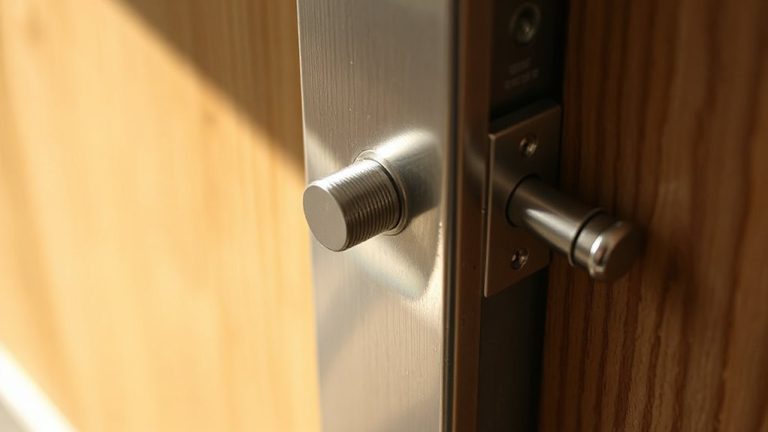
One reliable way to reinforce a loose wooden window lock is by installing a brass insert, which adds durability and prevents stripping in soft or aged wood. You’ll want to choose an insert that matches your lock’s thread size and depth-checking measurements with a caliper or screw gauge guarantees insert compatibility. Standard sizes include 8-32 and 10-24 threads per inch, but older windows may need specialty fittings. Brass durability makes these inserts ideal; they resist corrosion and outlast soft wood or plastic bushings. Look for solid brass inserts, not plated, for the best long-term performance. Some kits include multiple sizes, offering flexibility for different windows. Expect to pay $10–$25 for a quality set. Installing the wrong type can damage the sash, so verify fit before committing. Choosing the correct insert now saves time, money, and security risks later.
Install Brass Reinforcements in the Sash and Frame
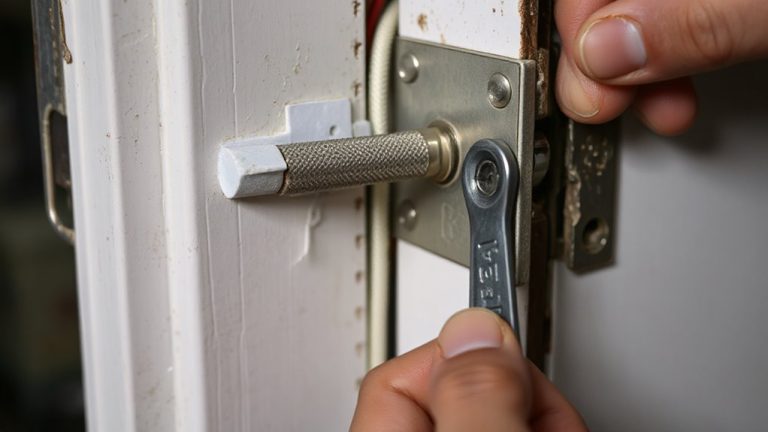
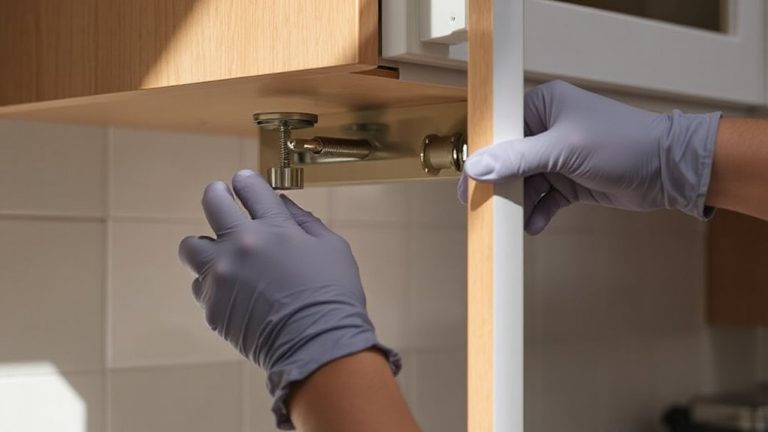
You’re ready to install the brass reinforcement now that you’ve chosen the right insert for your window lock. Begin by marking the sash and frame precisely where the latch engages. Drill pilot holes carefully to guarantee solid brass alignment-this prevents splitting the wood and guarantees a smooth fit. Secure each insert with stainless steel screws, which resist corrosion and enhance insert durability over time. Brass alignment is critical: even a 1/16-inch shift can hinder operation. Test fit before final tightening. Choose thicker inserts for high-traffic windows; they offer better insert durability but may require slight wood reshaping. Most kits cost $15–$30 and take under 20 minutes per window. Proper installation strengthens security, resists wear, and maintains the window’s original function. Guarantee all parts sit flush-no gaps or protrusions. Once set, avoid adjusting unless necessary.
Adjust Sashes So the Lock Catches Tight
A small adjustment can make a big difference in how well your window lock functions. Over time, wooden sashes shift, and paint buildup or worn weather stripping can keep the lock from aligning properly. First, check for paint buildup along the meeting edges-if layers are thick, carefully scrape them down so the sashes close flush. Next, inspect the weather stripping; if it’s compressed or uneven, replace it to guarantee consistent pressure. Then, test the lock. If it still doesn’t catch, loosen the screws on the sash stops slightly and reposition them to guide the sash into the correct alignment. Tighten the screws once the lock engages smoothly. This fine-tuning takes only minutes but improves both security and seal. Proper alignment supports the brass insert’s performance and enhances energy efficiency. Upgrading to best window locks can further improve long-term durability and security.
Lubricate and Inspect Your Brass Locks Twice a Year
Now that you’ve aligned the sashes for a secure fit, keep the lock itself in reliable working order by maintaining the brass mechanism twice a year. Seasonal maintenance prevents wear and guarantees smooth operation, especially before winter and summer. Use a lightweight silicone or graphite lubricant-avoid oil-based products that attract dust. Apply sparingly to the latch, bolt, and strike plate, then work the lock to distribute it evenly. Inspect for signs of brass corrosion, which appears as dullness, dark spots, or greenish residue; mild cases can be cleaned with a vinegar and salt solution, but severe pitting may require replacement. Check screws and mounting hardware for tightness, and verify alignment hasn’t shifted. Twice-yearly care extends lock life, improves security, and catches issues early. Plan this upkeep alongside changing smoke detector batteries for consistency. A high-security deadbolt lock can further enhance protection when paired with well-maintained window locks.
On a final note
You’ve strengthened weak window locks using durable brass inserts, improving both function and security. Proper installation guarantees a tight catch, while semi-annual lubrication prevents wear. Brass resists corrosion better than steel or aluminum, though it costs slightly more upfront. Measure your sash and frame carefully before buying inserts to guarantee compatibility. This upgrade is a cost-effective alternative to full window replacement, offering measurable security gains with minimal disruption.