Retrofitting Smart Security Features Into Older Alarm Systems
You can retrofit smart security features into your older alarm system and cut upgrade costs by over 50% compared to full replacement. Reuse existing wiring and sensors when possible, and add a smart hub for under $200 to enable remote access, real-time alerts, and automation. Pair with wireless sensors costing $50–$150 each, ensuring compatibility with your panel. Use Z-Wave or Zigbee hubs to reduce interference, and always test connections. There’s more to evaluate when choosing the best setup for your home.
Notable Insights
- Retrofit older alarm systems affordably by reusing existing wiring and sensors to cut upgrade costs by 50% or more.
- Integrate smart sensors wirelessly for real-time alerts, remote monitoring, and automation with $50–$150 per sensor investment.
- Choose a compatible smart hub that supports Z-Wave or Zigbee to ensure reliable communication with legacy alarm panels.
- Enable instant remote access via mobile app by pairing a smart hub with cloud connectivity for arming, alerts, and logs.
- Use DIY smart modules on auxiliary panel outputs to add smart features safely-power off first and test after installation.
Save Money by Upgrading Instead of Replacing
Most homeowners can cut upgrade costs by 50% or more when retrofitting older alarm systems instead of installing entirely new ones. You’ll enjoy immediate cost savings by reusing existing wiring, control panels, and sensors where possible. That means less labor, fewer parts, and quicker installation. Upgrading also delivers long term value, since modern components integrate smoothly with proven infrastructure. For example, adding a smart hub to your current system often costs under $200, compared to $800 or more for a full replacement. Pros include lower upfront costs and minimal disruption, while cons may involve limited compatibility with very old panels. Plan to consult a certified technician to assess your system’s age and wiring condition. Reliable brands like Honeywell and Alarm.com support retrofits. With careful selection, you maintain security effectiveness while maximizing investment returns over time.
How Smart Sensors Boost Old Alarm Systems
While your older alarm system may lack built-in smart capabilities, adding modern sensors can substantially improve its performance and usability. Smart sensors enable real-time alerts, remote monitoring, and automation-features you’d expect in newer systems. Sensor integration is key: you’ll connect devices like motion detectors, door contacts, and glass break sensors directly to your existing alarm panel, often using wireless protocols. But first, conduct compatibility testing to confirm your alarm panel supports third-party sensors or requires a bridge. Some systems only work with specific frequencies or encryption types, so check specs carefully. Proper testing prevents false alarms and guarantees reliable communication. Most upgrades cost $50–$150 per sensor, depending on features. While installation is usually DIY, incorrect setup can reduce effectiveness. Always verify system responses after installation. With the right planning, sensor integration enhances security without replacing your entire system.
Choose a Smart Hub for Your Legacy Alarm
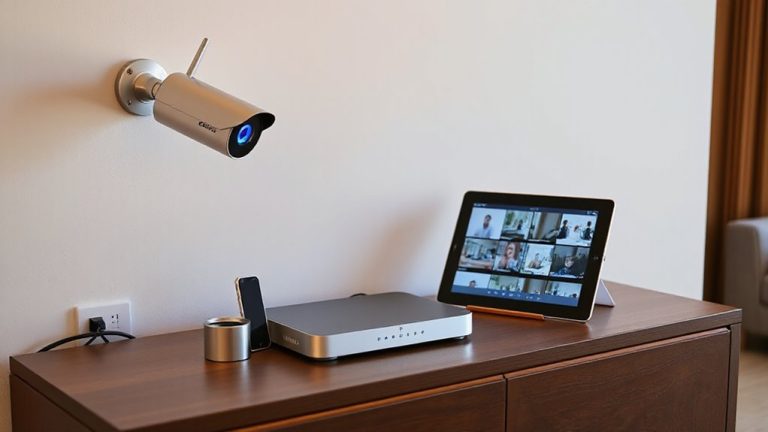
If you’re looking to modernize your existing alarm system, picking the right smart hub is a critical step that determines how well everything works together. You’ll need to verify compatibility testing between the hub and your legacy alarm to guarantee stable communication. Not all hubs work with older panels, so check manufacturer specs or consult a technician. Look for models supporting common protocols like Z-Wave or Zigbee, which reduce signal interference from Wi-Fi networks and other devices. Place the hub centrally, away from metal objects or thick walls, to improve range and reliability. Some hubs offer encryption and local processing, boosting security and response times. While prices vary from $50 to $150, investing in a reputable brand often means better long-term support and fewer connectivity issues. Always test the setup before finalizing installation. Consider starting with one of the best smart home hubs to ensure broad device compatibility and reliable performance.
Add Remote Access in Minutes
Since you’ve connected your legacy alarm to a smart hub, you can now enable remote access in minutes using a compatible mobile app. With cloud connectivity, you’ll monitor and control your system from anywhere, whether you’re at work or on vacation. The app lets you arm or disarm the alarm, check sensor status, and review activity logs in real time. You’ll also receive mobile alerts instantly when a door opens or motion is detected, helping you respond quickly to potential threats. Most services use encrypted connections, so your data stays secure. Setup usually takes under ten minutes and doesn’t require technical skills. Typical costs range from $5 to $15 per month, depending on features and storage. Choose a provider that offers reliable uptime and 24/7 support. Reliable cloud connectivity and timely mobile alerts are essential-don’t skip testing them after installation.
DIY Retrofit: Install Smart Upgrades Yourself
How do you upgrade an older alarm system without replacing it entirely? You can retrofit it yourself using smart modules that connect to your existing control panel. Start by checking compatibility-most systems support auxiliary outputs for new devices. Use basic wiring techniques to link smart relays or sensors, typically involving low-voltage connections. Match wire types and guarantee secure terminals to avoid false triggers. Your tool requirements are minimal: a screwdriver, wire strippers, and a multimeter to test signals. Some kits include plug-and-play adapters, reducing installation time. Always power off the system before working. This DIY approach saves money, but mistakes in wiring may compromise reliability. Plan each step, follow manufacturer guides closely, and test thoroughly. With careful execution, you gain modern features without full replacement.
Best Smart Devices for Old Alarm Systems
While your older alarm system may lack built-in smart capabilities, you can still bring it into the modern era with compatible add-on devices that deliver real-time alerts, remote control, and integration with voice assistants. Devices like the SkyBell Doorbell and Ring Alarm Contact Sensors connect to existing panels, enabling mobile alerts and voice control via Alexa or Google Assistant. The GE Enbrighten Z-Wave Hub is a top choice, supporting up to 32 devices with reliable range and no monthly fee. Consider the Nest Secure, though discontinued, for its strong encryption and seamless app integration. Most add-ons cost $50–$150 per unit, with professional installation adding $100–$200. Guarantee your system supports Z-Wave, Zigbee, or Wi-Fi before buying. Look for low latency and end-to-end encryption to maintain security. These upgrades offer measurable improvements in response time and convenience without replacing your entire system.
On a final note
You can upgrade your old alarm system without replacing it. Adding smart sensors and a compatible hub gives you remote access, real-time alerts, and better monitoring. Most retrofits cost $100–$300, saving money versus full replacement. Choose devices that work with your system’s frequency and protocol. DIY installation is easy for most users. Check warranties and test devices after setup. A smart retrofit boosts security and convenience reliably.