Using Machine Learning to Reduce False Alarms in Smart Security Systems
You can cut false alarms by using machine learning that learns your home’s routine. Systems analyze data from motion, door, and camera sensors to tell pets or shadows apart from real threats. Over 10–14 days, AI builds a model of normal activity, so it alerts you only when something unusual happens. This reduces unnecessary alerts by up to 70% in homes with frequent false alarms. Some cameras even detect your dog’s size and movement-without a subscription. Better accuracy means you’re less likely to disable the system. Brands like Nest, Ring, and Arlo offer these features, often with a monthly fee. You’ll see how smart security keeps adapting to your life.
Notable Insights
- Machine learning analyzes sensor data patterns to distinguish normal activity from potential threats, reducing false alarms.
- Adaptive systems learn household routines over 10–14 days to detect anomalies that deviate from established behavior.
- Sensor fusion combines camera, motion, and environmental data to improve detection accuracy and context awareness.
- Pet detection algorithms use size, shape, and movement patterns to differentiate pets from intruders.
- On-device AI in smart cameras enables real-time anomaly detection without relying on cloud processing or subscriptions.
Why False Alarms Break Trust in Smart Security
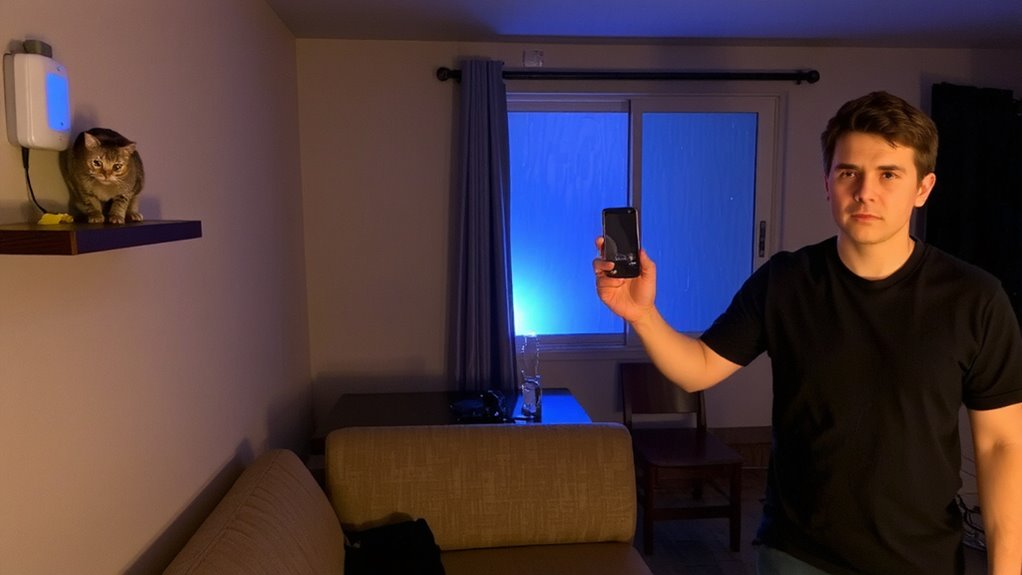
While smart security systems promise peace of mind, frequent false alarms can quickly undermine your confidence in the technology. Each time your alarm sounds unnecessarily-triggered by a pet, a breeze, or a shadow-you experience user frustration that builds over time. This erodes trust, making you question the system reliability when it matters most. Studies show households with more than two false alarms per month are 70% more likely to disable their systems temporarily. That’s a serious security risk. Poor reliability doesn’t just waste your time, it may delay real emergency responses. You need a system that accurately distinguishes real threats from everyday motion. Look for models with adjustable sensitivity settings and environmental filters. Though higher-priced units often offer better reliability, check third-party reviews for verified performance data. Prioritize consistent operation over flashy features to maintain long-term confidence. For reliable performance, consider the best motion detectors based on expert testing and real-world usage.
How Machine Learning Tells Intruders From False Alarms
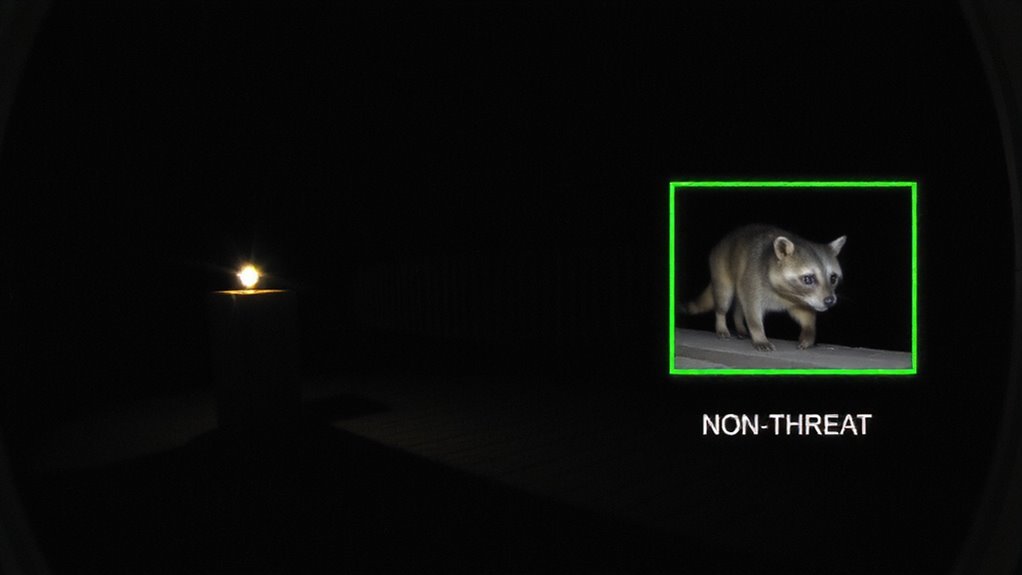
You’ve likely turned off your alarm after one too many false triggers from pets or shifting light. Machine learning helps by using pattern recognition to study what normal activity in your home looks like over time. It learns when your dog crosses the room or sunlight hits a sensor, so it doesn’t mistake those for threats. When something unusual happens, anomaly detection flags it for closer inspection. This means real intrusions-like someone entering at odd hours or moving unpredictably-stand out clearly. The system doesn’t just react; it compares current data to learned patterns, reducing false alarms. Over time, it gets better without constant reprogramming. While initial setup may require some adjustment, the payoff is fewer false alerts and stronger security. You stay alerted only when it matters most.
How Smart Systems Use Sensor Data to Learn
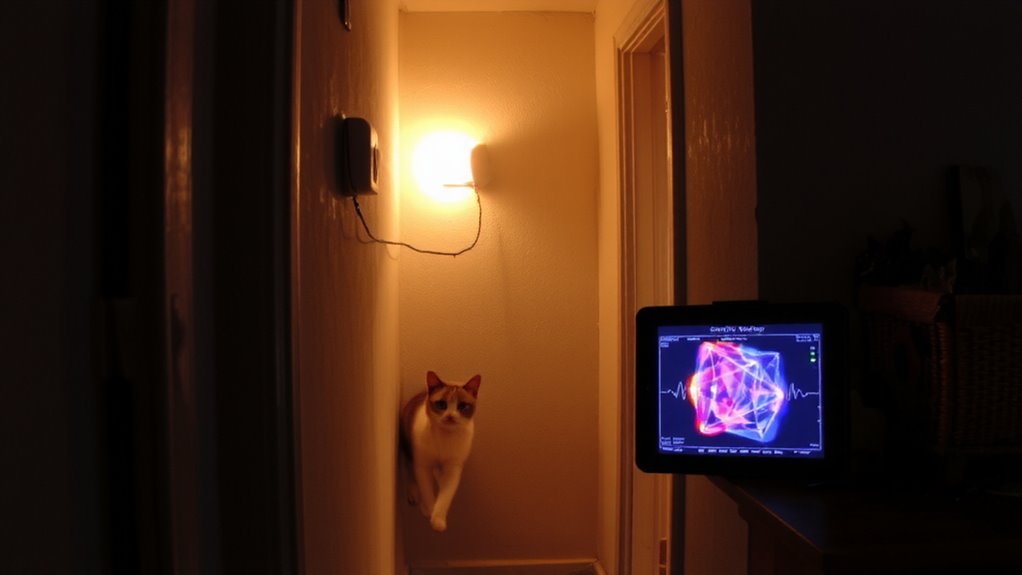
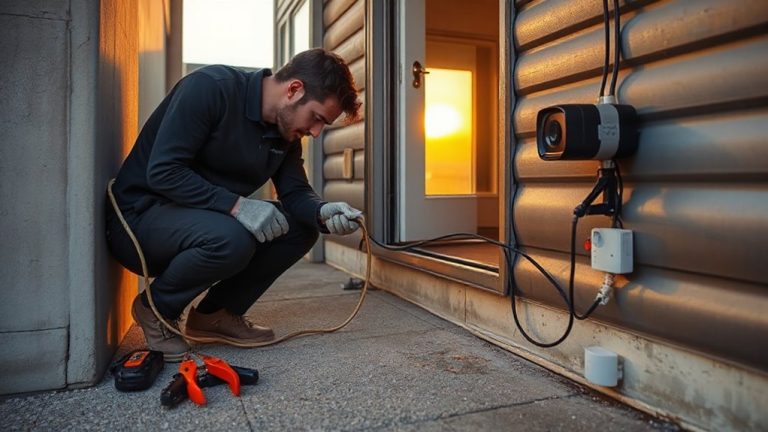
Data is the foundation of every smart security system, and yours collects plenty of it. You rely on sensor fusion to combine inputs from cameras, motion detectors, and door sensors for a complete picture. Over time, your system uses pattern recognition to learn daily routines-like when you come home or when lights are turned on. This helps reduce false alarms by distinguishing normal behavior from potential threats. Systems with advanced analytics often leverage best wireless home security systems with cameras to improve accuracy through integrated, high-quality sensor data.
| Sensor Type | Function | Contribution to Learning |
|---|---|---|
| Motion | Detects movement | Identifies activity patterns |
| Door/Window | Monitors openings | Flags unusual access times |
| Camera | Captures video | Enables visual pattern recognition |
| Ambient | Measures light/temp | Supports context via sensor fusion |
Can ML Tell If It’s Your Dog or a Burglar?
How do you know your security system won’t mistake your dog for an intruder? Machine learning uses dog detection to differentiate between pets and people, analyzing size, shape, and movement patterns. Systems trained on thousands of images recognize your dog’s behavior, reducing false alarms. You don’t have to worry about Fido triggering alerts every time he walks past a sensor. This relies on strong anomaly recognition, which identifies deviations from normal activity. If the system sees a human crawling through a window at 3 a.m., it flags it as a potential threat-your dog pacing at night likely won’t. These models improve over time, learning your home’s routine. Look for systems with proven dog detection and accurate anomaly recognition. Higher-end models offer better precision but may cost more. Make sure the one you choose fits your pet’s size and your household’s layout. Some wireless indoor cameras now include on-device AI processing to enable these smart detection features without requiring a subscription.
Pick the Best ML Security System for Your Home
Now that you understand how machine learning can tell the difference between your dog and an intruder, it’s time to use that knowledge to choose the right system for your home. Start with a cost comparison: some systems have low upfront prices but charge high monthly fees, while others cost more initially but save you money over time. Look for brands with strong brand reliability-check customer reviews, warranty length, and third-party testing results. Opt for models that offer HD video, two-way audio, and local data storage to protect privacy. Make sure the system integrates with your existing smart home devices. Avoid locking into long-term contracts unless professional monitoring is essential. Balance features against your budget and security needs, and always verify if professional installation is required. A reliable, well-priced system gives lasting protection without surprises.
Adaptive Systems That Learn Your Daily Routine (Already Here)
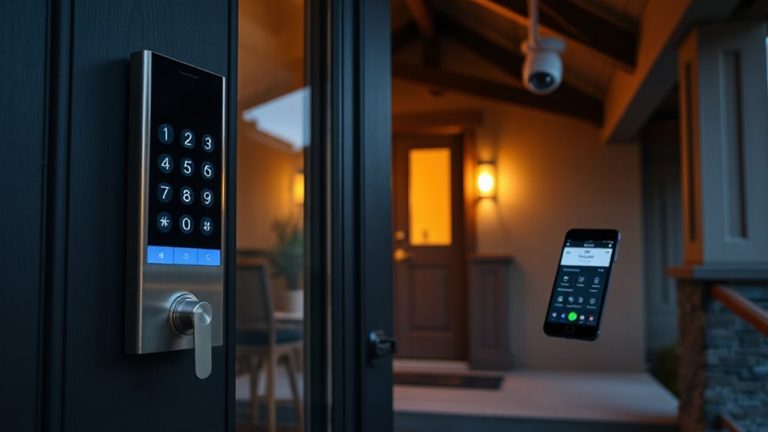
While most security systems react to motion after it happens, adaptive systems go a step further by learning your household’s patterns over time-so they know when you typically come and go. These systems use pattern recognition to analyze user behavior, like when you open the door or adjust the thermostat. Over days or weeks, the AI builds a model of normal activity, reducing false alarms from pets or routine movements. You’ll get alerts only when behavior deviates-say, motion at 3 a.m. on a Tuesday. Most adaptive models need 10–14 days to calibrate, and they improve with consistent data. Systems like Ring, Nest, and Arlo offer this now, often requiring a subscription for full features. While slightly more expensive, they save time and reduce unnecessary police dispatches, making them a smart upgrade for households wanting fewer false alarms and more personalized protection.
On a final note
You’ll reduce false alarms by choosing a system that uses machine learning with multiple sensors, like motion, cameras, and sound. These systems learn your routine and distinguish real threats from pets or shadows over time. Look for models with adaptive learning, high accuracy rates, and easy integration. They cost more upfront but save money on monitoring and increase peace of mind. Check reviews and test alerts before buying.