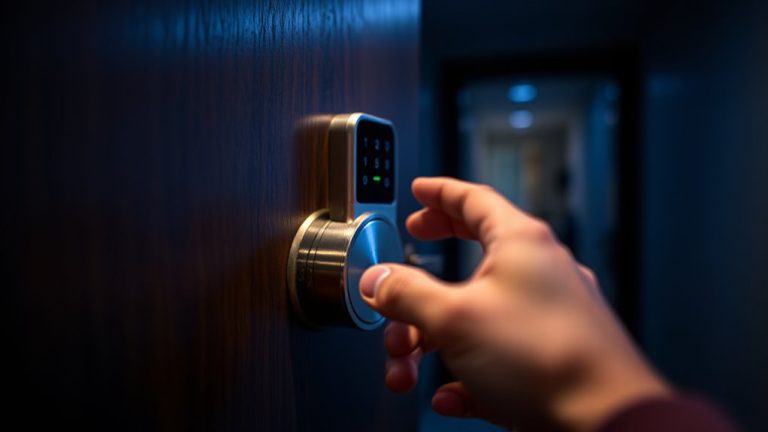
Creating Secure Entry Points: The Importance of Robust Lock Systems
Your front door lock is likely the weakest link in your home’s security, with over 70% of break-ins involving forced entry through weak or aging locks. Upgrading to a Grade 1 deadbolt with a one-inch throw and reinforced strike plate dramatically improves protection. Smart locks offer keyless access, remote control, and real-time alerts, enhancing convenience and monitoring. If your keys stick, show wear, or your lock is over 10 years old, it’s time for an upgrade. Choosing the right system depends on your property type, usage needs, and security goals-learn how each option performs under real-world conditions.
Notable Insights
- Over 70% of home invasions involve forced door entry, making strong locks a critical first defense.
- Grade 1 deadbolts with one-inch throw bolts significantly increase resistance to forced entry.
- Smart locks offer keyless, remote access with real-time alerts and advanced encryption for enhanced security.
- Worn or outdated locks with sticking keys or visible damage should be replaced to prevent easy break-ins.
- Match lock types to property needs-deadbolts for homes, commercial-grade systems for businesses.
Your Door Lock Is the Weakest Link: Here’s Why
While your front door may seem secure, the lock itself is often the weakest point, and that’s where most break-ins start-statistics show over 70% of home invasions involve forced entry through doors, usually because the lock isn’t strong enough. You might not realize it, but outdated or low-quality locks create serious security vulnerabilities. Simple cylinder locks or worn mechanisms can be picked or forced open in seconds. Effective access control means more than just turning a key; it requires hardware that resists tampering and supports layered defense. Many standard locks lack reinforced strike plates or deep deadbolts, making them easy targets. Upgrading isn’t just about strength-it’s about reliability over time. Consider durable materials, proper installation depth, and resistance ratings. Even small improvements reduce risk markedly. A secure lock acts as your first line of defense, limiting unauthorized access before alarms or cameras are needed. Homeowners should consider upgrading to best door locks for optimal protection against break-ins.
Best Locks for Homes and Small Businesses: Deadbolts, Smart Locks, and More
If you’re looking to upgrade your property’s security, choosing the right lock type matters just as much as the installation quality. Deadbolts offer strong key strength and excellent lock durability, making them a top choice for homes and small businesses. Grade 1 deadbolts resist forced entry better than lower grades and often cost $75–$150, including professional installation. You’ll want at least a one-inch throw bolt that extends deep into the door frame. Smart locks provide convenience and monitored access, but their key strength depends on encryption standards and app security. While lock durability varies by brand, metal-finished models rated for outdoor use perform best over time. Multi-point locks add extra resistance but may require reinforced doors. Whichever you pick, guarantee it meets ANSI/BHMA standards. A well-chosen lock enhances protection markedly when matched with solid doors and correct setup.
Why Smart Locks Beat Traditional Keys
Smart locks offer features that go well beyond what traditional keys can provide, giving you greater control and visibility over access to your property. With keyless entry, you can open doors using codes, fingerprints, or smartphones-no more lost or copied keys. Remote access lets you grant entry to guests or service workers from anywhere, using an app. You’ll also get real-time alerts when someone enters, adding accountability and peace of mind. Top models support advanced encryption to protect against hacking, ensuring your smart lock security remains robust over time.
| Feature | Traditional Key | Smart Lock |
|---|---|---|
| Keyless Entry | No | Yes |
| Remote Access | No | Yes |
| Physical Key Use | Yes | Optional backup |
Smart locks integrate with home security systems, support user-specific codes, and allow temporary access-all while reducing lockout risks. Though they cost more upfront, their long-term benefits in convenience and control make them a practical upgrade for modern homes.
5 Signs Your Home Security Locks Are Outdated
Since security threats and technology have evolved, the locks you’ve relied on for years might no longer offer the protection you expect. If your keys stick or require jiggling, that’s a sign of mechanical wear, which weakens security. Visible damage or looseness around the lock cylinder also points to aging hardware. Older locks often use simple designs that make key duplication easy, even without your knowledge. This increases the risk of unauthorized access, especially if lost keys or ex-tenants are involved. Many traditional models lack modern anti-pick or bump-resistant features, making them vulnerable to common break-in methods. If your lock is more than 10 years old or shows signs of wear, upgrading improves safety. Look for signs like difficulty turning keys, rust, or wobbling deadbolts. Replacing outdated locks with stronger models reduces risks tied to mechanical wear and uncontrolled key duplication. For reliable protection, consider choosing from the best lock sets available today, which combine durability and advanced security features like top lock picks.
Which Lock Type Fits Your Home, Rental, or Business?
You’ve likely recognized the weaknesses in aging locks, especially when keys stick or hardware shows visible wear. Now it’s time to choose the right lock for your needs. For homes, deadbolts with high key durability and reinforced strike plates offer strong protection. Look for ANSI Grade 1 or 2 locks-they’re tested for strength and consistency. Renters should check with landlords before installing new hardware, but portable options like smart locks can work well, especially with easy key replacement and modern lock aesthetics. Businesses often need commercial-grade mortise or electronic access systems, supporting keypads or key cards to manage entry. Key durability matters here-frequent use wears down weaker mechanisms. Lock aesthetics also play a role in professional or residential settings, helping maintain curb appeal without sacrificing function. Always balance security, cost, and ease of use when choosing.
On a final note
Your lock is often the first defense against break-ins, so choosing the right one matters. Deadbolts offer proven strength, while smart locks add convenience and tracking. Look for features like ANSI Grade 1 ratings, auto-locking, and encryption. Test reliability and power sources before buying. Upgrading outdated locks improves security, especially in rentals or small businesses. Balance cost, ease of use, and safety to protect your space effectively.