Battery Security Cameras in Cold Weather: Cut Power Loss by 50%
Cold weather slows your security camera’s battery chemistry, cutting life by up to 50% below freezing. Heat speeds up discharge, while humidity risks corrosion and signal issues. Use IP65-rated, sealed devices like Arlo Pro 4 or Blink Outdoor for reliable performance. Insulate batteries, add solar charging, and install units in shaded, sheltered spots to boost efficiency. You’ll see how smart placement and weather-resistant models make a real difference in long-term reliability.
Notable Insights
- Cold weather reduces battery efficiency by slowing chemical reactions and increasing internal resistance, leading to shorter device runtime.
- Batteries in lithium-ion devices lose capacity below freezing, causing unexpected shutdowns even with apparent charge remaining.
- High temperatures accelerate battery discharge and degrade cells faster, reducing overall lifespan and performance.
- Humidity and moisture can cause corrosion and damage internal components, especially without proper sealing.
- Using weatherproof enclosures with IP65+ ratings and insulation helps maintain battery performance and device reliability in extreme conditions.
How Cold Weather Kills Security Camera Batteries
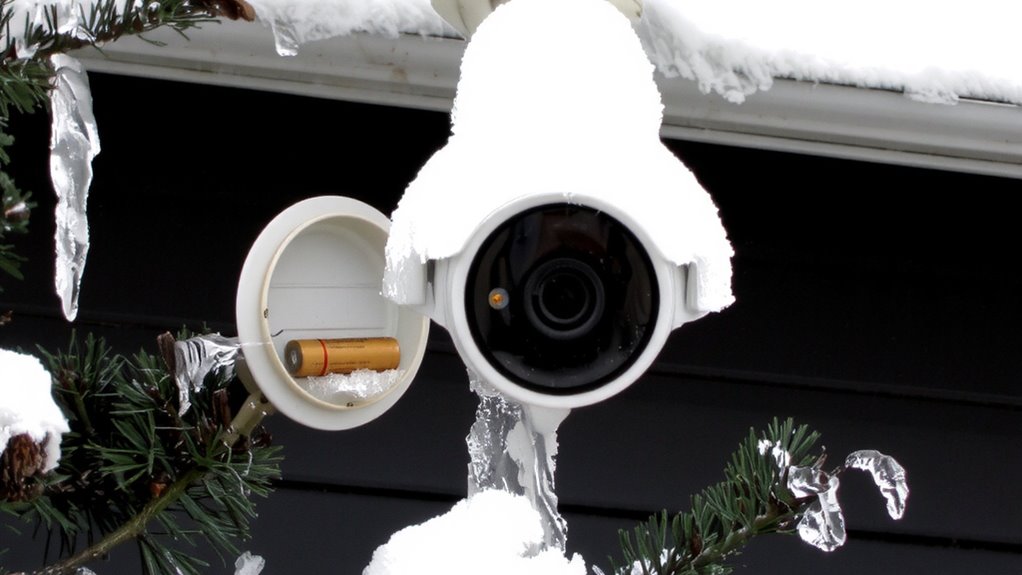
While you might not think twice about your security camera working in the winter, cold weather can seriously shorten battery life, especially below freezing. Cold temperatures slow down battery chemistry, reducing a battery’s ability to deliver power efficiently. This means your camera may die even if the charge appears adequate. Lower temps increase internal resistance, which in turn raises discharge rates, draining batteries faster than normal. Lithium-ion cells, common in these devices, are especially sensitive to cold. You’ll likely see performance drop markedly below 32°F (0°C). To minimize issues, choose cameras rated for cold climates or with weather-resistant enclosures. Some models include internal heating, though they consume more power. Consider hardwiring in extreme zones or checking batteries monthly. Budget for replacements or solar chargers in winter months to maintain consistent operation without gaps in coverage. For extended performance, consider models known for the longest battery life.
Can Heat and Humidity Ruin Your Battery-Powered Devices?
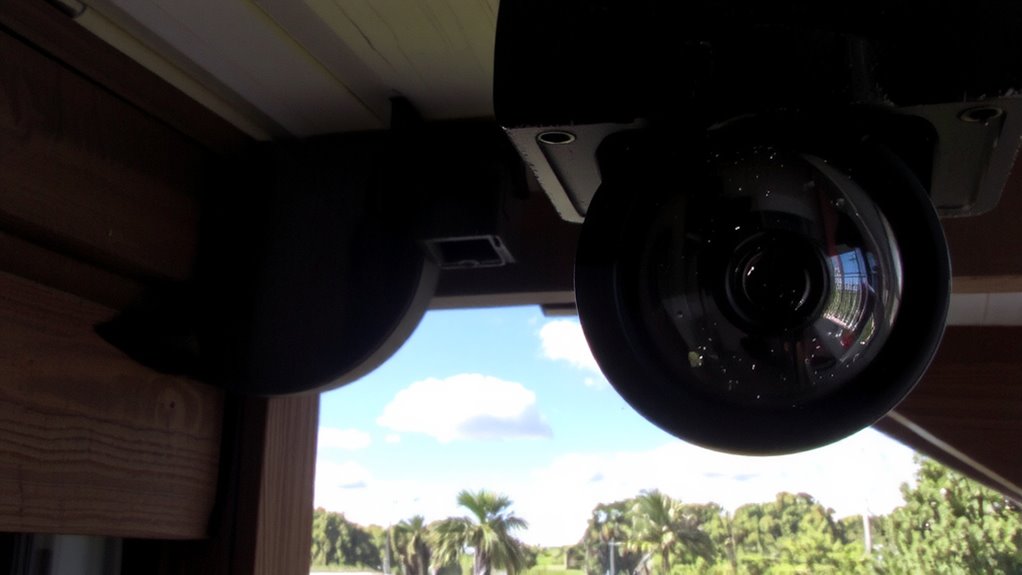
What happens to your battery-powered security devices when temperatures rise and humidity creeps in? High heat can shorten battery life, as excessive warmth speeds up chemical reactions inside the cells, leading to quicker discharge. Humidity increases the risk of battery corrosion, especially if moisture enters the device’s housing-this can damage internal components and prevent reliable operation over time. You might also experience signal interference, since humid air can weaken wireless transmissions between sensors and hubs, reducing responsiveness. While some devices are rated for hot, muggy environments, many consumer models aren’t built to handle prolonged exposure. Look for sealed enclosures and corrosion-resistant materials when choosing gear for humid climates. Devices with IP65 or higher ratings typically resist moisture better. Though these cost more upfront, they reduce long-term maintenance and replacement expenses.
How to Protect Outdoor Sensors From Rain and Dust
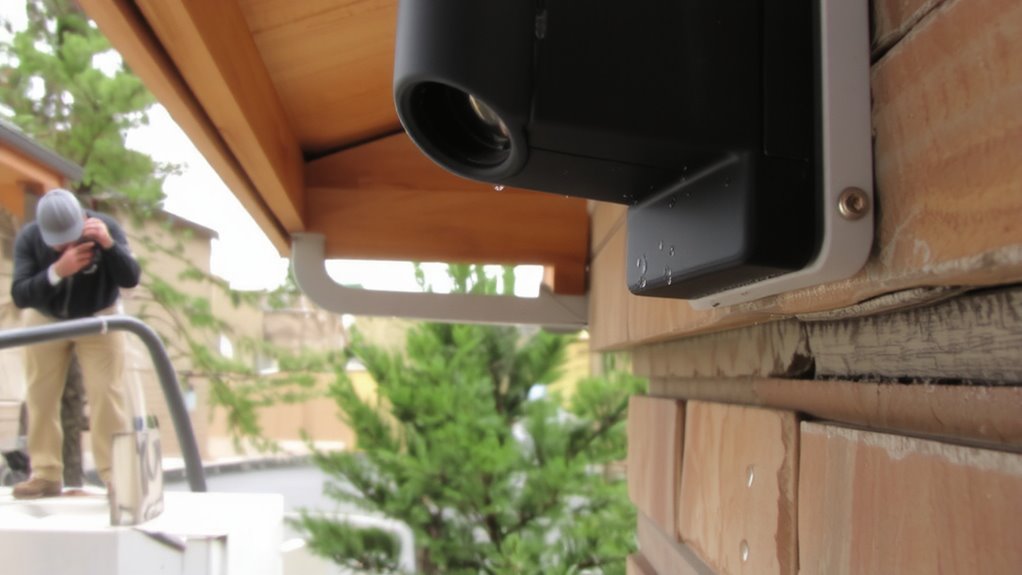
Keeping outdoor sensors running reliably means shielding them from rain and dust, two common threats that can compromise performance over time. You should use waterproof enclosures to block moisture and prevent internal damage during heavy rain or snow. These enclosures are rated by IP (Ingress Protection) standards, so aim for at least IP65 to guarantee solid protection. Dust seals around cable entries and sensor joints stop fine particles from entering and interfering with connections. They’re small but essential for long-term reliability, especially in dry, windy areas. Make sure the seals stay intact during installation and routine checks. Pairing waterproof enclosures with quality dust seals markedly extends sensor life and maintains accuracy. While these features may add slightly to upfront costs, they reduce maintenance and replacement expenses later. Inspect your setup seasonally to confirm seals are tight and enclosures aren’t cracked. This proactive approach guarantees dependable outdoor security year-round.
Top Weatherproof Battery Security Devices for Any Climate
Several top-rated battery-powered security devices are built to handle extreme weather, so you can count on consistent performance whether you’re facing scorching heat, freezing cold, or heavy rain. Look for models with durable IP65 or higher ratings, which resist water and dust effectively, minimizing signal interference. Devices like the Arlo Pro 4 and Blink Outdoor feature sealed housings and stable wireless connections, reducing disruptions in harsh conditions. These systems also use low-power sensors and efficient circuitry to limit power drainage, especially during temperature extremes. They typically operate from -20°C to 50°C, ensuring reliability across climates. While some models cost more upfront, their resilience reduces replacements and maintenance. Always check manufacturer specs for environmental tolerance and battery longevity. Choosing a weatherproof design backed by strong user reviews helps avoid common issues like connection drops or rapid battery depletion, giving you dependable outdoor coverage without constant monitoring or adjustments.
Battery Life Hacks for Extreme Heat and Cold
You’ve picked a weatherproof security camera built to handle tough conditions, but even the most durable models can struggle with battery life when temperatures swing far above or below normal. In extreme cold, lithium-ion batteries lose charge quickly, while intense heat accelerates internal degradation. To combat this, use battery insulation sleeves or housings that stabilize internal temperatures. These simple add-ons help maintain efficiency and prolong service life. For thermal regulation, consider models with built-in temperature management systems-they monitor cell heat and adjust output. Solar chargers with overcharge protection also support consistent power in variable climates. Place devices in shaded or sheltered spots to reduce exposure. While battery insulation adds slight bulk, the trade-off in longevity is worth it. Always check specs for operating temperature ranges before buying. Smart placement and accessories can extend battery life by 30–50% in extreme conditions, saving money and maintenance over time.
On a final note
You now know how weather affects battery-powered security devices. Cold slows battery chemistry, while heat increases drain, and moisture risks damage. Choose devices rated for temperature extremes and sealed against dust and water. Look for IP65 or higher ratings, lithium batteries, and power-saving modes. Plan for more frequent checks in harsh climates, and consider solar charging to extend life. These steps help keep your system reliable year-round.