Understanding Different Types of Intrusion Detection Sensors Used in Outdoor Surveillance Systems
You can use beam breaks to detect intrusions across driveways or fences, costing $150–$400 and requiring periodic alignment. Outdoor PIR sensors detect body heat but may trigger falsely from sunlight or pets. Dual-tech sensors combine microwave and PIR, reducing false alarms in complex areas. Vibration and tension fence sensors catch climbing or cutting, with tension models being more reliable but costly. All should have IP66 ratings and withstand -40°F to 150°F. Smart placement and sensor pairing improve accuracy-knowing your layout helps choose the best mix.
Notable Insights
- Beam break sensors detect intrusions by monitoring disruptions in infrared beams across driveways or fences.
- PIR sensors identify heat-based motion but can generate false alarms from sunlight or small animals outdoors.
- Dual-tech sensors combine microwave and PIR detection to reduce false alarms in challenging outdoor environments.
- Fence vibration sensors detect climbing or cutting, while tension sensors monitor structural changes in perimeter wires.
- Outdoor sensors require weather resistance, with IP66 ratings and wide temperature tolerances for reliable operation.
How Outdoor Sensors Stop Intruders Before They Enter
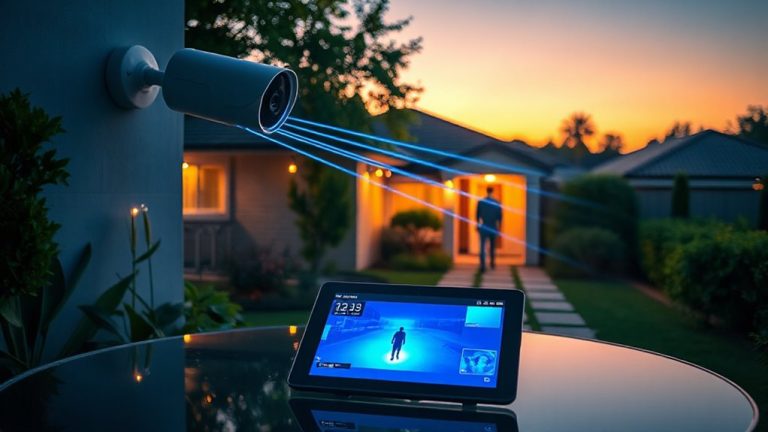
While no security system can guarantee 100% protection, outdoor intrusion detection sensors considerably reduce the risk of a break-in by identifying threats before they reach your home. You can rely on beam breaks to detect when someone crosses an invisible infrared barrier, commonly set up across driveways or perimeter fences. These systems alert you instantly, giving you time to respond or notify authorities. Vibration alerts, meanwhile, sense physical tampering on walls, gates, or windows, signaling suspicious activity early. Both technologies work before intruders access entry points. Beam breaks cover long distances but may require alignment maintenance, especially after weather shifts. Vibration sensors are low-profile and effective but can trigger on non-threats like heavy wind. For best results, use them as part of a layered system. Initial costs range $150–$400, depending on coverage and integration needs. Proper placement improves accuracy and reduces false alarms, making your outdoor surveillance more reliable. A well-designed driveway alarm can enhance perimeter monitoring by combining beam break technology with wireless alerts.
PIR Sensors: Do They Work Outside?
Can PIR sensors really perform well in outdoor settings, or are they better suited for indoor use? You can use them outside, but with limitations. PIR sensors detect heat changes from moving bodies, which works reliably indoors. Outside, they’re prone to false alarms caused by sunlight, pets, or falling leaves. Even with good weather resistance, rain, wind, and temperature swings can still impact performance. For outdoor use, choose models built with strong weather resistance and adjustable sensitivity to reduce false alarms. Mount them under eaves or shaded areas to avoid direct sun and precipitation. While PIR sensors are cost-effective and energy-efficient, they’re less reliable than other options in dynamic outdoor environments. You’ll get better results when combining them with other technologies, though on their own, they demand careful placement and ongoing adjustment to remain effective outdoors. Best Motion Detectors offer advanced sensor combinations for improved outdoor reliability.
Microwave vs. Dual-Tech: Best Motion Detection for Outdoors
What if your outdoor motion sensor could ignore a swaying tree branch but still catch an intruder in the dark? Microwave and dual-tech sensors offer outdoor reliability, but they differ. Microwave sensors detect motion using radio waves, making them sensitive yet prone to false alarms from moving foliage or signal interference. Dual-tech sensors combine microwave and PIR technologies, requiring both to trigger, greatly reducing false alarms. For seamless integration with smart home platforms, consider models highlighted in the best motion sensors for Home Assistant roundup.
| Feature | Microwave Sensor | Dual-Tech Sensor |
|---|---|---|
| Weather Resilience | High | High |
| False Alarms | More likely | Substantially reduced |
| Signal Interference | Possible in dense areas | Less affected |
| Best Use Case | Open, clear zones | Complex environments |
Fence Sensors: Catching Climbers and Cutters Early
If you’re securing a perimeter, fence sensors can detect climbing, cutting, or impact on fencing before an intruder gets inside. These sensors use vibration detection to identify unusual movement, like someone grabbing or shaking the fence. Some systems also use tension monitoring to sense when wires are cut or loosened, triggering an alert. Vibration-based models are easy to install and work with most fence types, but they may produce false alarms from wind or animals. Tension monitoring is more reliable for detecting deliberate attacks, though installation is more complex and costs more. Most systems work in all lighting and weather conditions, offering 24/7 protection. For best results, combine both technologies-this increases accuracy and reduces false alerts. Plan for power and communication wiring, and budget $200–$500 depending on fence length and feature set. Proper placement and calibration are key to reliable performance.
How Outdoor Sensors Survive Storms and Heat
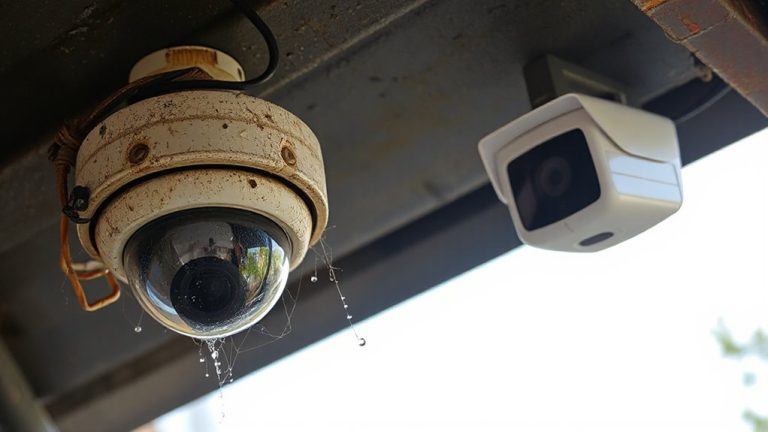
Fence sensors give you early warning of intruders, but they need to keep working when weather turns harsh. You rely on their weather resistance to handle heavy rain, strong winds, and dust without false alarms or damage. These sensors are built with sealed enclosures and durable materials that protect internal electronics. Temperature tolerance is also critical-quality models operate in ranges from -40°F to 150°F, so they stay active in deserts or freezing climates. You’ll want to check specs for IP66 or higher ratings, which confirm solid protection against water and dust. Sensors with wide temperature tolerance reduce maintenance and downtime. While more resistant units may cost more upfront, they save money over time by avoiding frequent replacements. Look for models tested in extreme conditions to guarantee reliability. With proper weather resistance and temperature tolerance, your outdoor sensors stay effective year-round, no matter the storm or heat.
On a final note
You now know the key outdoor sensors to evaluate: PIR works well in stable conditions but struggles with heat changes, while microwave sensors detect motion through light interference. Dual-tech sensors combine both, reducing false alarms. Fence sensors alert to climbing or cutting attempts. All outdoor sensors must be weather-rated to endure rain, wind, and extreme temperatures. Choose dual-tech for reliability, especially in fluctuating climates, and always match sensor specs to your environment for best results.